What Causes It Around Here
Most of the housing stock in this part of the service area went up between 1938 and 1996, with a lot of it clustered in the 1960s and 70s across the 62 named areas we work in. That matters for cables specifically: houses from that era were built with steel lift cables run over stamped pulleys, and after five or six decades a lot of that original hardware is still hanging there, just worn thinner every year. Nobody swapped it out because the door still opened, right up until the day a strand gives.
Cold is the other half of it. This is a moderate-cold climate band, and cable steel doesn't like the swing between a warm garage in the afternoon and a hard freeze overnight. That cycle stiffens the galvanized coating, and once the coating cracks, the strands underneath start rusting from the inside where you can't see it. On a house from the 1963-median era, that cable has been through fifty-plus winters of that cycle. It's not a defect, it's just time plus weather on old steel.
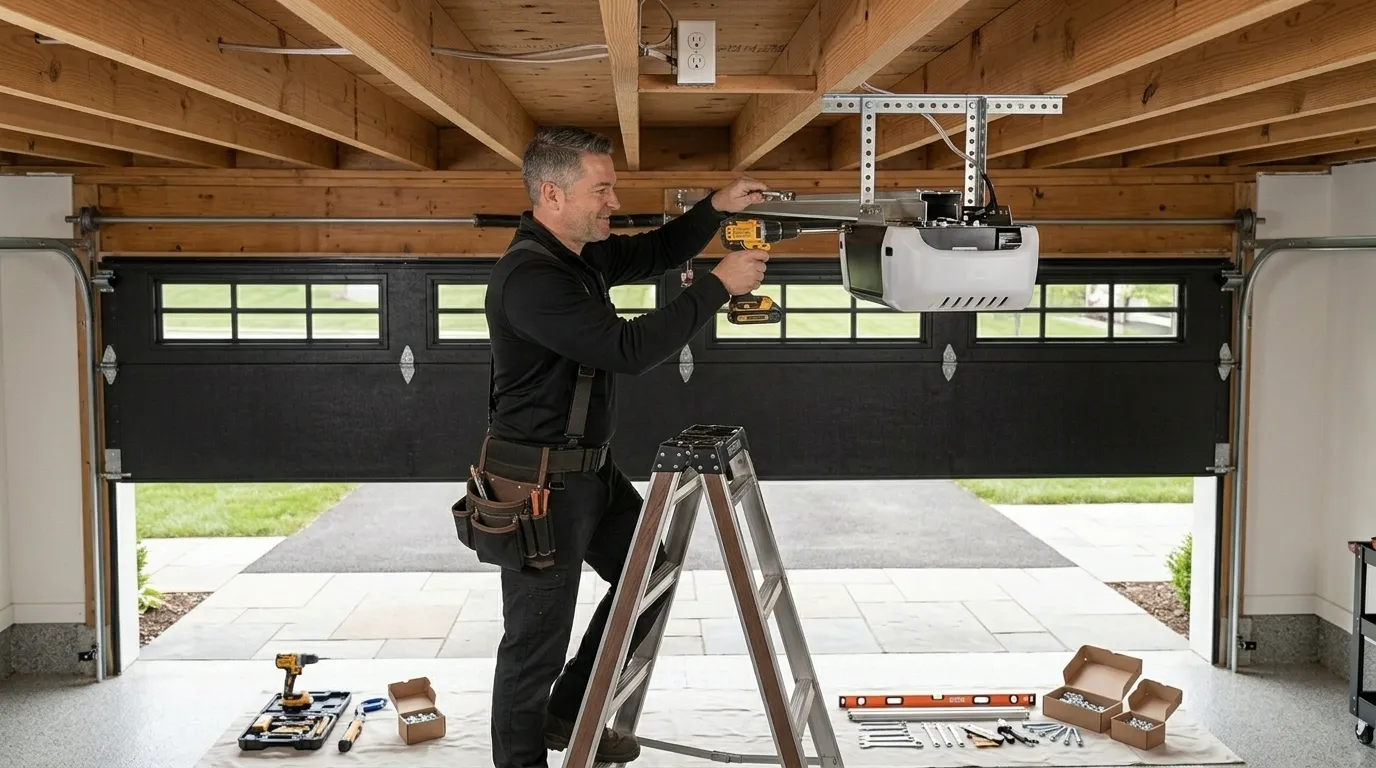
We also see it on doors that got a new opener bolted onto original 1960s track and drums - the motor pulls harder than the cable was ever asked to handle, and a stressed cable frays faster than a happy one.
How We Fix It
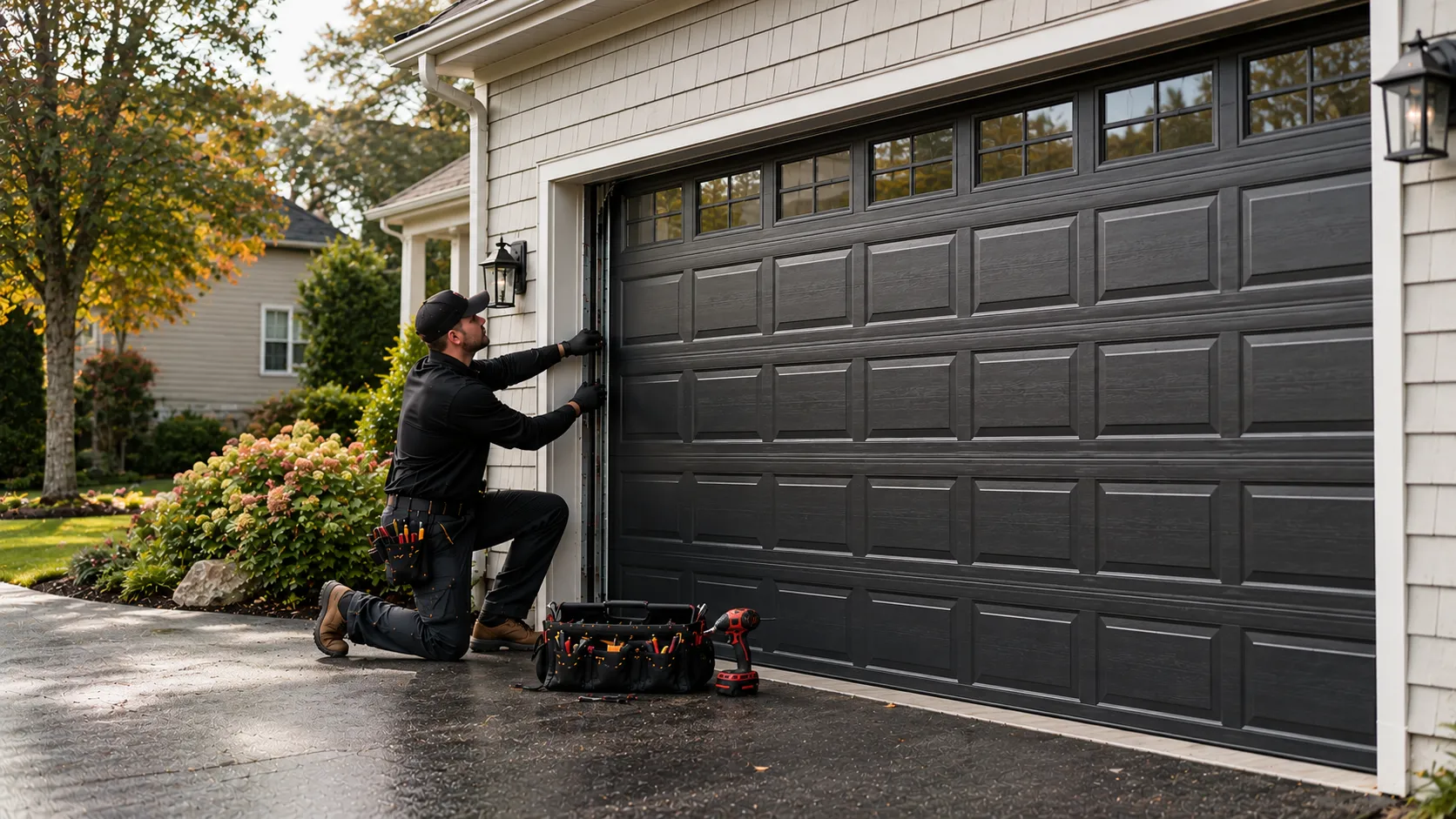
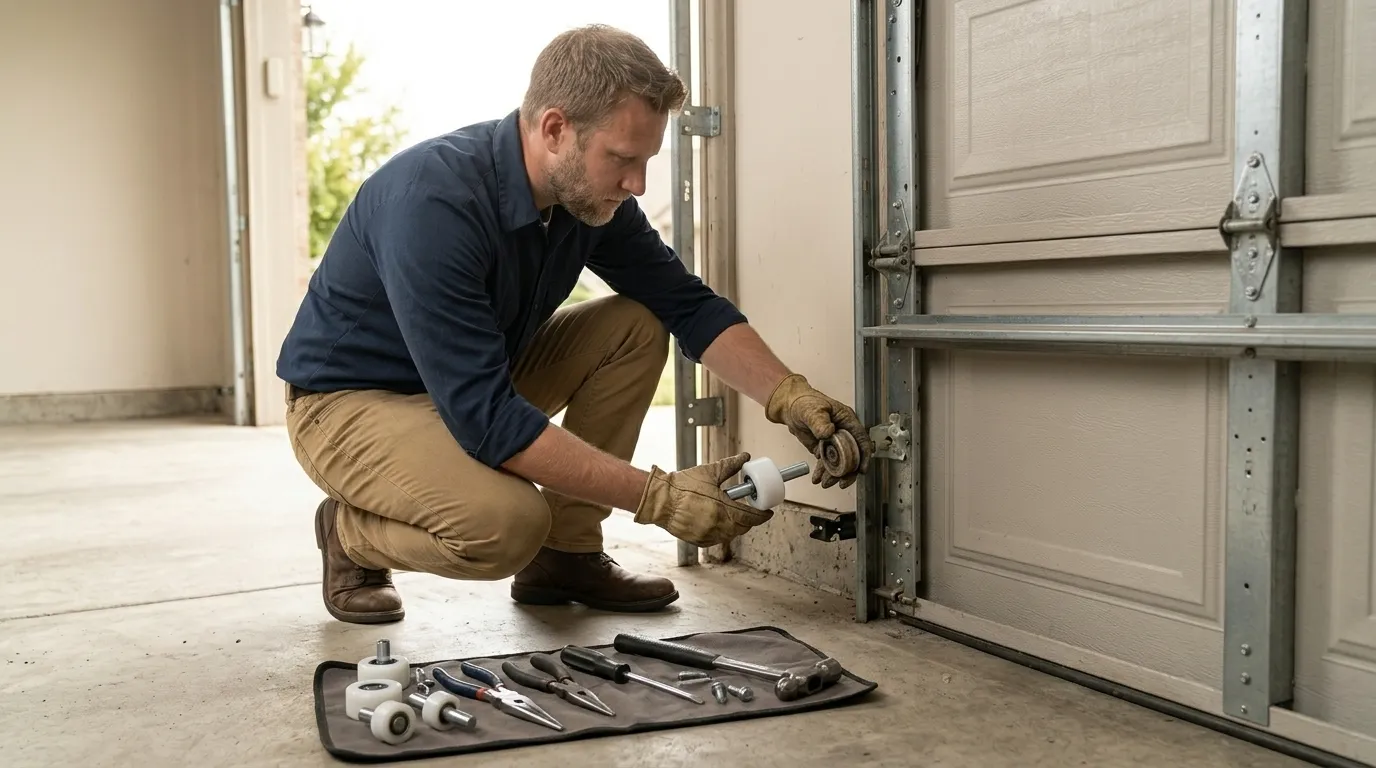
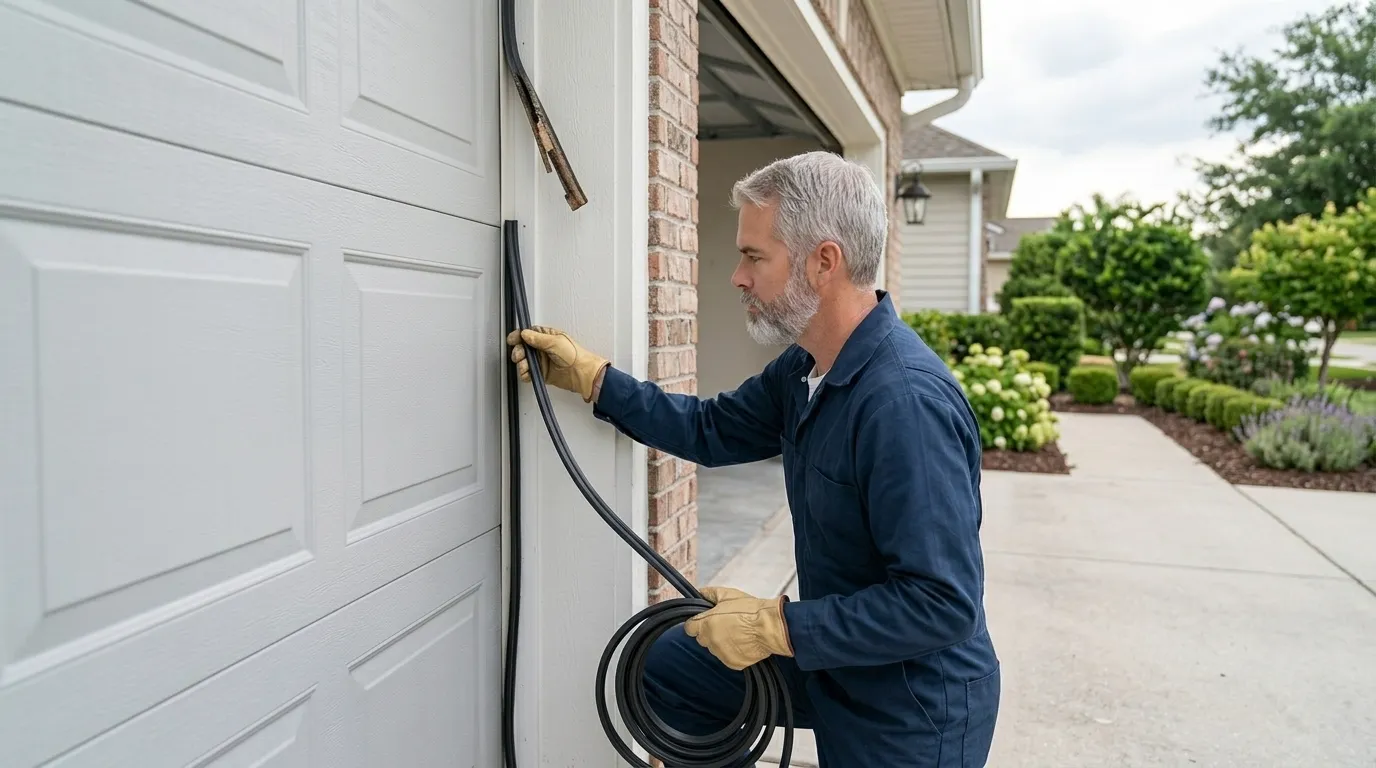
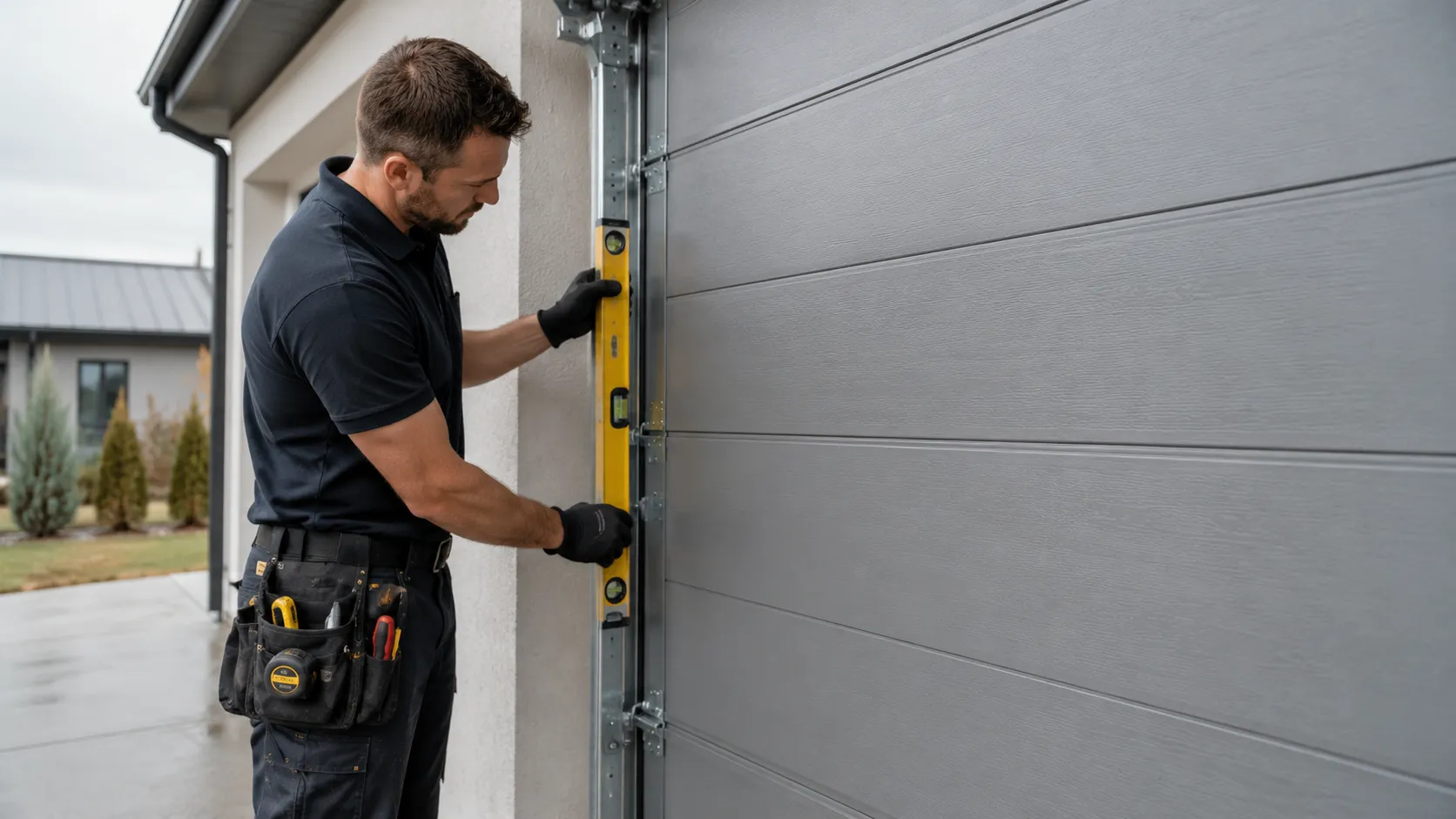
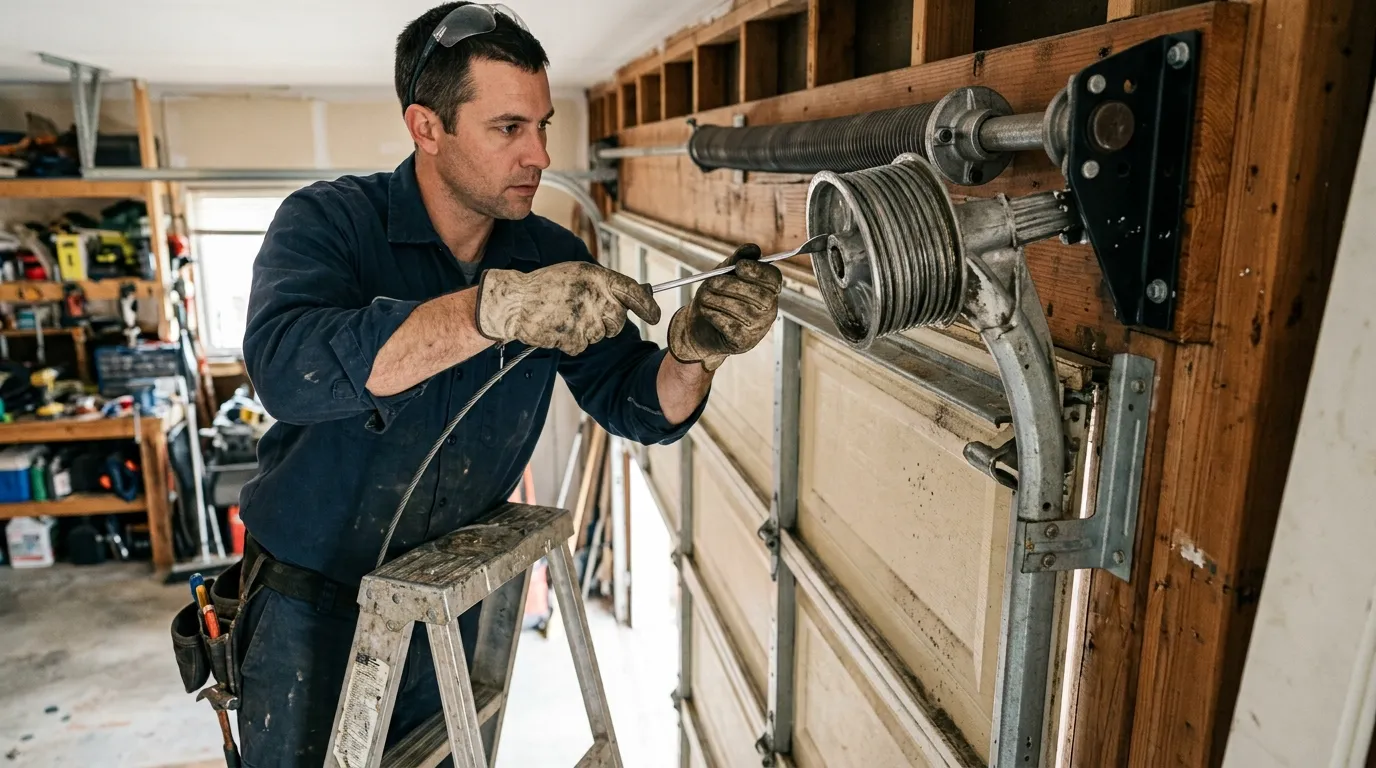
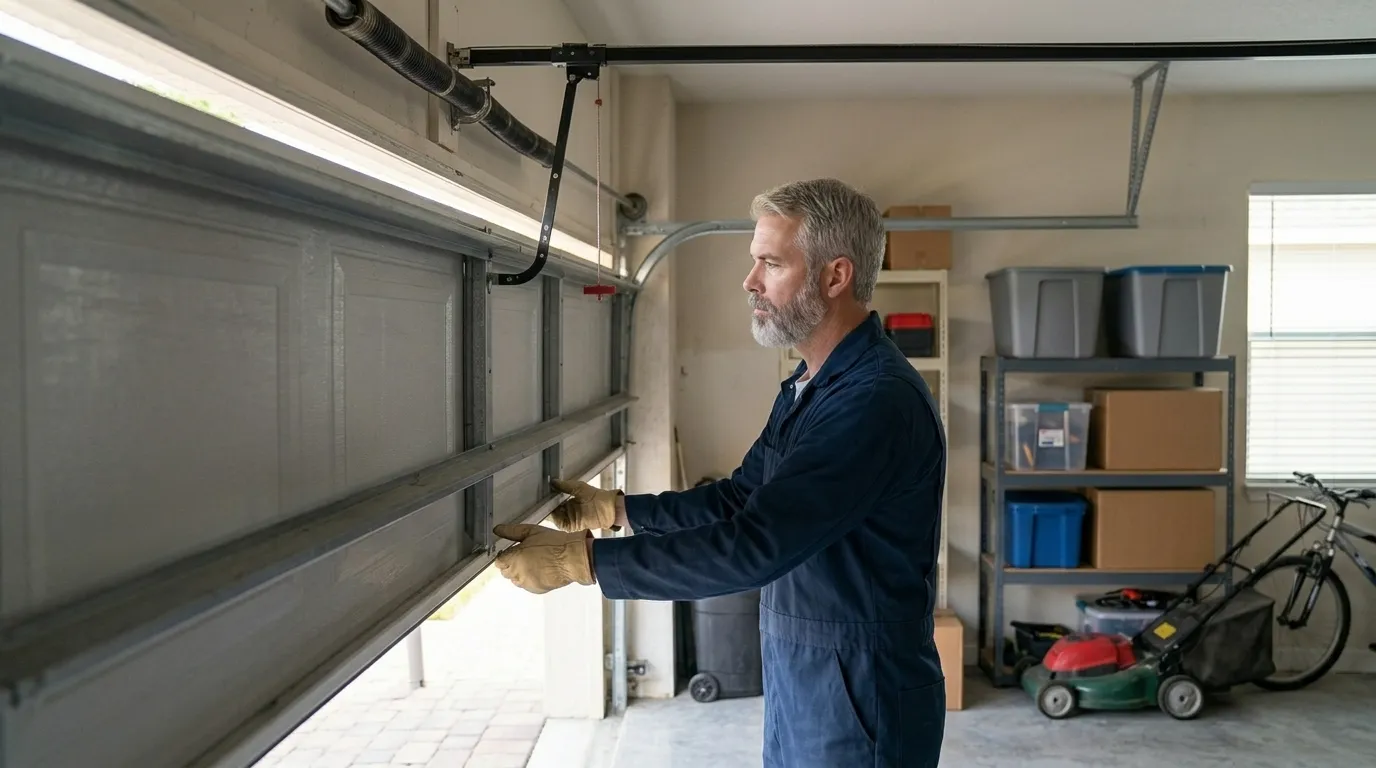
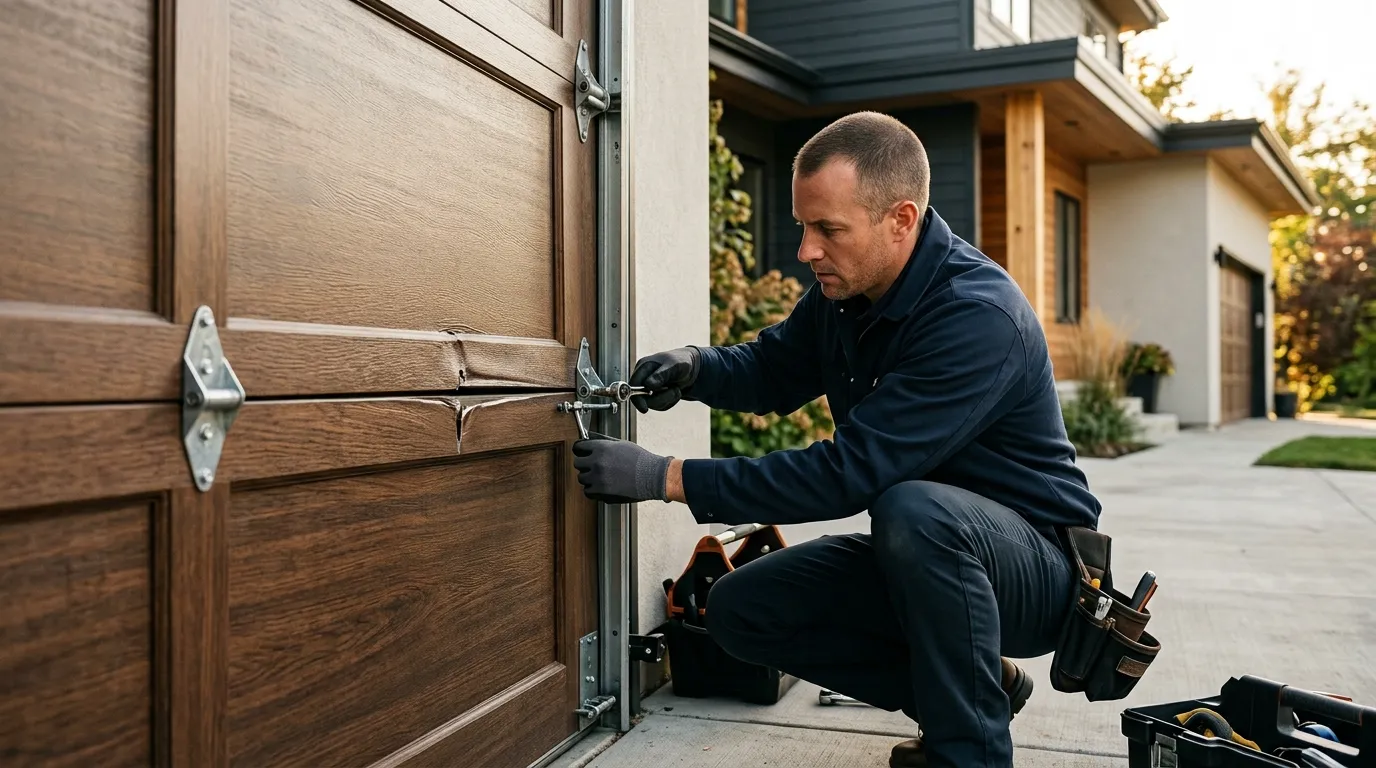
We pull both cables off the drums, check the drums and bottom brackets for wear grooves the old cable may have cut into them, and replace cable and any worn hardware together rather than putting new cable on a chewed-up drum. On doors carrying original 1960s-70s track, we also check whether the track itself has drifted out of plumb from decades of cable tension pulling unevenly - that's a common secondary issue on housing stock this old, and it's worth fixing at the same time so the new cable doesn't wear the same way in another year.
We test the door through a full open-close cycle under load before we leave, watching for drift or catch points. One honest limit: if the drums or track are bent badly enough, cable alone won't solve it, and we'll tell you that instead of selling you a cable that fails again in six months.
How It Shows Up
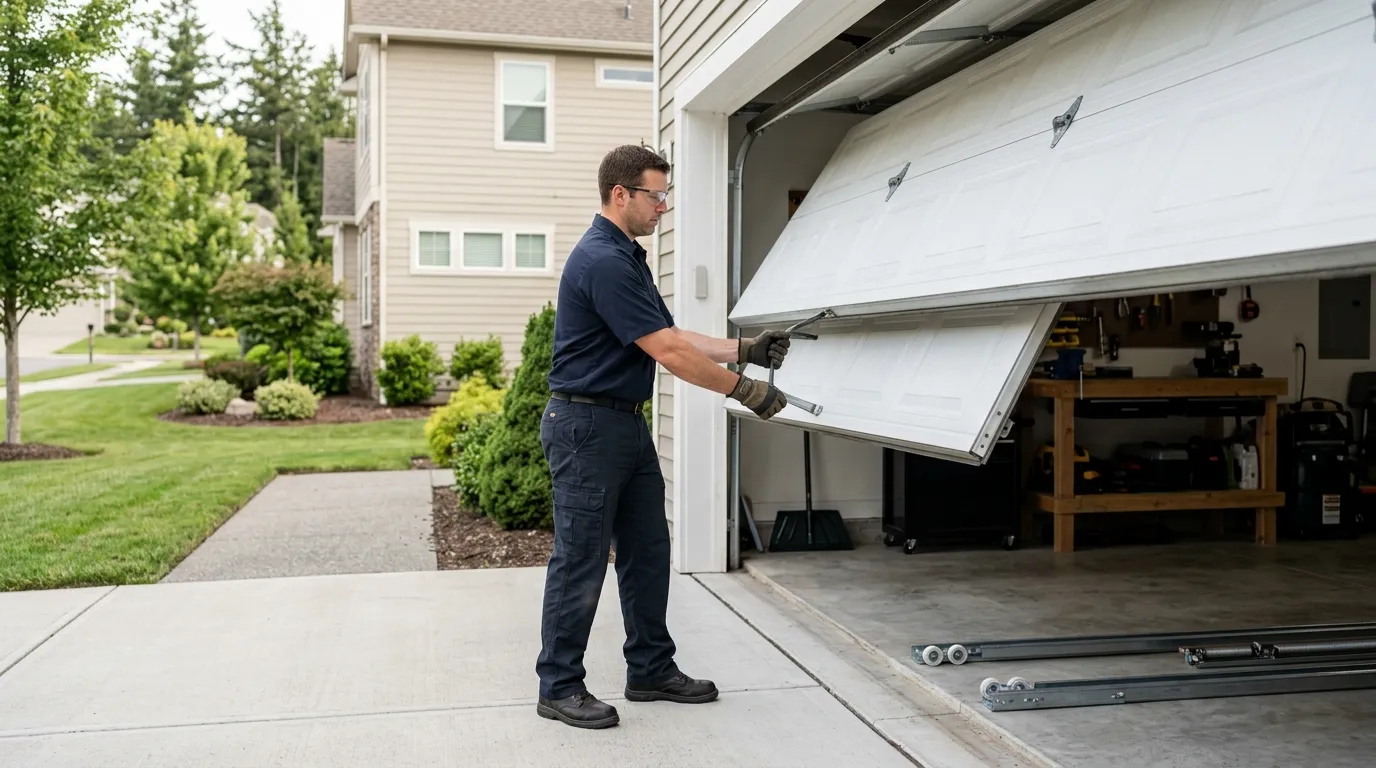
The classic sign is a door that drops unevenly on one side, or won't lift past a foot or two before the opener strains and stops. Sometimes you'll hear a sharp snap first, followed by the door sagging on one corner - that's one cable letting go while the other still holds tension, which is dangerous because the door can twist in the track. On older 1960s-70s doors with original drums, we also see slow fraying show up as a faint rubbing or grinding sound during the last few inches of travel before full failure.
If your door won't move at all and the opener just hums, don't force it with the emergency release rope - that's often a cable problem, not an opener problem, and pulling on it can drop the door. Shut the opener off and call before anyone tries to open it by hand.