What Causes It Around Here
Torsion springs wear out on a cycle count, not a calendar, and the housing stock across this service area sets that clock. Homes here were built between 1938 and 1996, with the median landing at 1963, and most of the 62 named areas we cover are dominated by 1960s and 70s construction. That matters because a spring installed when a house was built, or replaced once since, is well past its rated life by now on most of these doors.
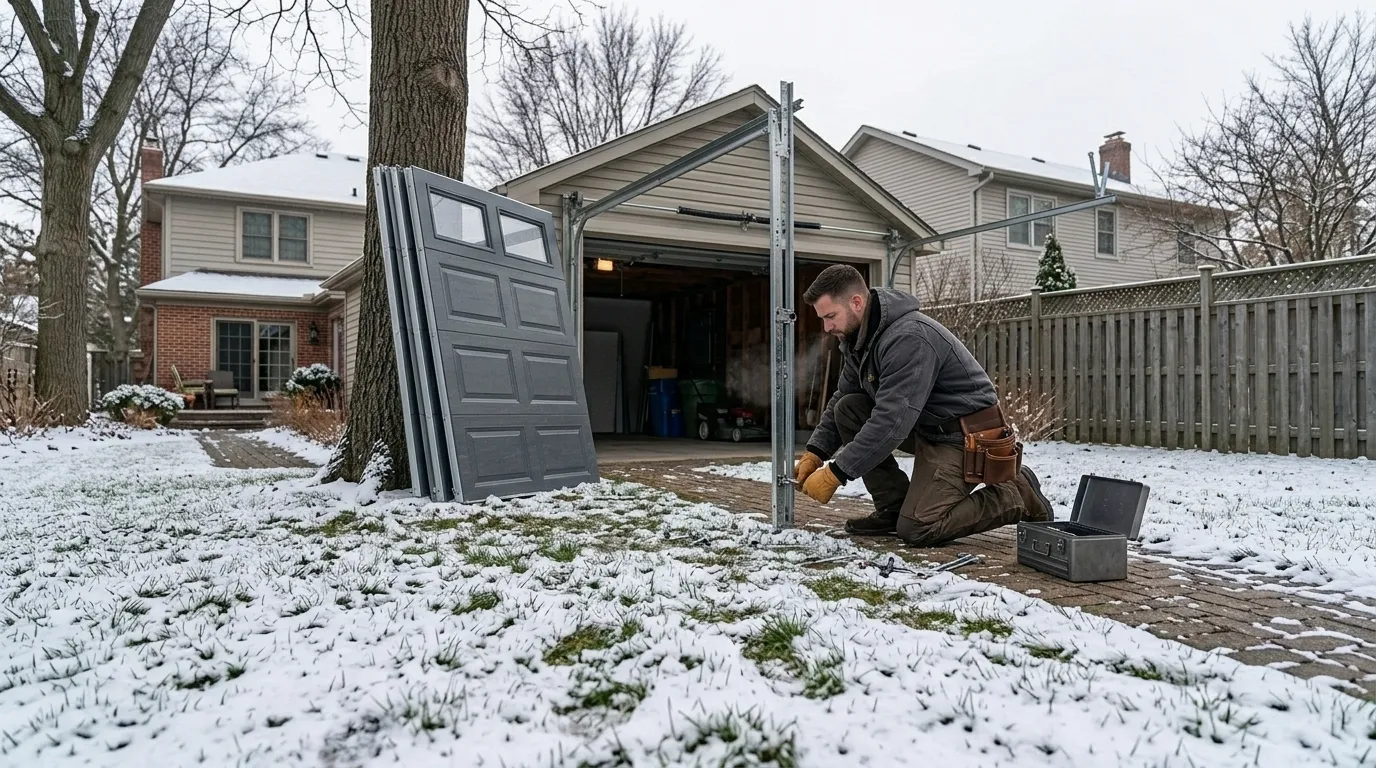
Cold does the rest. This is a cold-moderate climate band, and steel contracts as it drops toward freezing. A spring already fatigued from thirty-plus thousand cycles doesn't need much more to let go on a cold morning - it just needs one more pull. That's why the calls cluster the way they do: not random failures, but a housing-stock age problem meeting a winter problem.
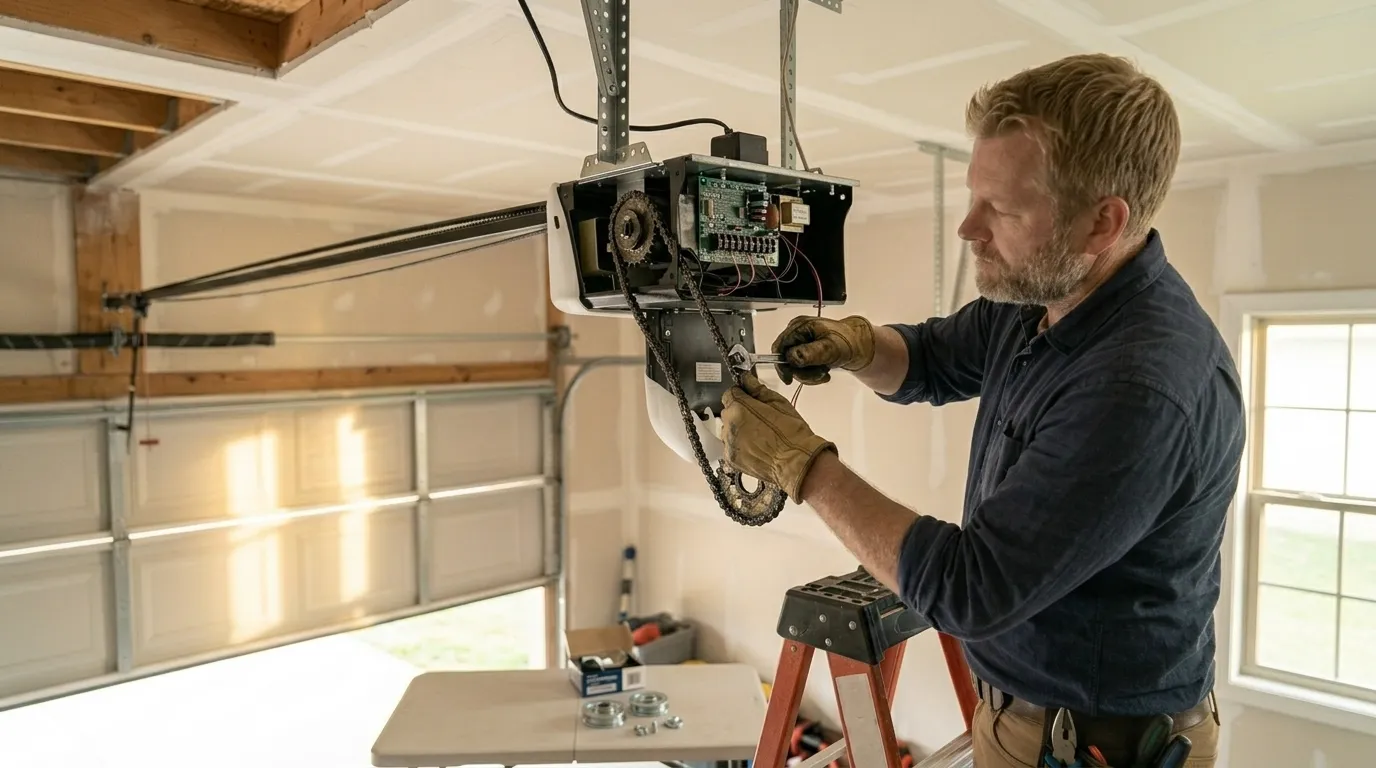
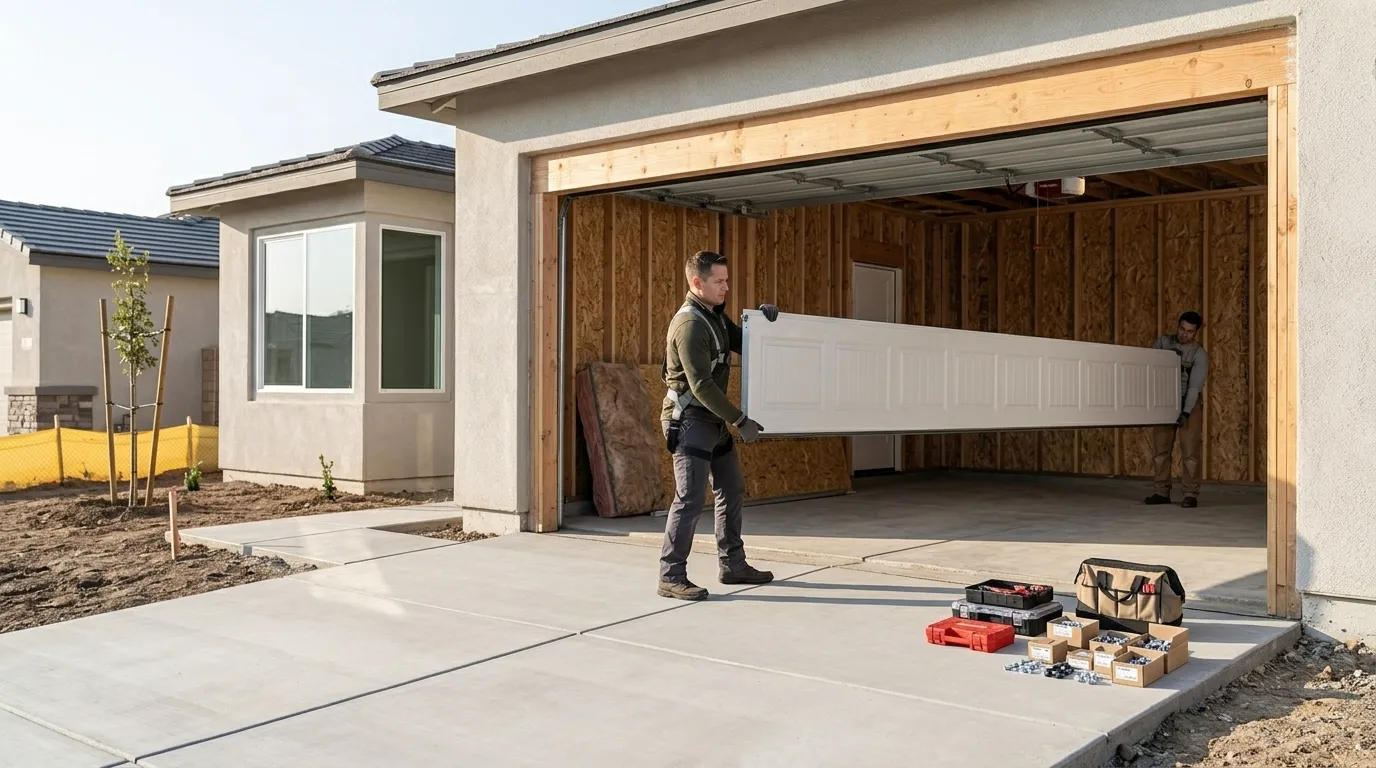
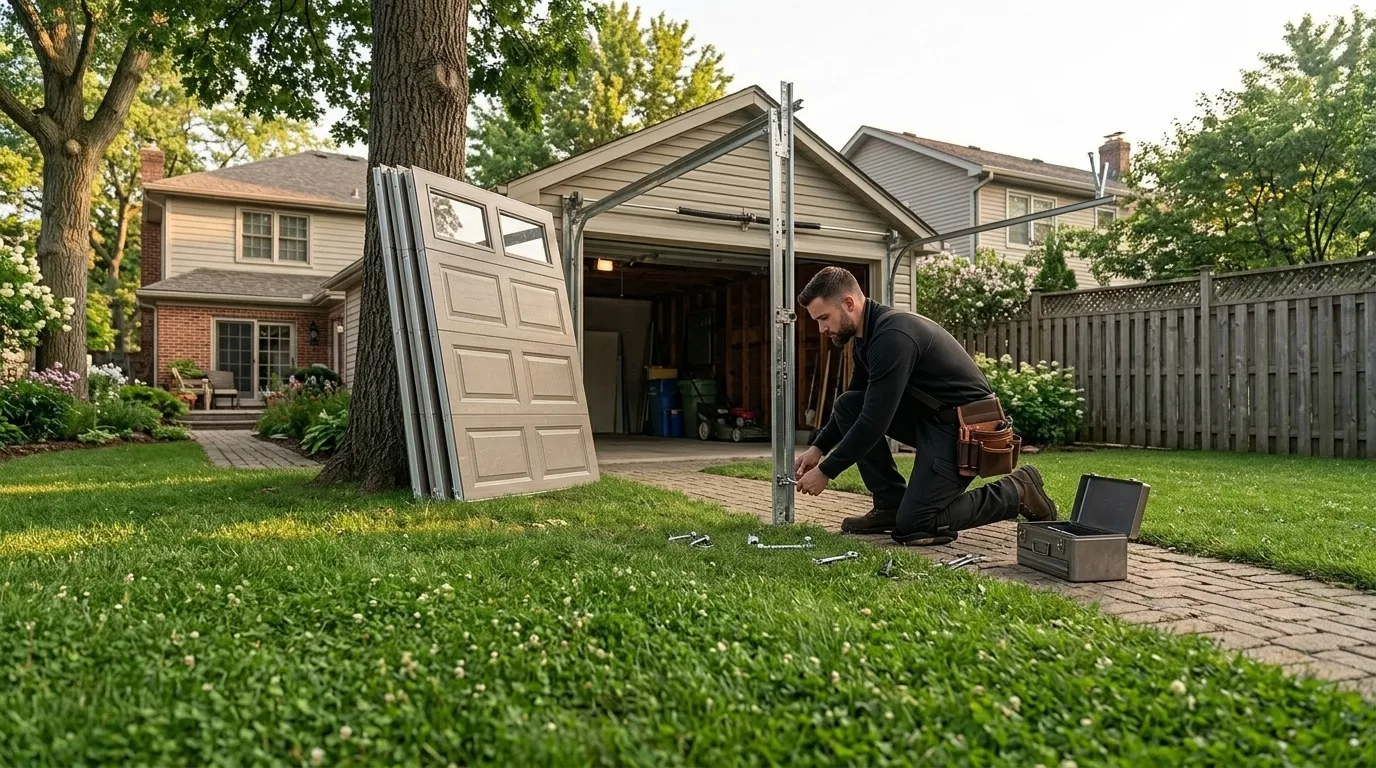
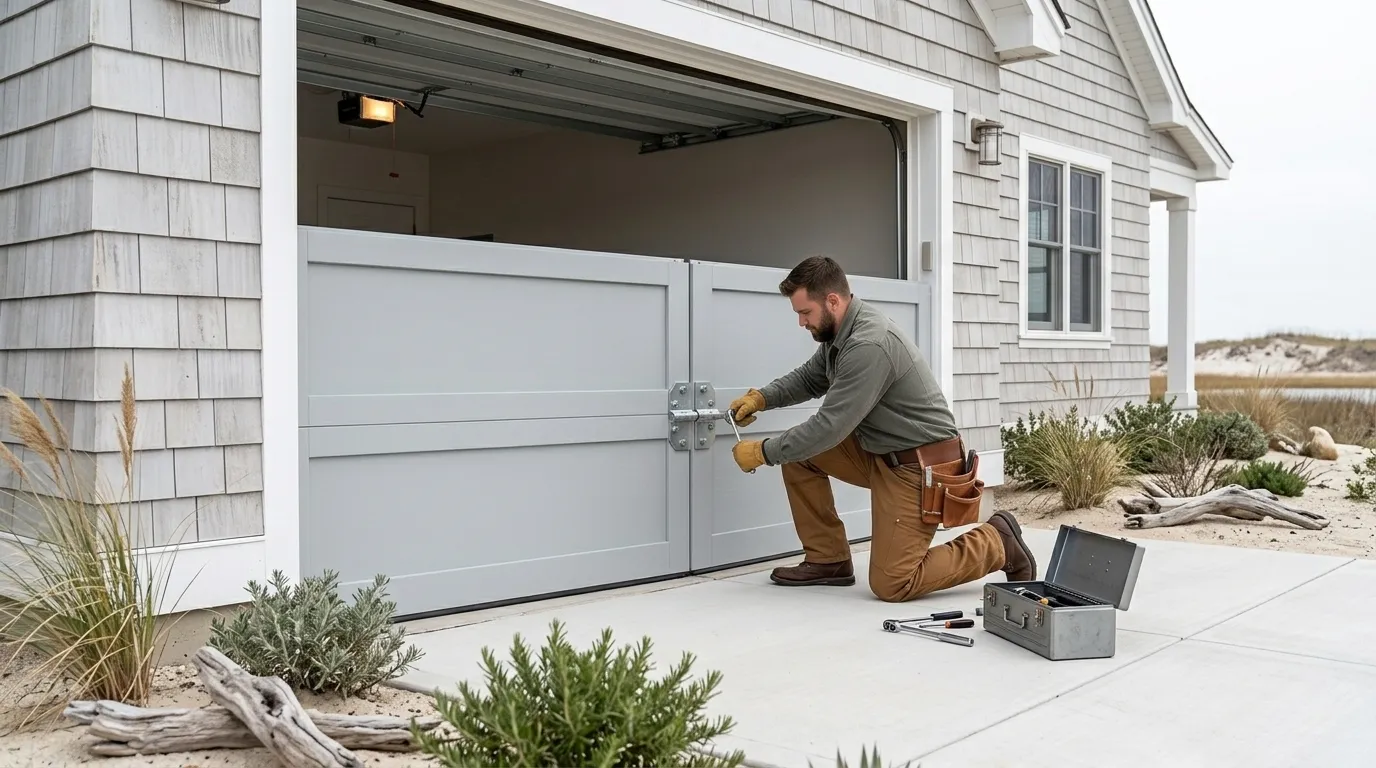
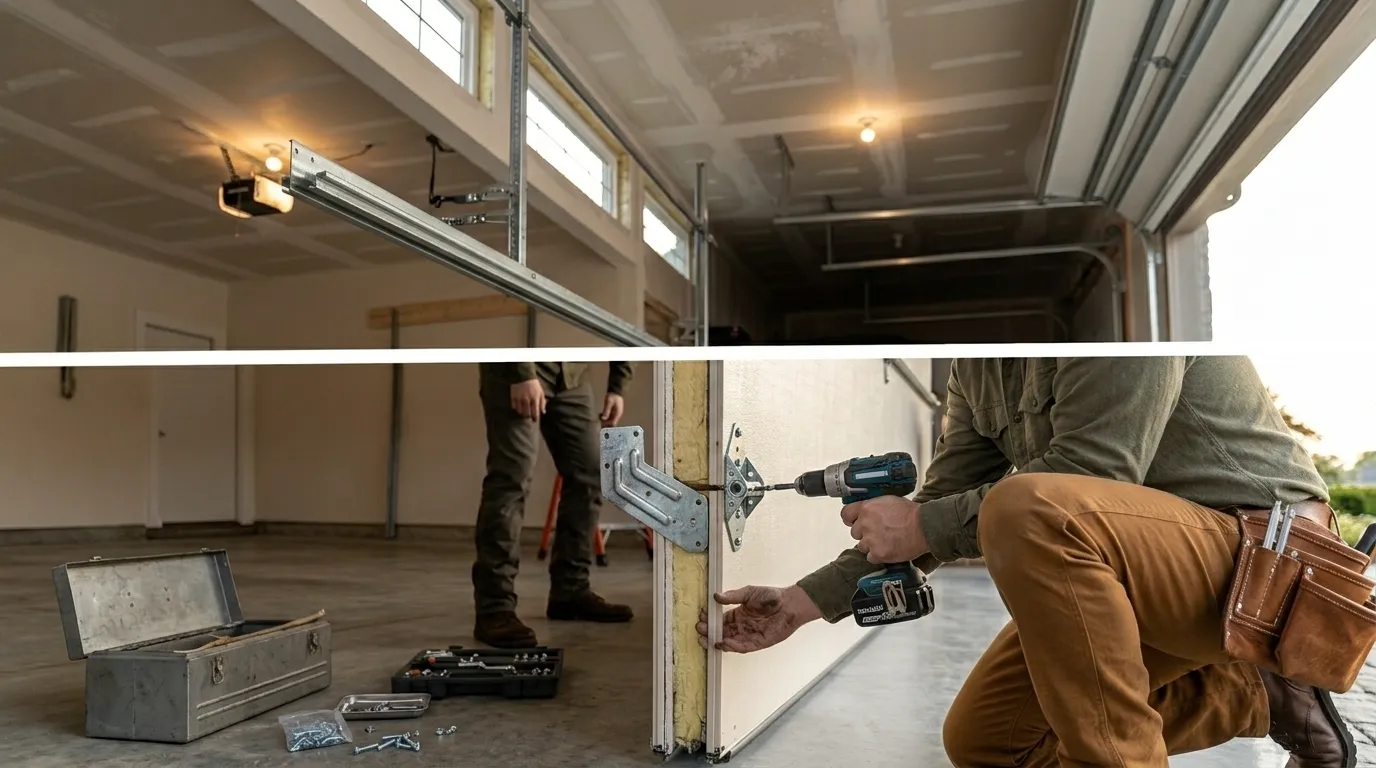
We also see original hardware on some of these older builds - side-mounted torsion setups and spring sizes that newer doors don't use. That's not a defect, it's just what building in 1963 looked like, and it changes what we bring on the truck versus a 2005-built door.
How We Fix It
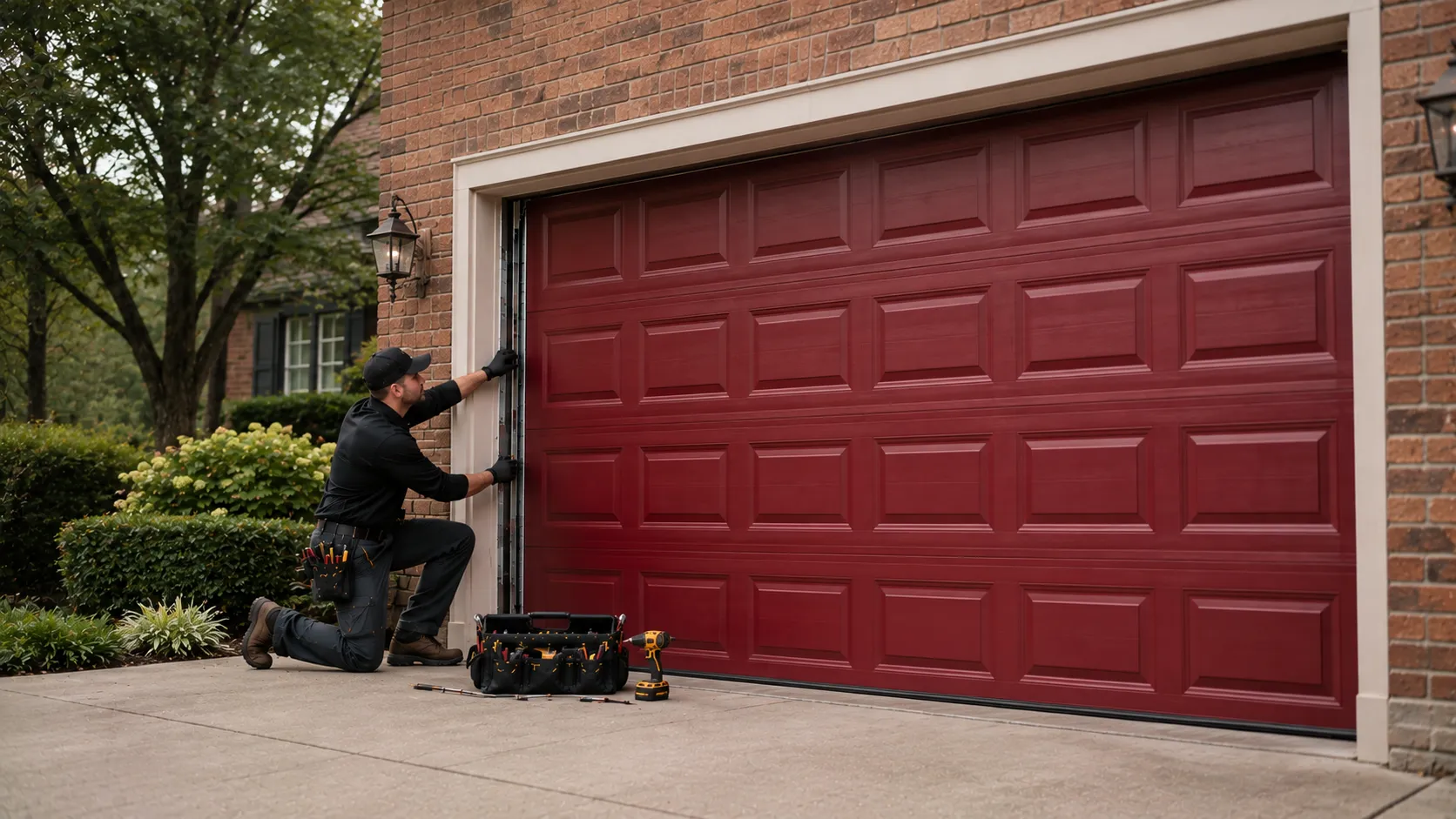
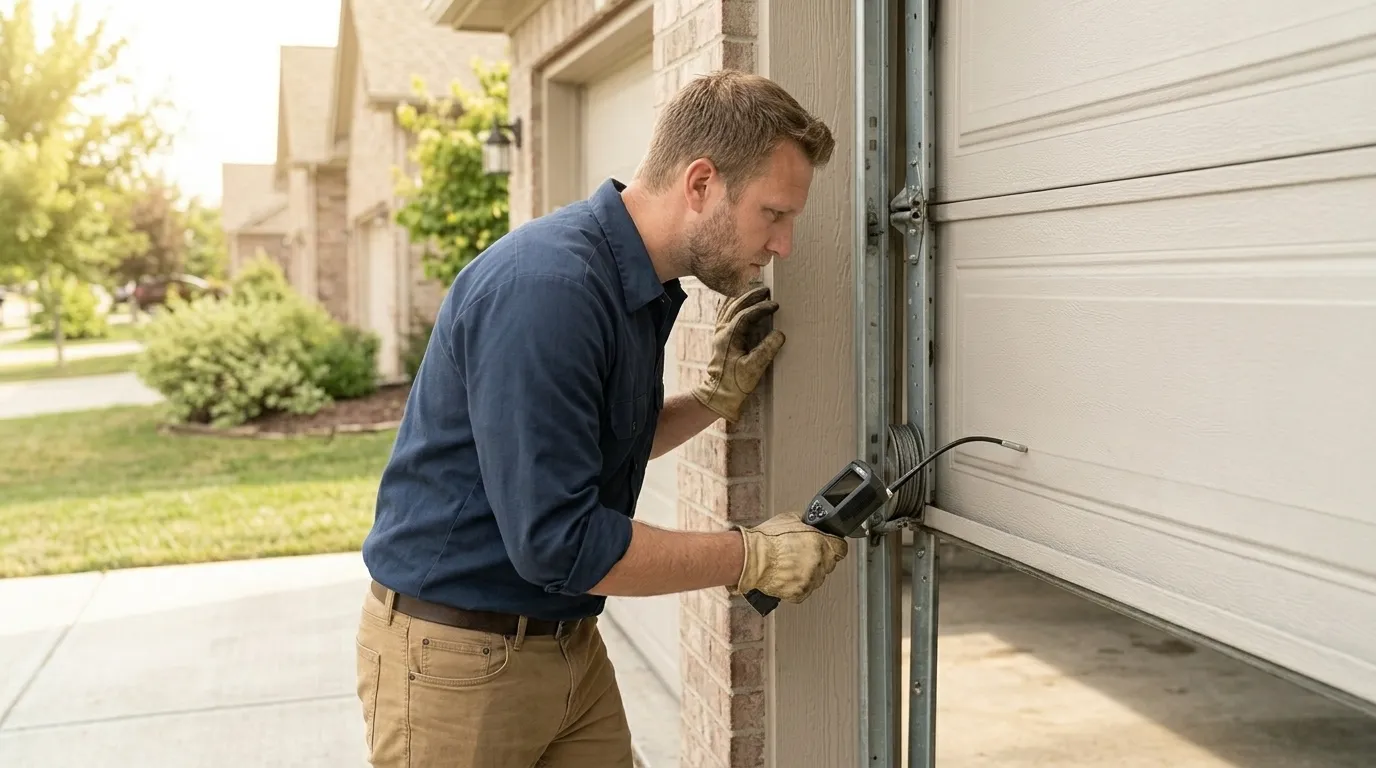
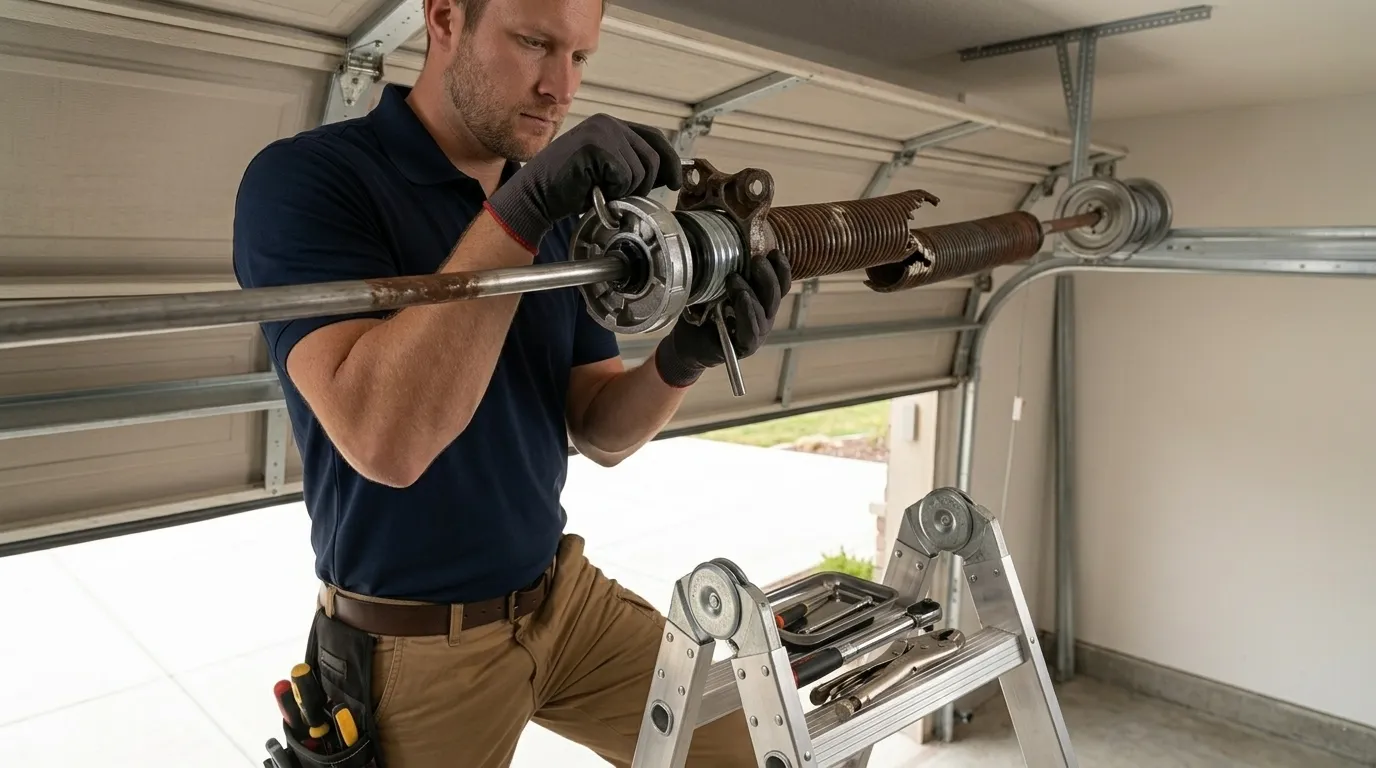
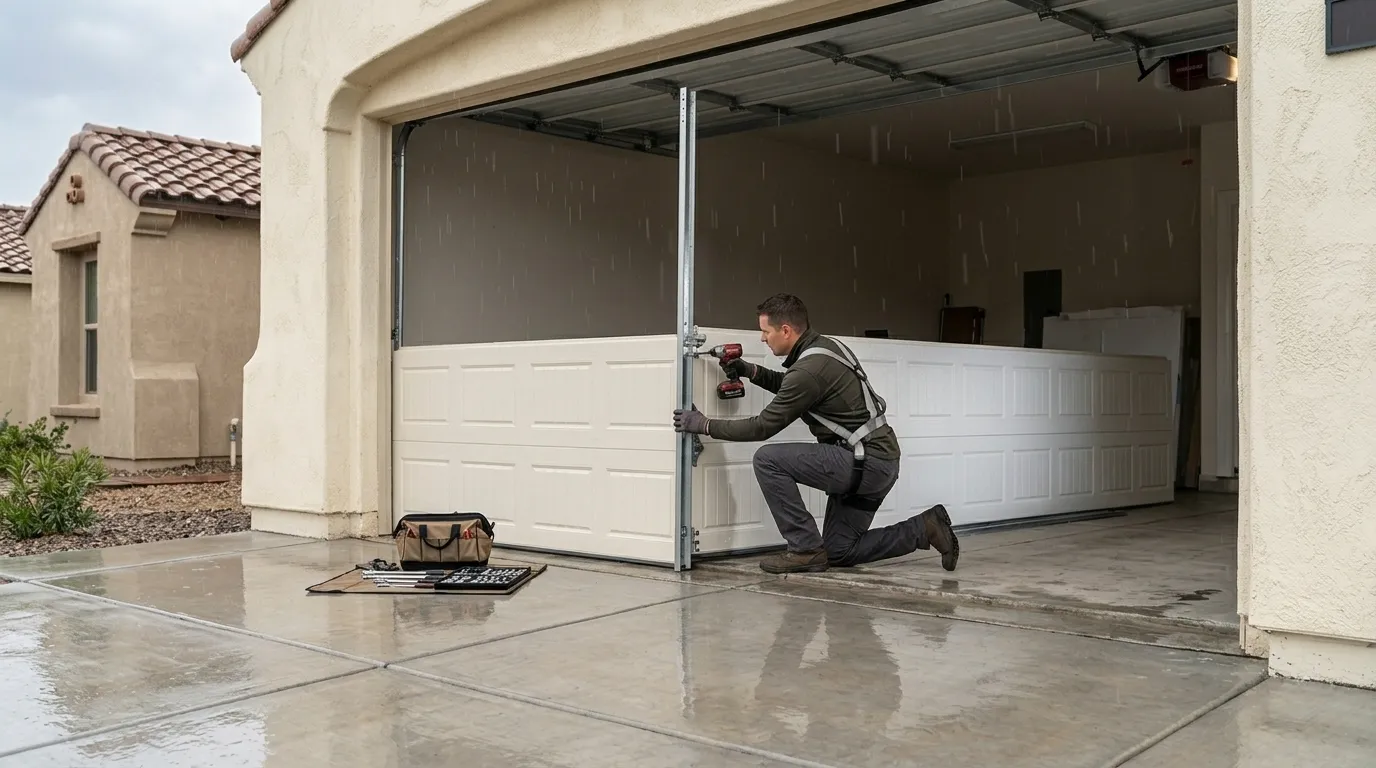
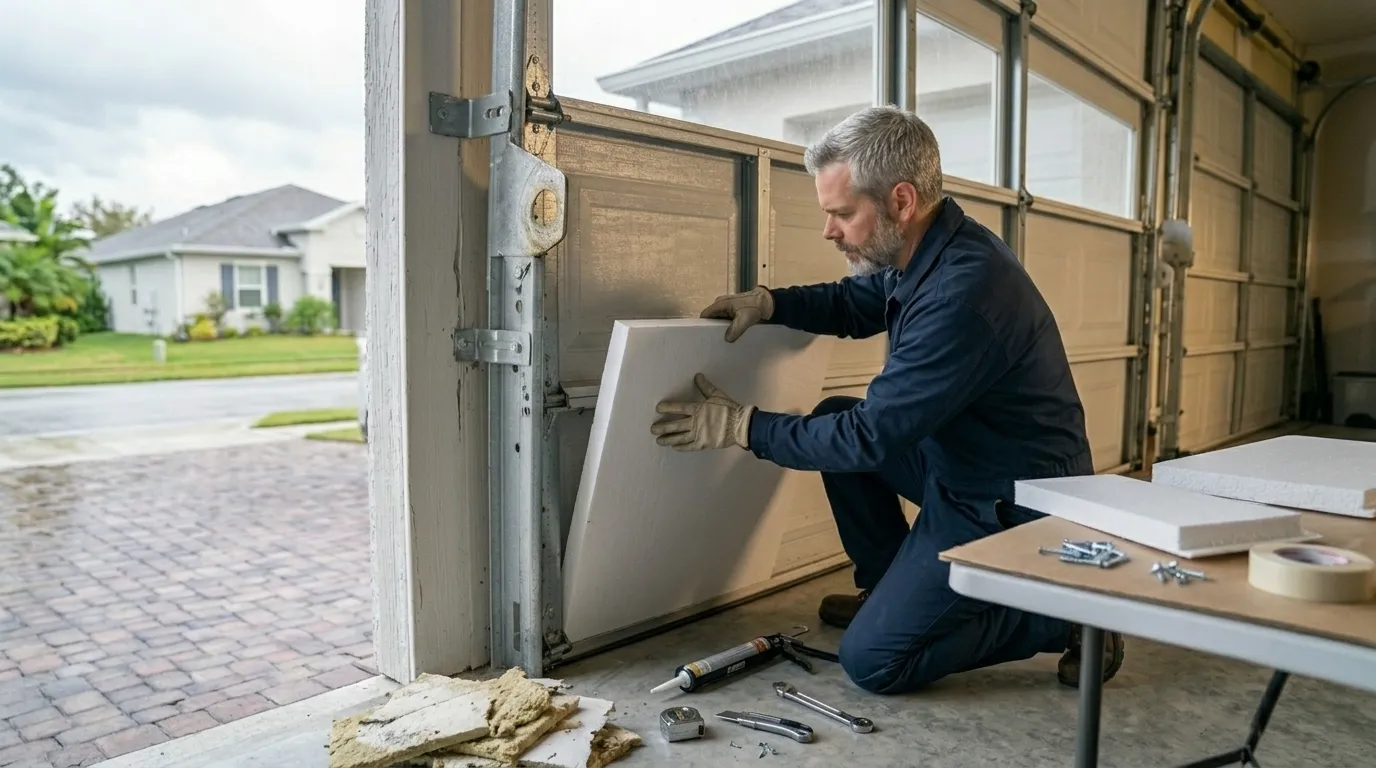
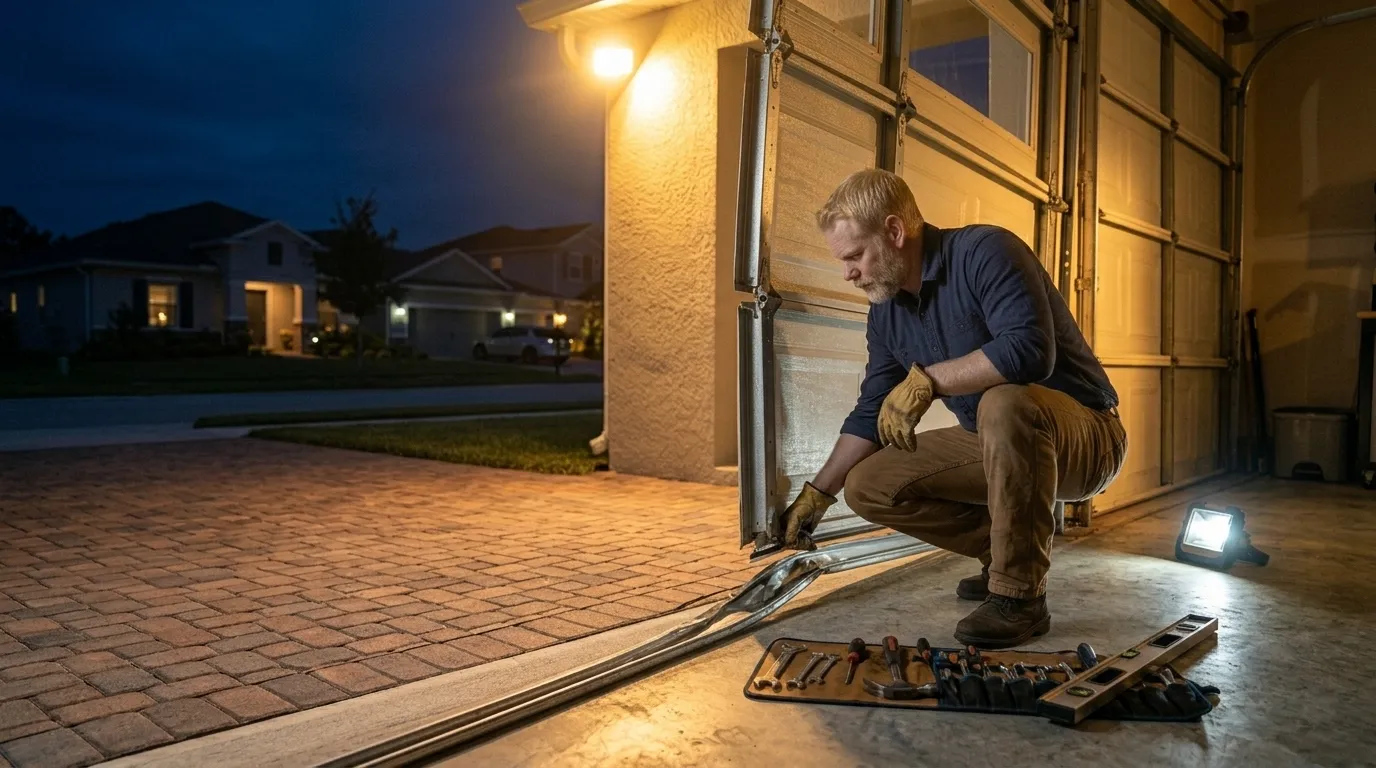
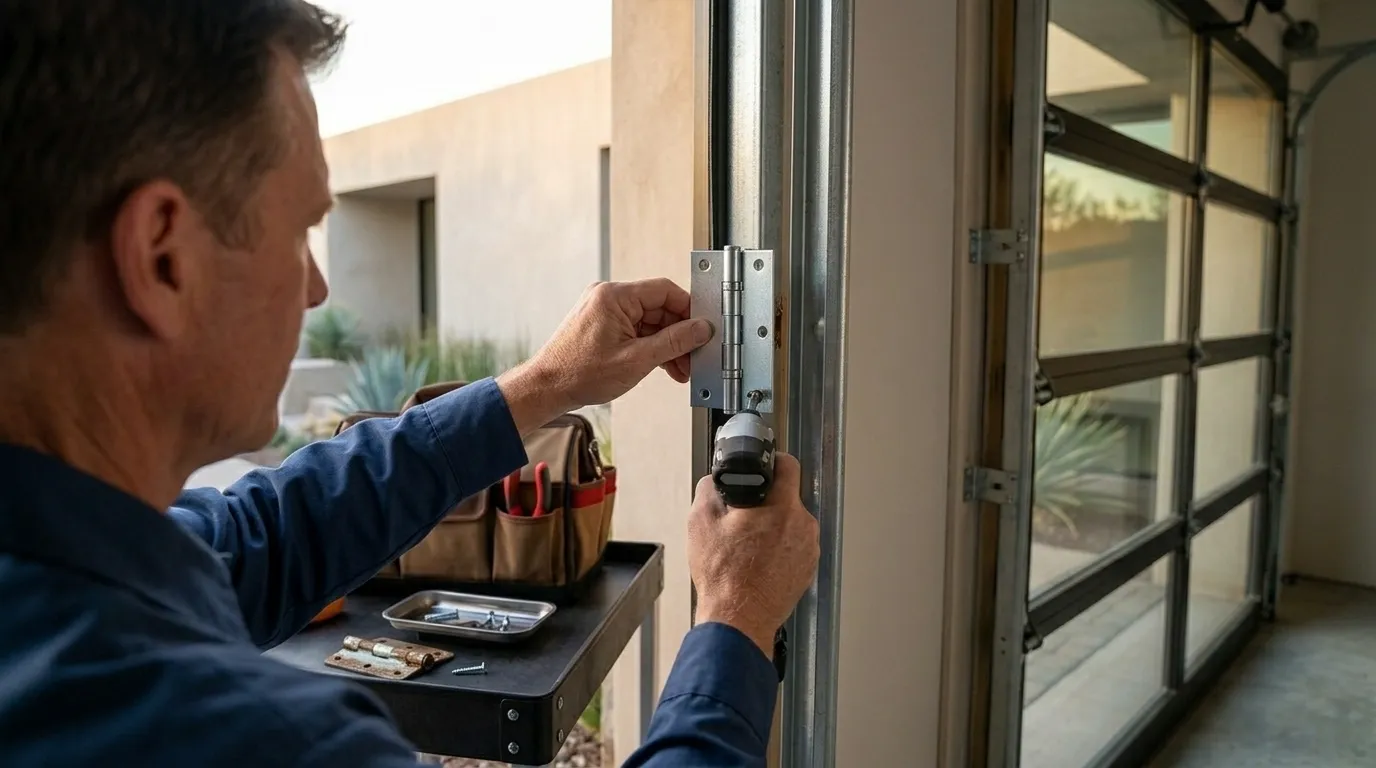
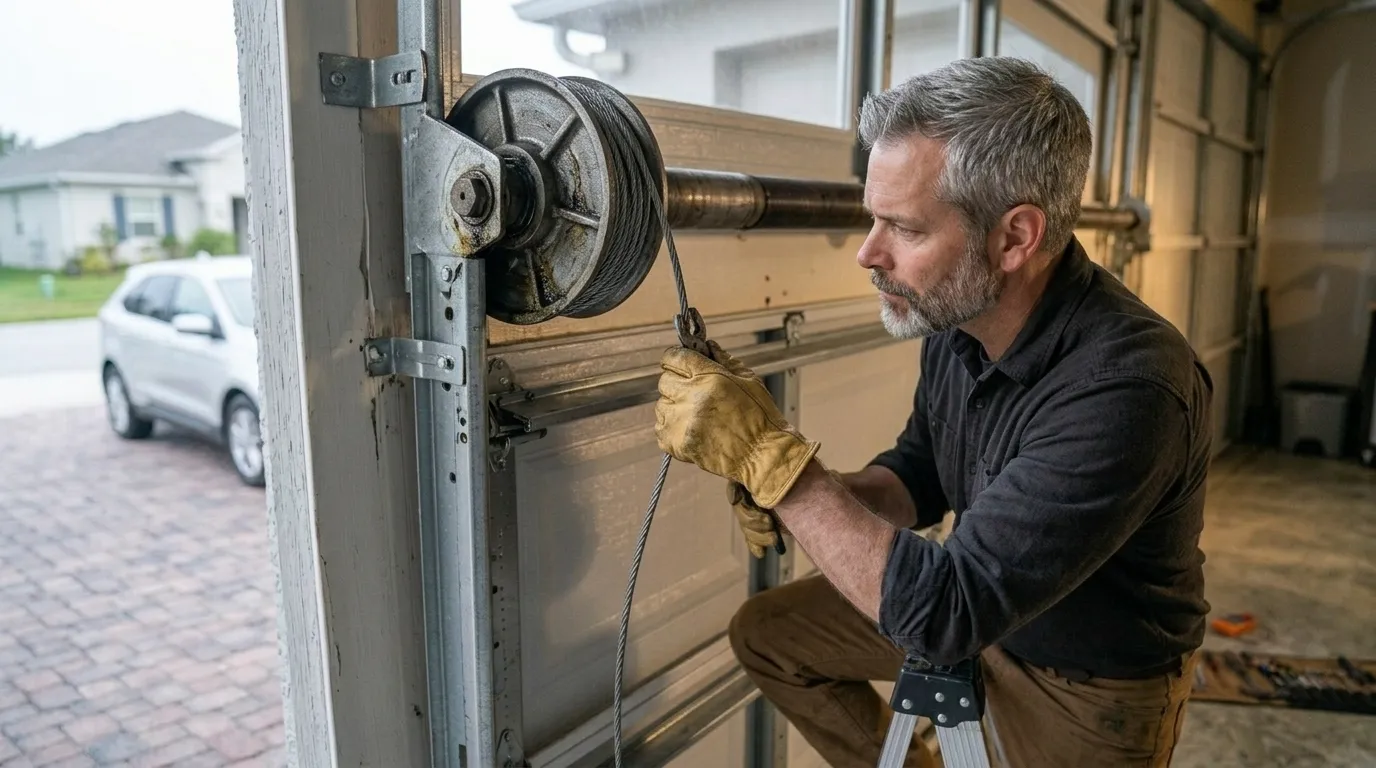
We match the replacement spring to the door's actual weight and wind cycle, not just to what's currently hanging on the shaft, since a prior repair may already have been undersized. Cables get inspected at the same time - a fraying cable under a fresh spring is still a hazard, and a spring job that skips the cables isn't a finished job.
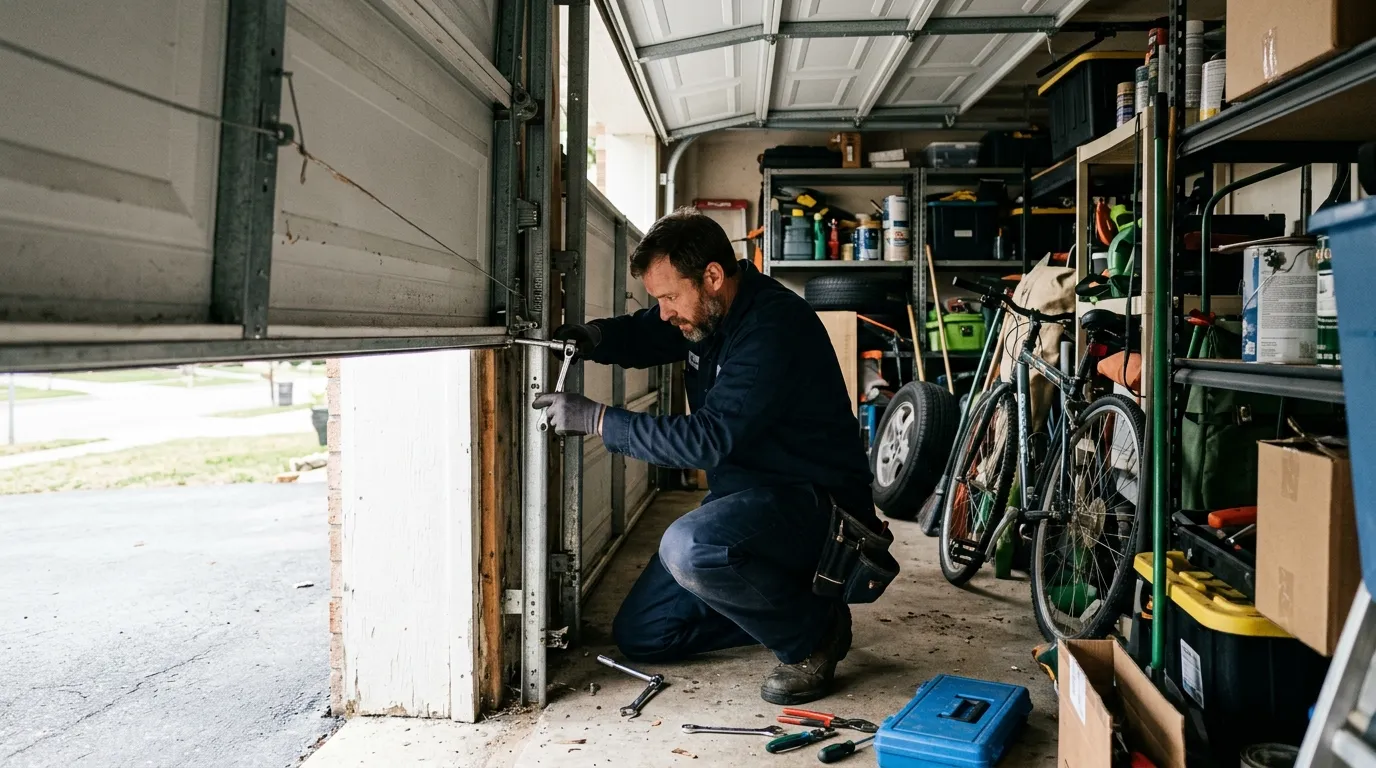
We use winding bars rated for the torsion load, not the vice-grip method some homeowners have understandably tried themselves after watching a video. Safety cables through extension springs, where that setup is present, get checked and replaced if worn.
Honest limitation: on a genuinely older door - original 1960s hardware with a track and drum config nobody makes parts for anymore - a spring repair sometimes isn't the right call. If the rest of the door is failing too, we'll say so rather than sink a new spring into a door that needs replacing within the year anyway.
How It Shows Up
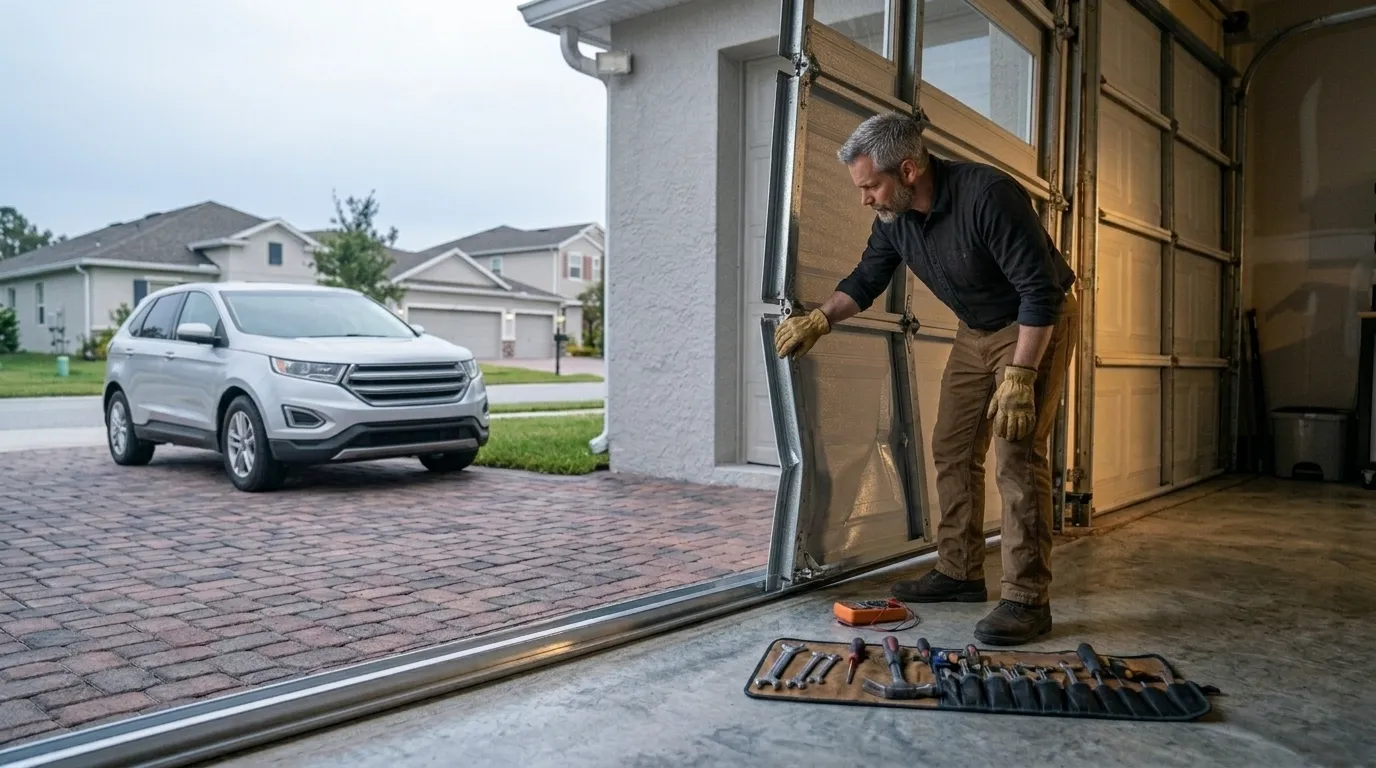
The most obvious sign is a loud bang from the garage, usually first thing in the morning when the cold has already stiffened the steel overnight - that's the spring letting go, not the opener. After that, the door either won't lift at all or an able-bodied person can barely muscle it up by hand, because the spring was doing most of the lifting work the opener isn't built to do alone.
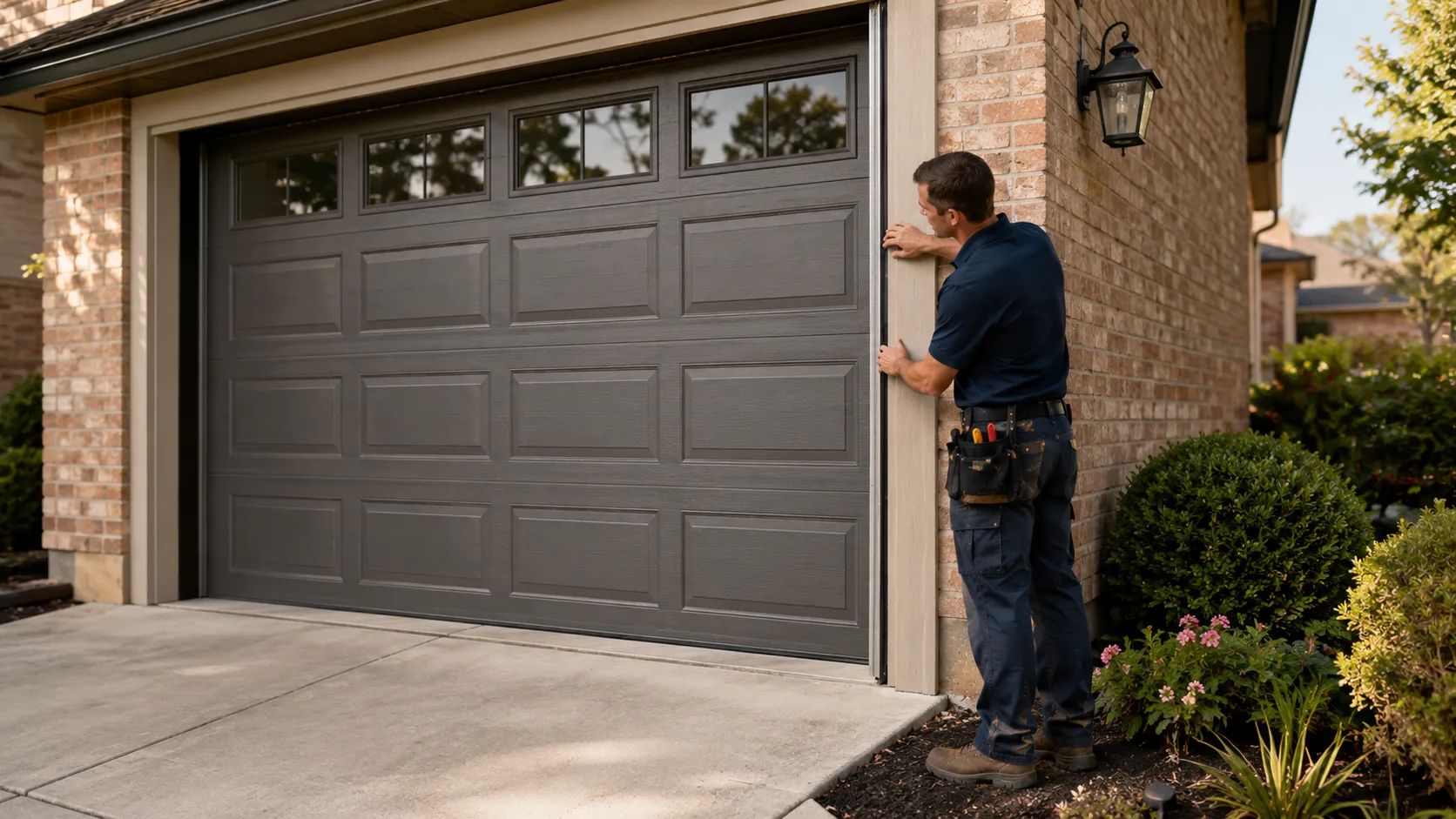
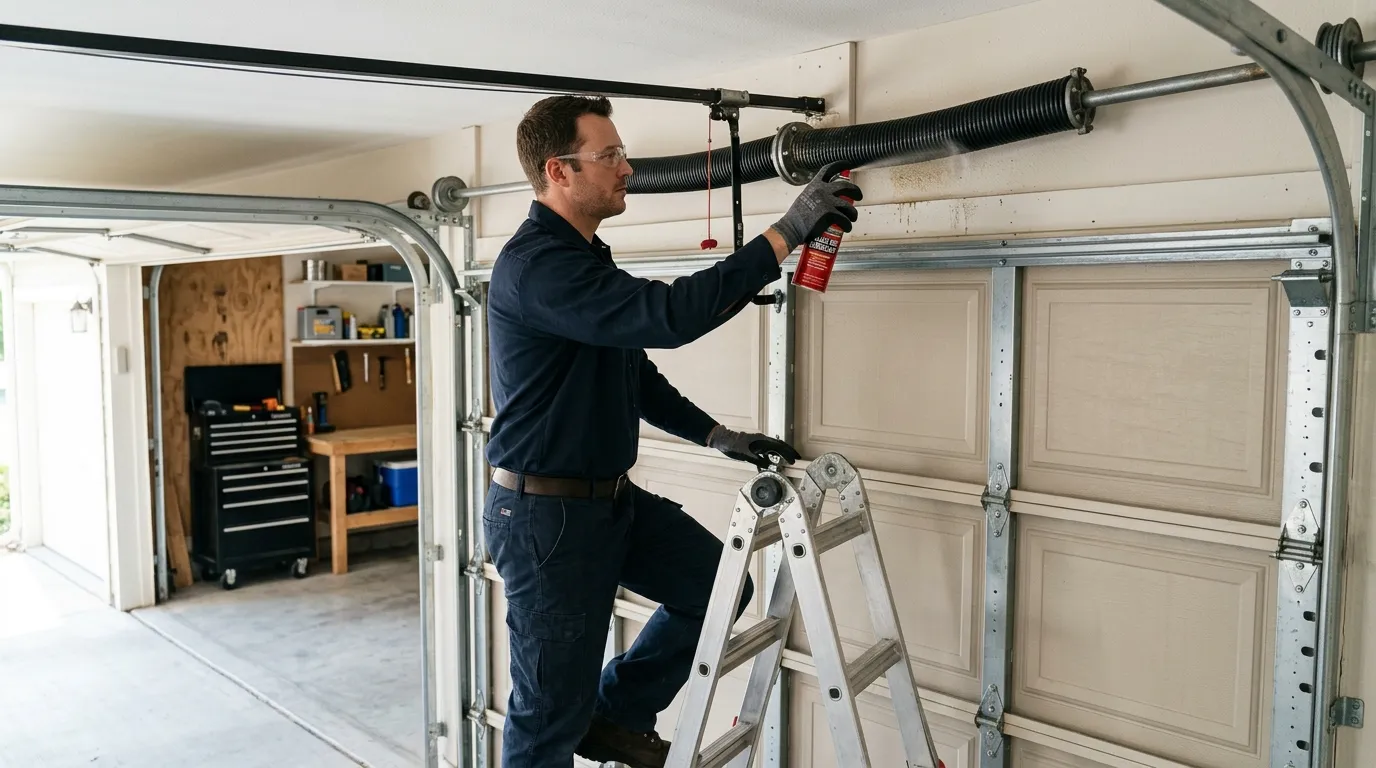
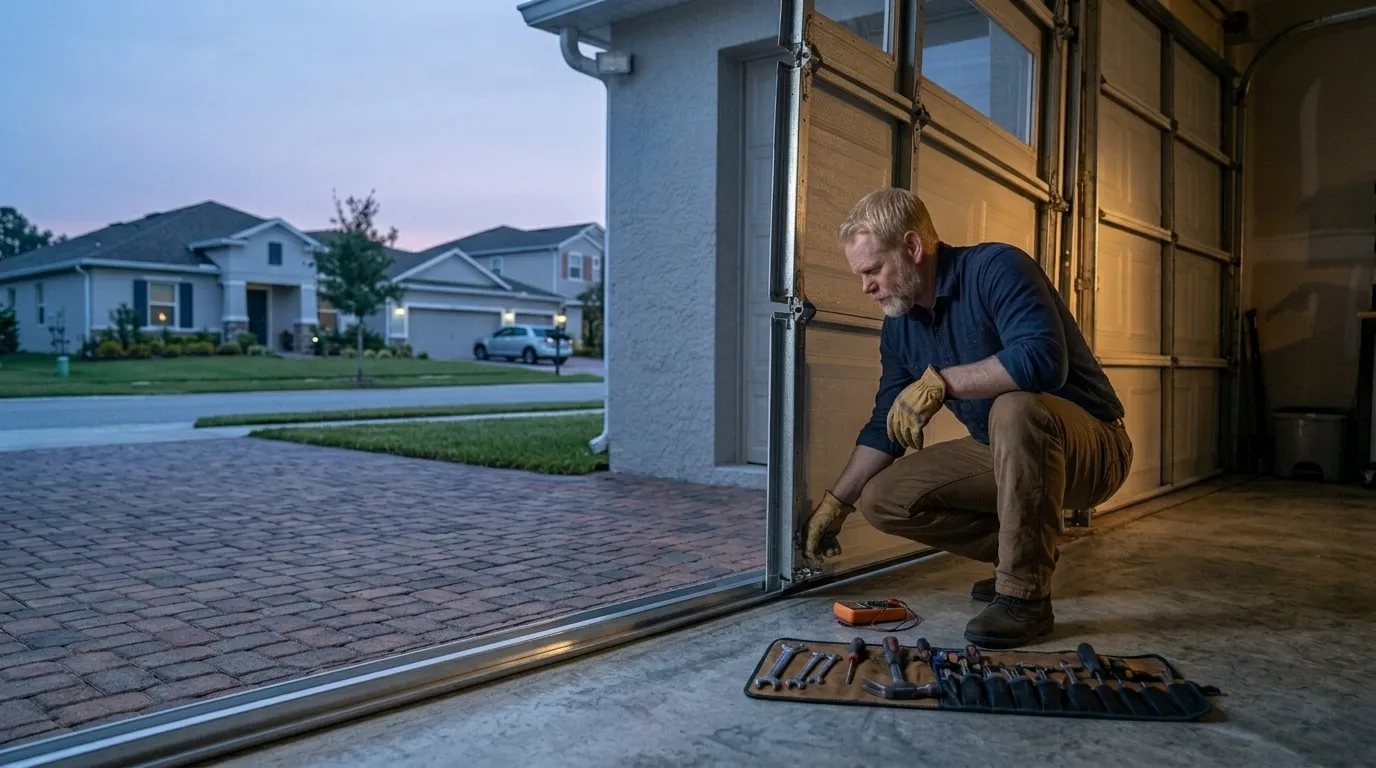
A slower sign is an opener that strains and reverses partway up, or a door that closes with a visible tilt because one spring on a two-spring door has weakened while the other hasn't failed yet. Cables that look loose or frayed near the bottom bracket often show up alongside a tired spring rather than on their own.
Given the age spread of housing across this area - median build year 1963 - these symptoms show up more in homes that haven't had the springs touched since the original install or one prior repair decades back.