The Cost of This Job
We don't quote a number here without seeing the door, and we won't pretend otherwise. What we can tell you is what moves the price on a Libertyville job specifically. Libertyville sits 19 miles from our Morton Grove shop, farther than almost any other stop on our map, which changes how we plan a single opener install here - we're not swinging by on the way to another call, so the trip gets built into the schedule as its own stop rather than a quick add-on.
Beyond the drive, the door itself sets most of the cost. With a median household income of $162,270 across Libertyville's roughly 7,573 households, we see more requests here for openers with smartphone control, battery backup, and quieter belt drives than the bare chain-drive units that move fastest in older, tighter-margin neighborhoods. Those features cost more up front but come with fewer callbacks later.
One honest limitation: if your existing rail or header bracket is out of code for a heavier door, that's an extra line item we won't discover until we're standing in your garage. We'd rather tell you that now than pad an estimate to cover a guess.
What Is on the Truck
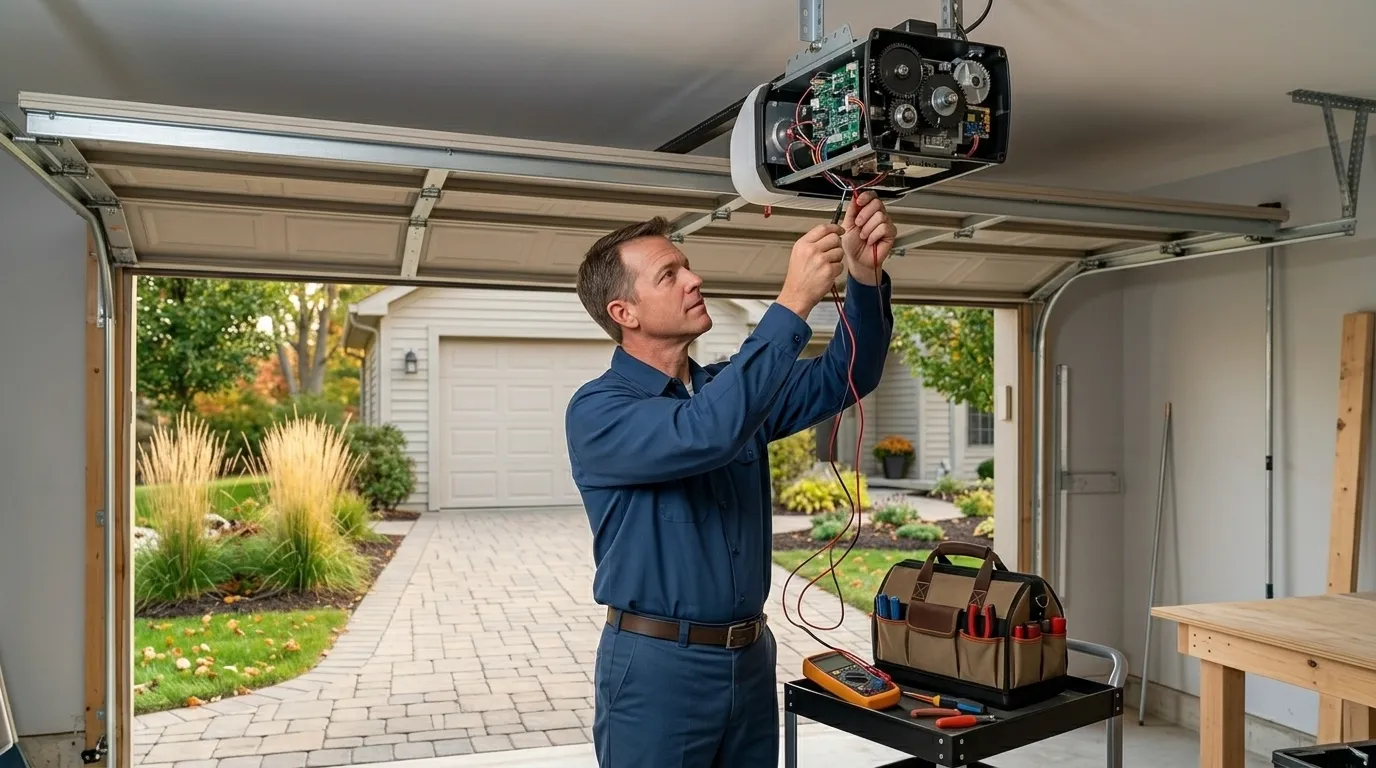
For an opener install we carry the motor unit itself in a couple of drive types - chain and belt - plus rail sections we cut to the door's travel distance rather than force a fixed kit to fit. We stock wall consoles, remotes, and the photo-eye safety sensors that federal code requires on any residential opener, along with the mounting brackets for header framing that doesn't match a modern kit out of the box, which comes up more than you'd think on a door framed decades before the opener was designed.
We also carry battery backup modules, since Libertyville's climate band means winter outages aren't rare, and a dead opener with no manual release is a bad morning. What we don't carry is every accessory on the market - if you want a specific smart-home integration tied to a system we haven't installed before, we'll tell you straight rather than promise compatibility we haven't tested.
Wiring hardware, junction boxes, and the small stuff - bolts, lag screws, vibration isolators - round out the kit so a straightforward swap doesn't stall out over a missing part.
How It Shows Up
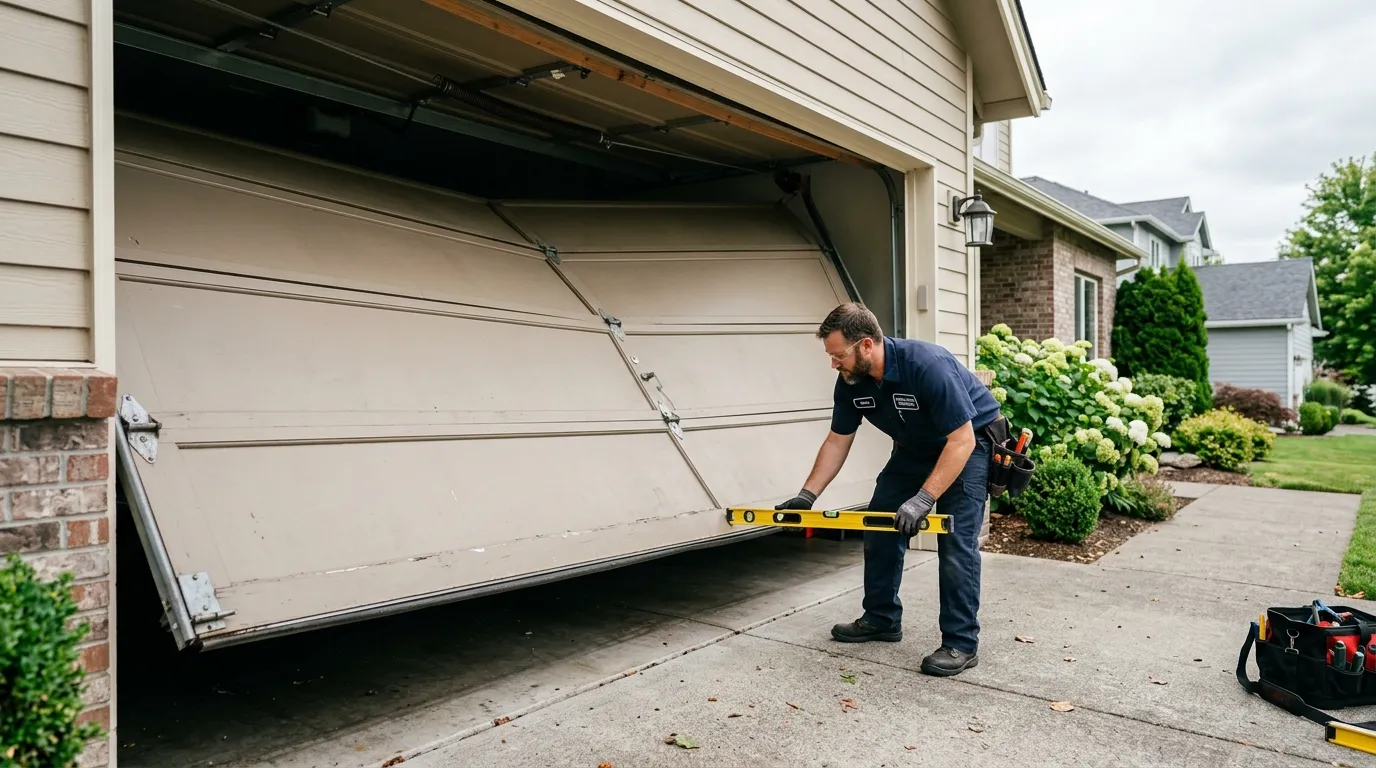
The most common call starts the same way: the opener runs but the door won't fully close, reversing partway up instead. On a house from the 1970s era common here, that's usually a sensor alignment issue made worse by seasonal frame settling, not a motor problem. Second most common is a door that opens on remote but not on the wall switch, which usually traces back to old wiring insulation cracking where it wasn't meant to flex.
Then there's the flat-out dead opener - no light, no hum, nothing. Sometimes it's the logic board, sometimes it's a breaker that's been quietly tripping for weeks and nobody noticed until the door stopped moving altogether. And with the newer, heavier double-car doors more common on Libertyville's later-built garages, we sometimes get called for an opener that runs constantly hot to the touch - a sign the motor's horsepower was undersized for the door weight from day one.
A grinding or slipping sound during travel almost always means the drive gear inside the unit has stripped, which on an older chain-drive opener is a repair not worth chasing - replacement is usually the honest answer there.
How Long It Takes
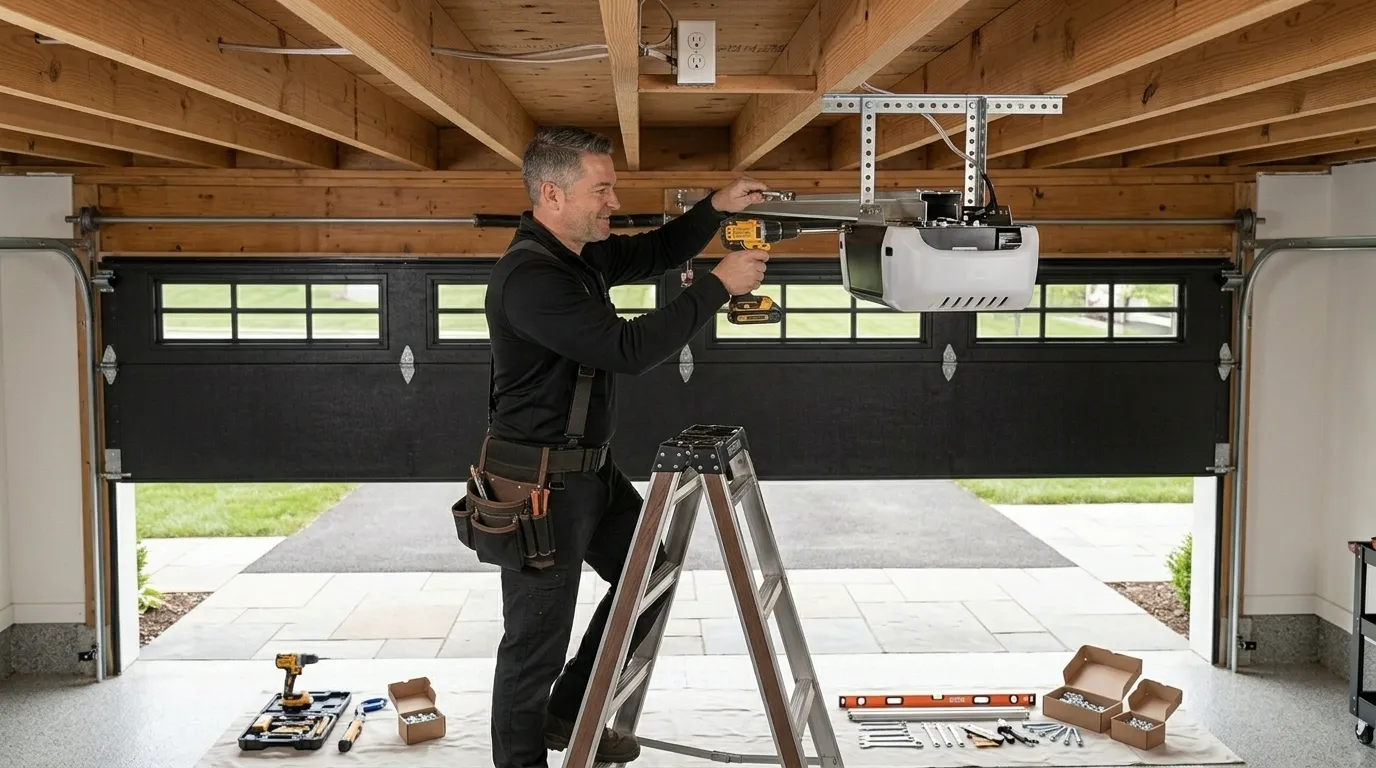
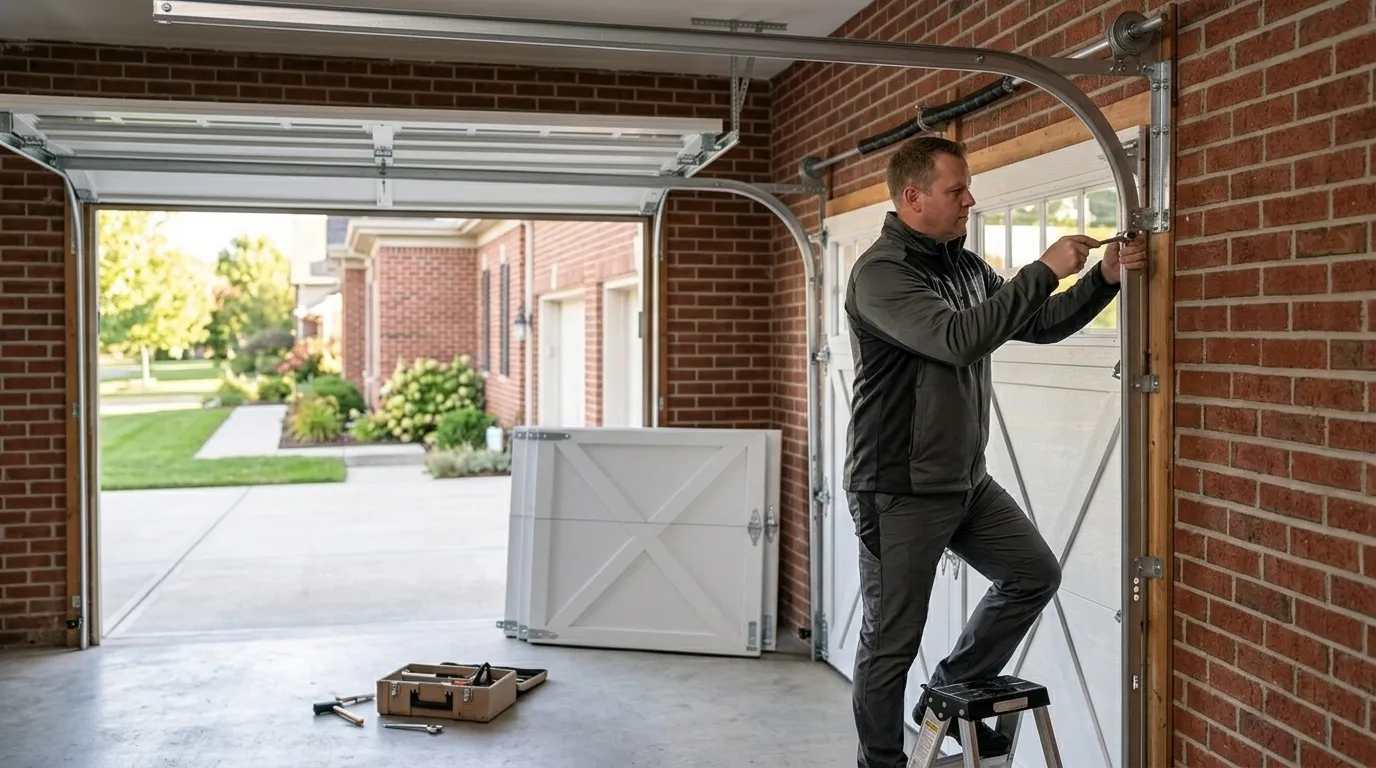
A straightforward opener swap, where the existing rail and bracket are still sound, is a same-visit job - most of the time on site goes into wiring, sensor alignment, and testing the travel limits rather than the mechanical mounting itself. If your door's framing predates the opener kit's design, which happens on a fair number of Libertyville's 1970s-era garages, expect extra time for the bracket work.
We don't give a fixed hour count here because it depends on what's already in the garage - a house with original 1970s wiring and a header that needs reinforcing takes longer than one with a bracket already in good shape. What we can say is that because of the 19-mile trip from Morton Grove, we plan for the full job in a single stop rather than leaving mid-task and coming back, so the time you lose isn't spread across two visits.
If a part isn't something we carry standard on the truck - a specific smart-home bridge, for instance - that's the one thing that turns a same-day job into a scheduled return trip.