What Can Go Wrong
The typical La Grange garage was built around 1951, more than a decade earlier than the 1963 median for the wider service area we cover. That earlier build date means a lot of these garages started life with narrower single doors and lighter steel or wood panels, hung on cable-and-drum hardware sized for a lighter load than what gets bolted onto doors today after an opener upgrade or a panel swap.
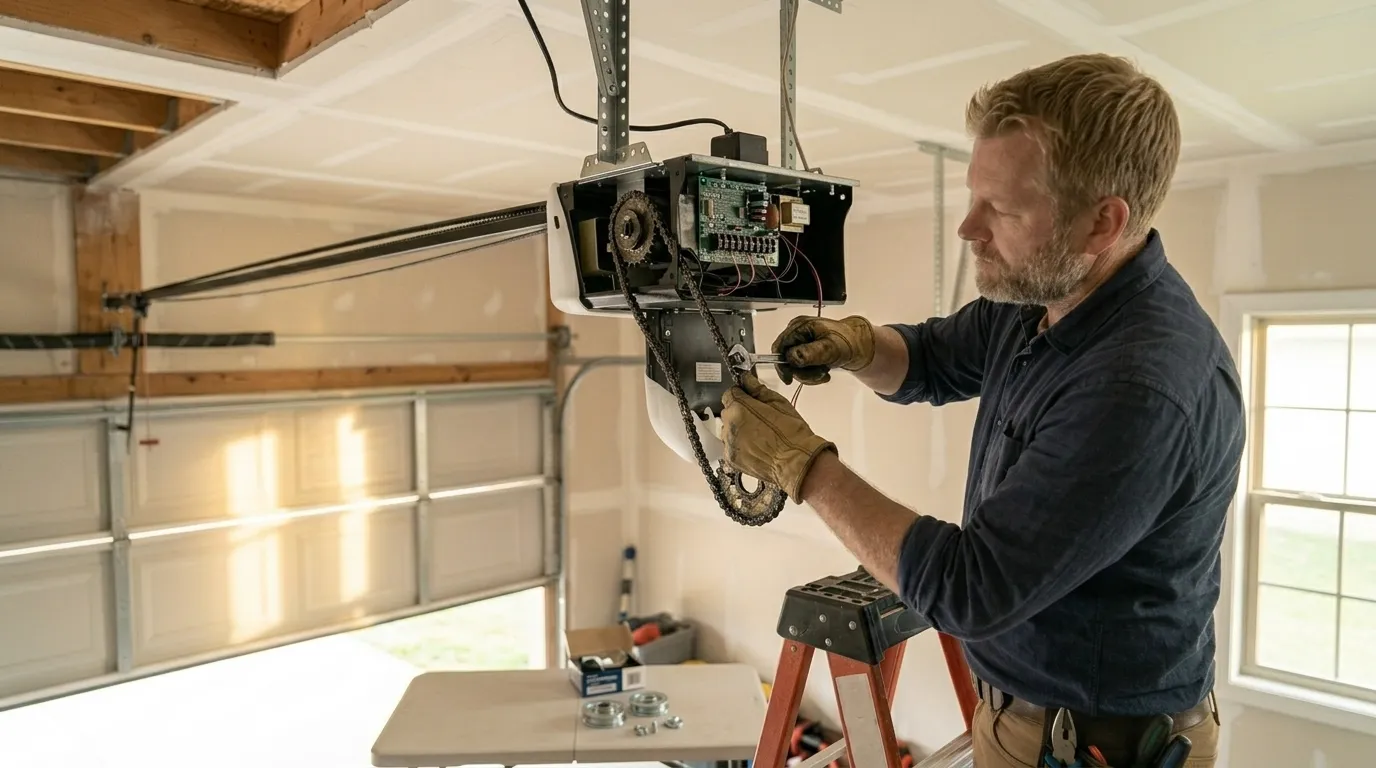
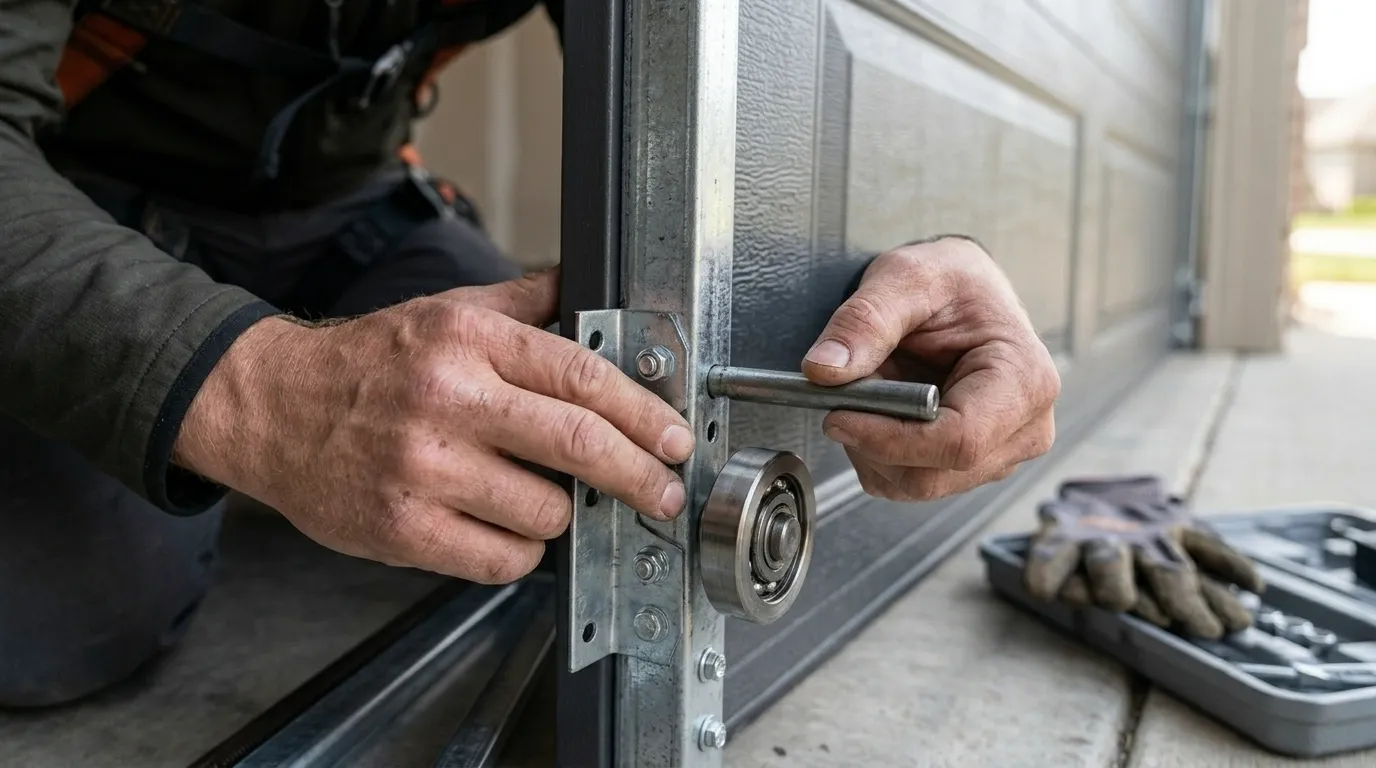
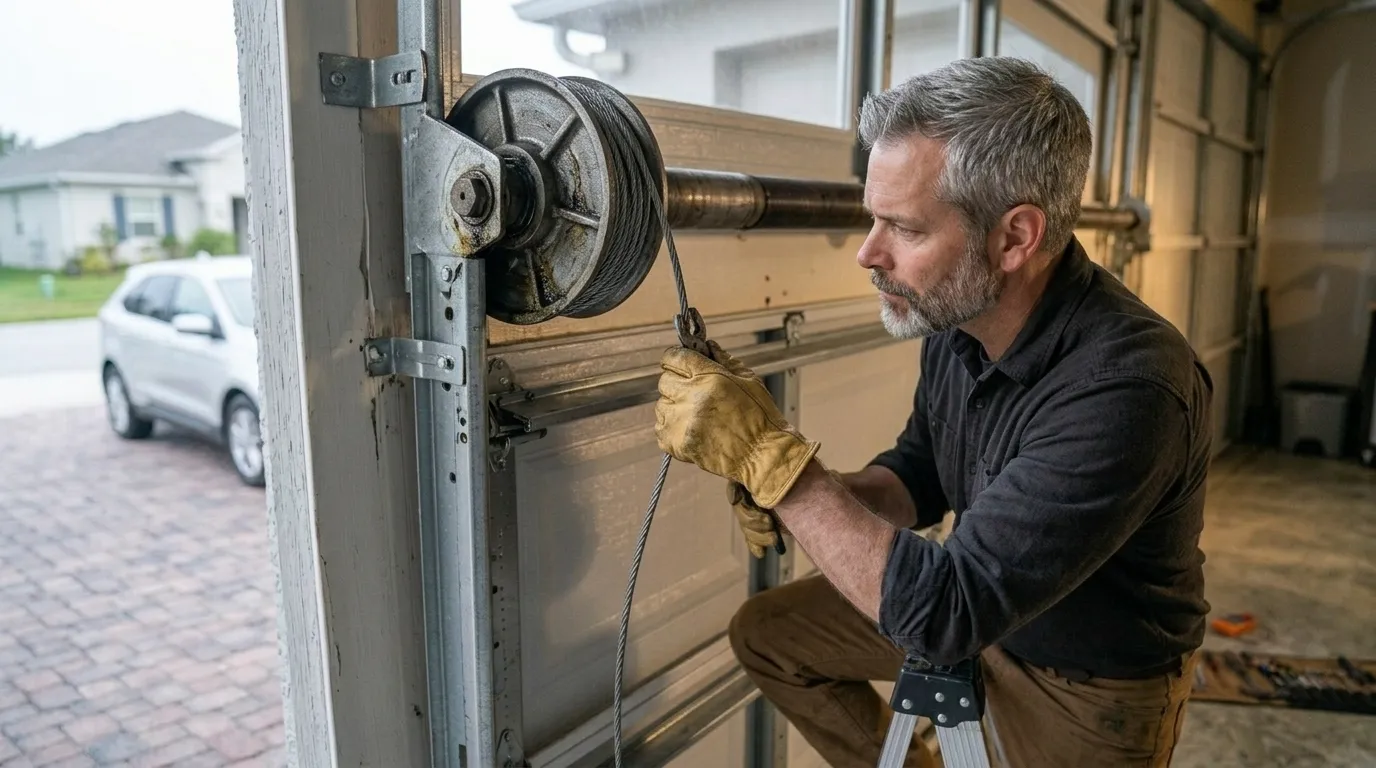
When a heavier replacement door goes onto original-era track and drums, the lift cables end up carrying more weight than the setup was ever designed for. That shows up as fraying at the drum end first, since that's where the cable takes the sharpest bend on every open and close. On older extension-spring setups still found on some of these garages, the cables can also fatigue at the pulley if the pulley itself has never been replaced.
Cold-moderate winters put a second kind of strain on the same cables. Ice on the track or a stiff spring on a frigid morning forces the door to jerk rather than glide, and a jerking start is exactly what shears a weakened cable strand by strand until one morning it just lets go. Neither of these failure paths is unique to any one garage, but they're the two we see most on doors from this era.
How It Shows Up
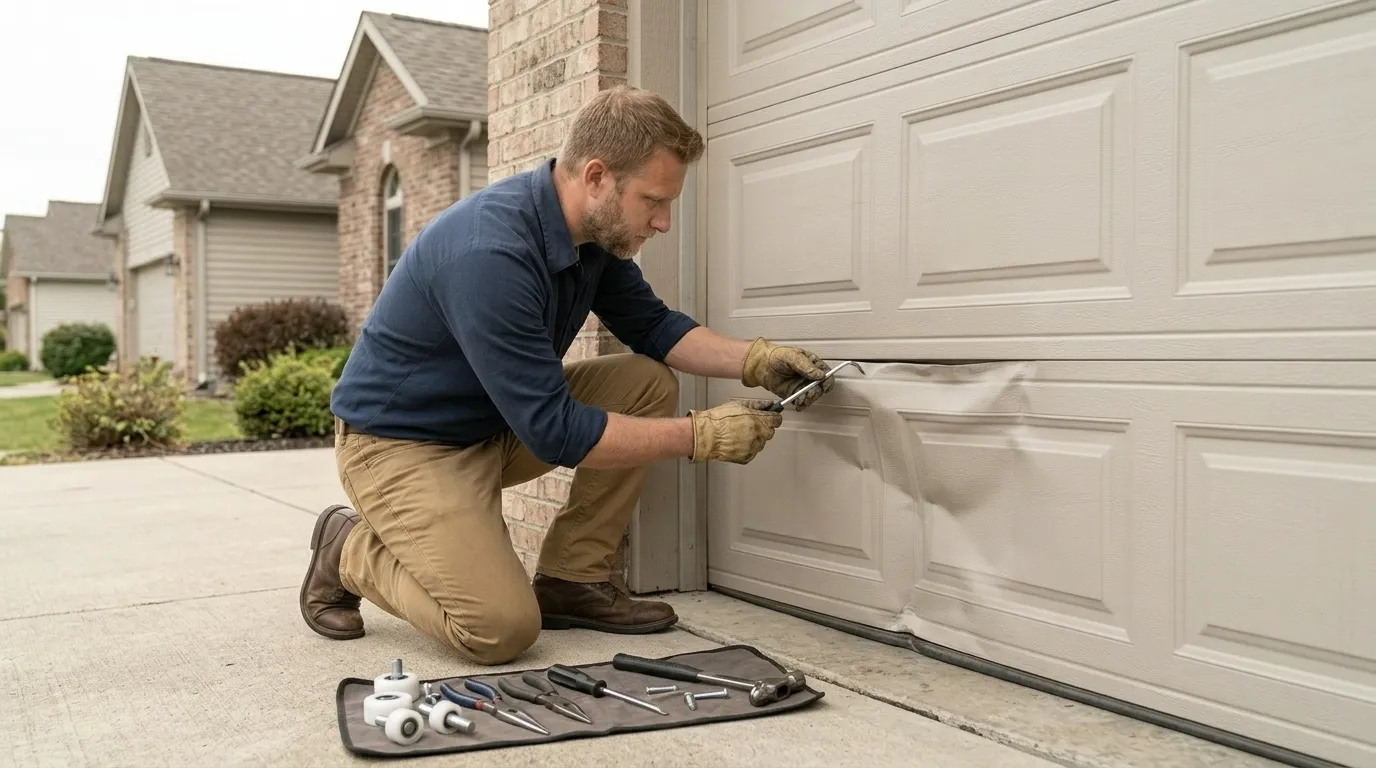
Most cable problems don't announce themselves as a total failure right away. The door starts to hang slightly crooked, dropping faster on one side than the other as it closes, because one cable has stretched or a strand has given out while the other side is still holding full tension. You might hear a light snapping or popping sound near the top corner of the door on the way down, which is often a strand parting under load before the whole cable goes.
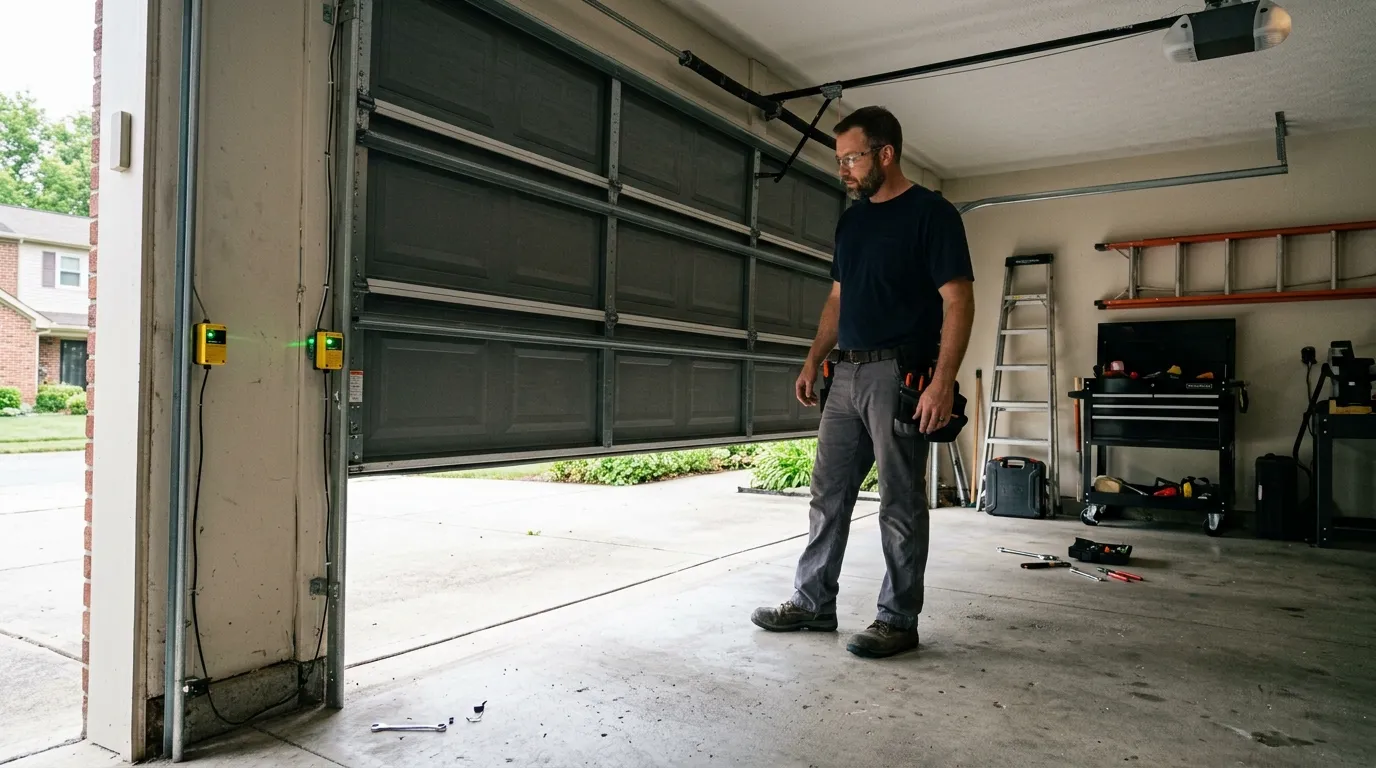
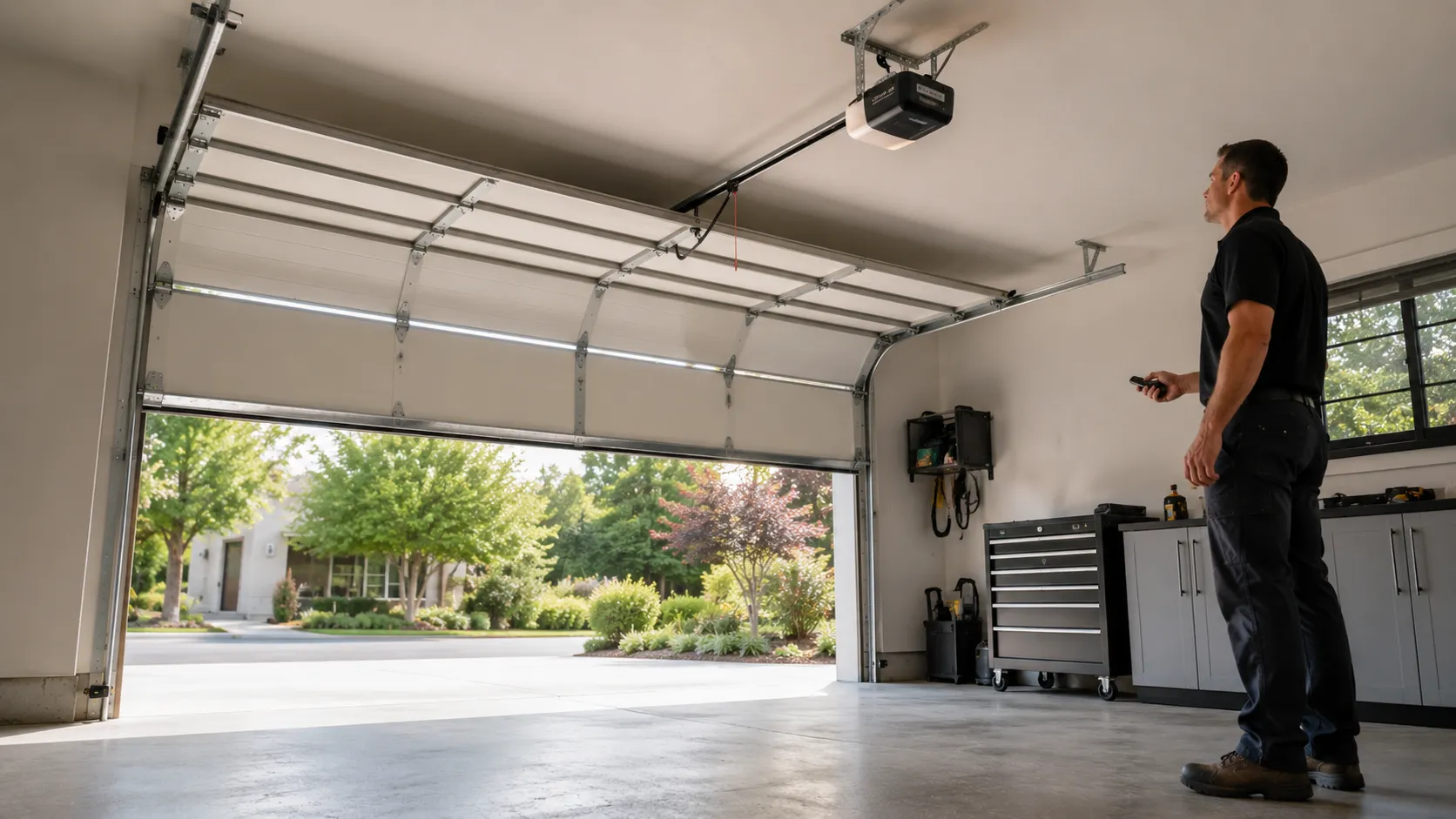
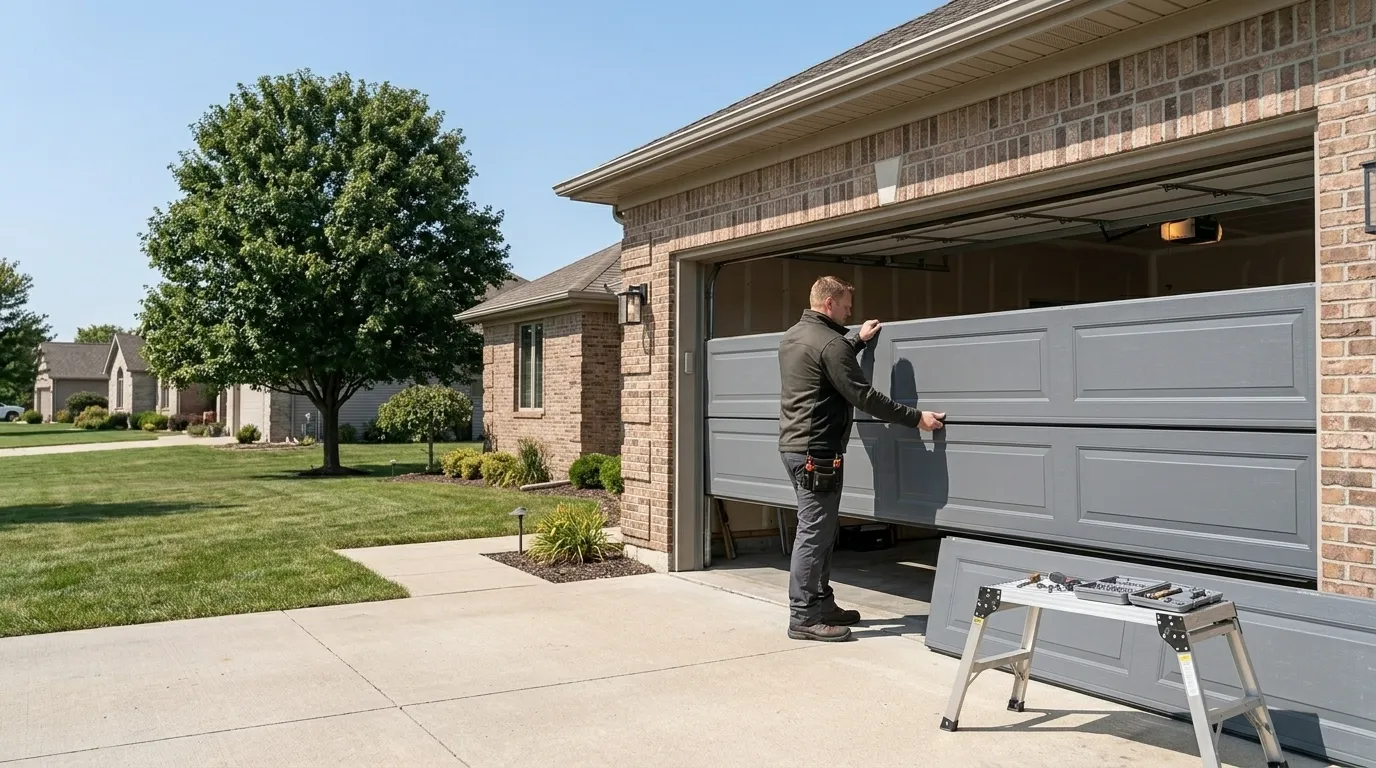
On a fully snapped cable, the door will drop hard and stop, usually stuck at an angle a few inches to a foot off the floor, with one side low and the other still up near the track. If that happens, don't run the opener again. Forcing a cycle on a partially supported door can bend the track or crack a panel that would otherwise have been fine once the cable itself was replaced.
How Long It Takes
A straightforward cable replacement on one side, or both sides together, is a same-visit job once the truck is on site, since the parts involved are standard stock we already carry. Given that we're driving the roughly 17 miles from Morton Grove, plan for that travel time on top of the repair itself rather than a walk-up response.
If the drums or pulleys are worn enough that they need replacing along with the cable, or if the door came off its track when the cable failed, the job runs longer because we're squaring up alignment before we put the door back into regular use. We'd rather take the extra time on site than leave a door that will fail again in six months.