How It Shows Up
The trip from Morton Grove to Villa Park runs about 15 miles, and that drive shapes how a same-day call actually gets scheduled here. We're not around the corner, so when a spring goes on a Tuesday morning, the job gets slotted into the route rather than squeezed in on a whim - which is why calling as soon as the door starts groaning, rather than waiting until it won't move at all, buys real time.
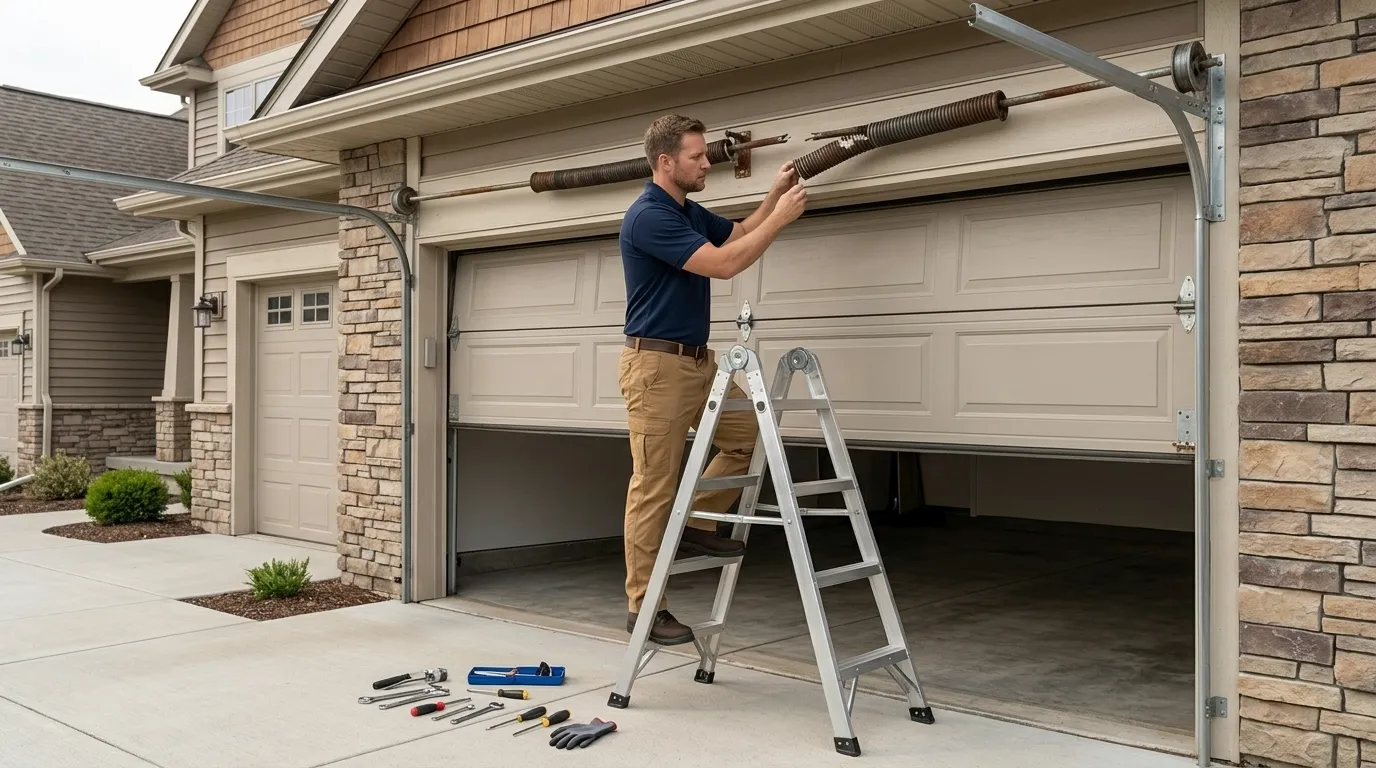
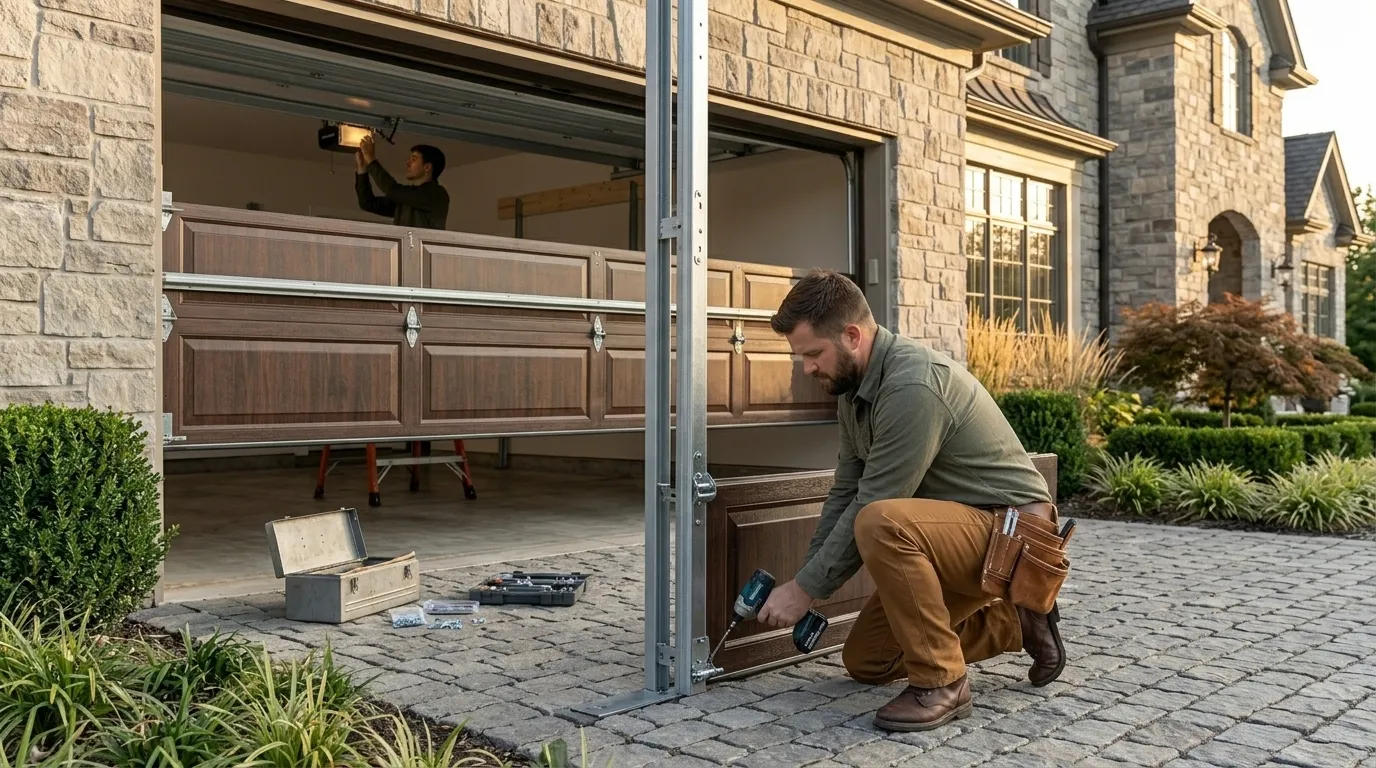
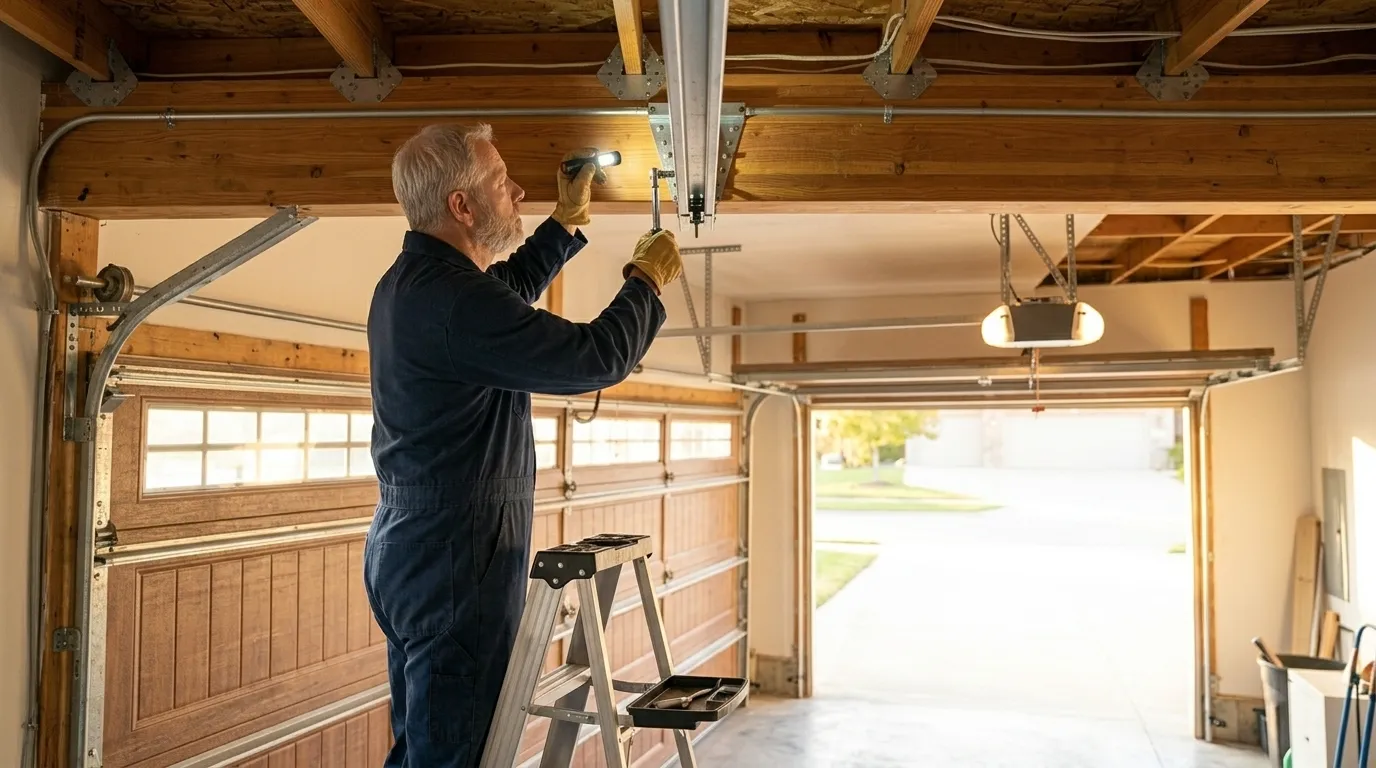
What you actually see: a door that hesitates halfway up, then jerks. A door that slams the last six inches on the way down. An opener that hums but the door doesn't budge. In Villa Park, the median home was built in 1958, five years earlier than the wider service area's 1963 midpoint, which means more of the original torsion hardware still hanging over these driveways than in newer pockets of the territory. That older hardware doesn't fail politely - a cable that's been fraying for months can let go all at once, and a spring that's lost half its coil tension will feel fine right up until it isn't.
Cold snaps make it worse. Steel contracts, grease stiffens, and a spring already carrying decades of cycles has less give left in it. If your door has gotten noisier or slower over the last cold stretch, that's the hardware telling you something, not just age catching up on its own.
The Cost of This Job
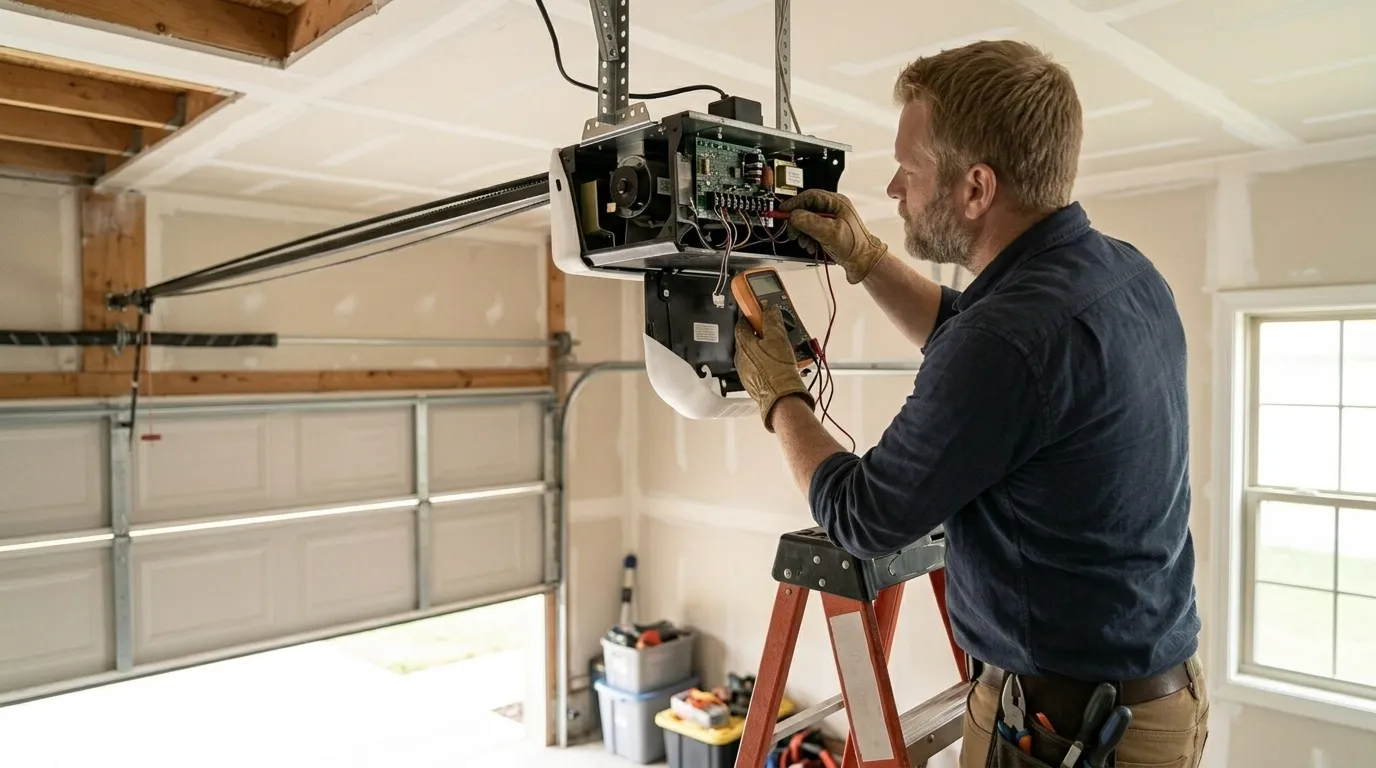
We don't post a flat number here because the two most common jobs - spring replacement and opener repair - land in different price brackets depending on what's actually wrong, and we're not going to make one up to fill this page. What we can tell you is what drives the number: whether it's one spring or a matched pair, whether the drums and cables need replacing alongside it, and whether the opener is a repair or has reached the point where parts for it just aren't made anymore.
Villa Park's median household income sits at $94,698, about $11,000 below the $105,995 median across the rest of the service area, a gap that shows up in how many owners here choose to fix the existing opener rather than replace it outright. That's a reasonable call in a lot of cases - a working motor with a bad gear or a worn sensor is often a repair, not a replacement.
Where it stops making sense is a door original to a 1958-era house with a cracked panel, rusted track, and a spring already replaced once. At that point you're paying to keep patching something that's spending more time broken than not, and we'll tell you that straight rather than keep billing small fixes.
What Can Go Wrong
With roughly 8,403 households in Villa Park, this is a smaller pocket of the territory than most of the other named areas Morton Grove Garage Door Pros covers, and that matters less for the work itself than for how quickly a small problem gets noticed. A door that's slow to close in a busier household gets flagged fast. In a house where the garage sees less daily use, a fraying cable or a slipping roller can go unnoticed until it fails outright - often on the coldest morning of the stretch, when steel is least forgiving.
Cold winters put the same strain on 1950s-era torsion springs that they do anywhere in the region, but on a door already older than most of the fleet, that strain finds the weak point faster. Watch for a cable strand starting to unravel near the drum, a bottom bracket working loose, or an opener that reverses for no reason - that last one is often a failing sensor, not the motor itself, and it's a cheaper fix if it's caught before someone forces the door manually and bends the track instead.