Getting It Booked In
We run this out of Morton Grove, about 15 miles from Brookfield, so a commercial call here gets scheduled rather than dropped in same-day the way a job five minutes from the shop might be. Tell us the building's age when you call - Brookfield's commercial stock leans older than a lot of what we cover, with plenty of structures going up around 1952, well before the wider service area's median build year of 1963. That gap matters for parts. A door and track system installed in the early '50s often isn't the same gauge or mount pattern as something from the '70s, so we ask up front so the right stock is on the truck before we drive out, not after. If your building has a loading dock or a rear service door that's been swapped out over the decades, mention that too - mixed-era hardware on one property is common here and it changes what we bring.
What Causes It Around Here
A building put up around 1952 was very likely built with a basic slab door on exposed track and a hand-crank or simple chain-hoist lift - no torsion spring cushioning, no insulation, minimal weather seal. Decades of Chicago-area cold cycling that steel through expansion and contraction is what breaks it: track pulling away from a jamb that's shifted slightly over 70 years, or a cable that's worked past its rated cycles on hardware nobody's updated. In a cold-moderate climate like this one, that steel also picks up condensation and rust faster on the older, thinner gauge doors than on anything installed post-1990. We see this pattern more in Brookfield's older commercial buildings than in newer construction nearby, where thicker steel and enclosed track hold up longer against the same weather.
What Is on the Truck
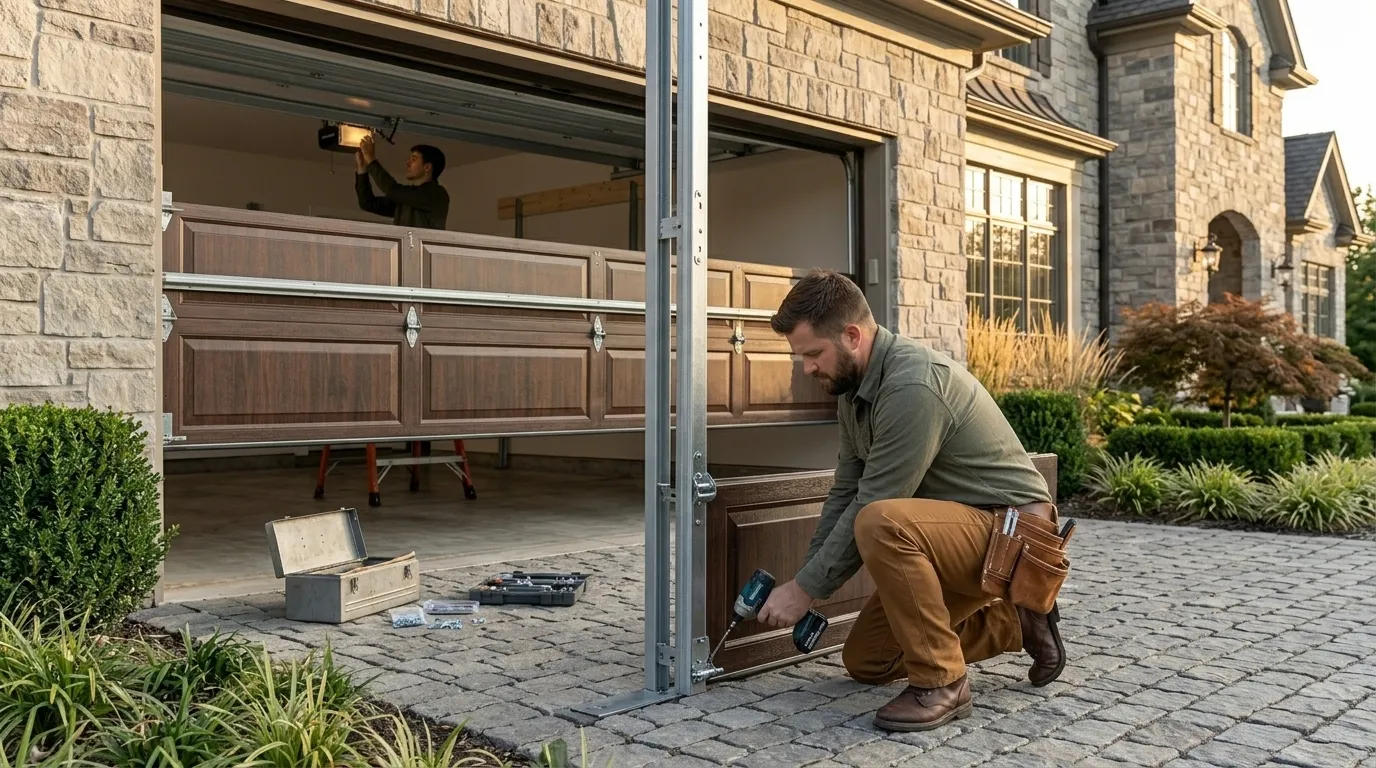
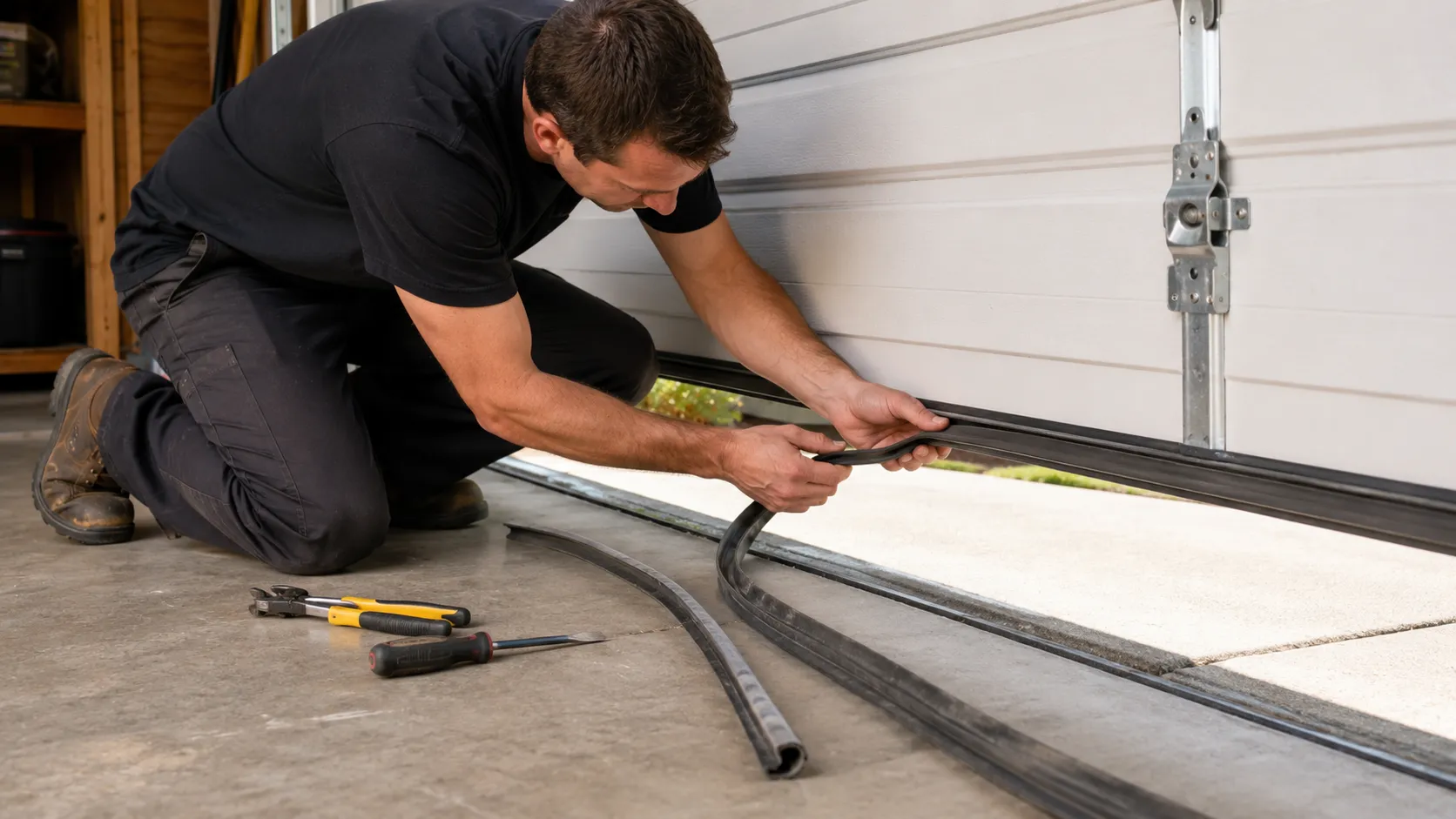
For Brookfield calls we carry stock sized for both eras - the standard commercial panel widths common since the '70s and '80s, plus the narrower jamb brackets and older-pattern track hardware that shows up on buildings from the early '50s. We bring torsion springs rated for heavier commercial slabs, chain and belt drive operators for dock doors, and a set of weather seal stock since older openings here rarely have any left worth reusing. What we don't carry as standard stock is a replacement for a fully custom 1950s-era panel - those sometimes need to be special-ordered, which we'll tell you plainly on site rather than promise a same-visit fix we can't deliver.
What Can Go Wrong
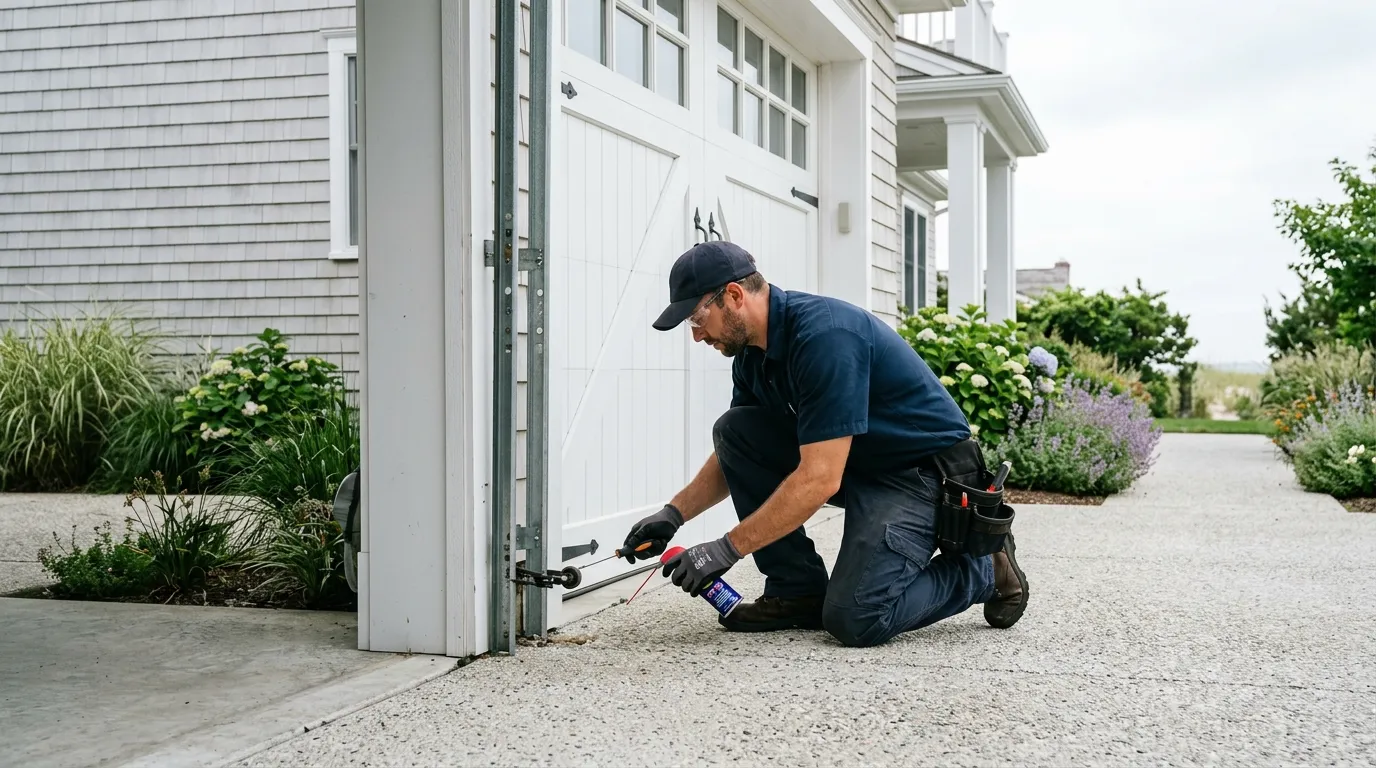
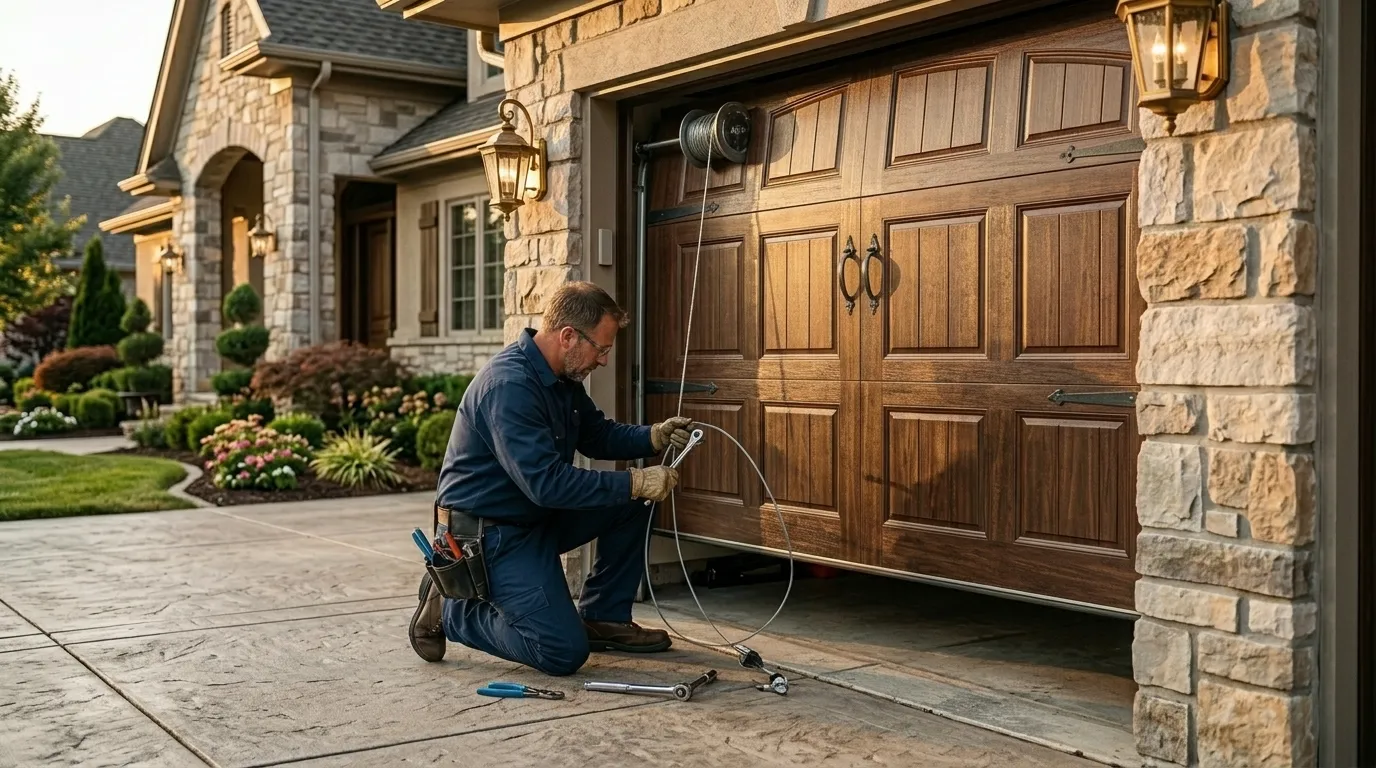
The most common failure we see on Brookfield's older commercial stock is a cable or hinge giving out mid-cycle on a door that's been running on original or near-original hardware for 70 years - the building's median age of 1952 means a lot of that hardware has simply outlasted its rated life. Cold-moderate winters here also stiffen old grease and seals, which is why a door that worked fine in October can bind or stall by January. The other issue is cost creep: once we're in and find a header opening built to a nonstandard 1950s size, replacing the door sometimes runs into needing custom trim work, which changes the estimate from what a standard commercial swap would cost. We'll flag that before starting, not after.