Getting It Booked In
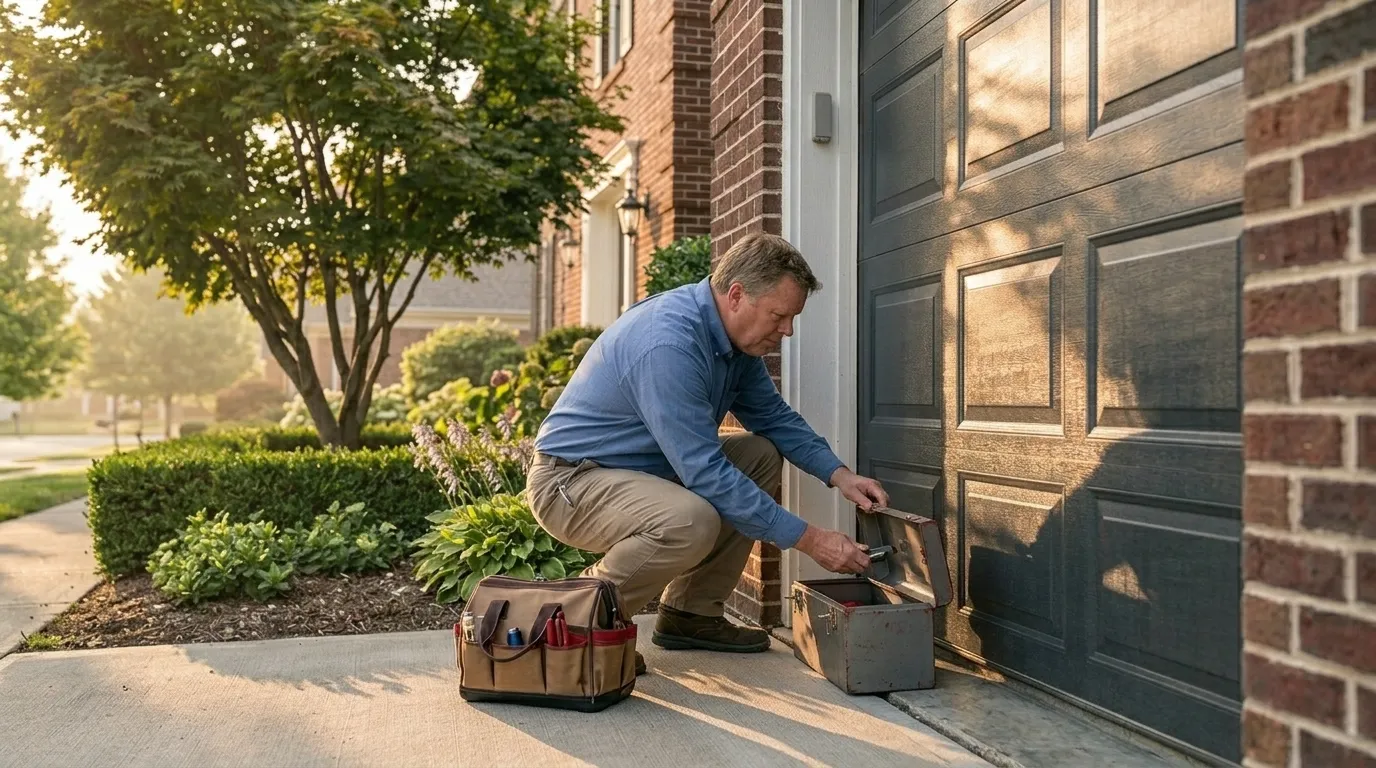
Brookfield sits fifteen miles from our Morton Grove base, on the far edge of the routes we run, so we ask for a bit more lead time to line the trip up with other calls headed that direction rather than promise a same-day window we can't back up from that distance. Tell us the make of your opener and roughly how old the door looks when you call - for a house built around 1952, that usually means original hardware, and knowing that before the truck leaves saves a second trip for a part we didn't bring. We book by phone, not by guesswork on-site, because a lot of these doors were never touched after the original install and the fix depends on what's actually up there. If you've got a torsion spring that's already let go, say so first - that's the call we move up, not the one we schedule around.
What Causes It Around Here
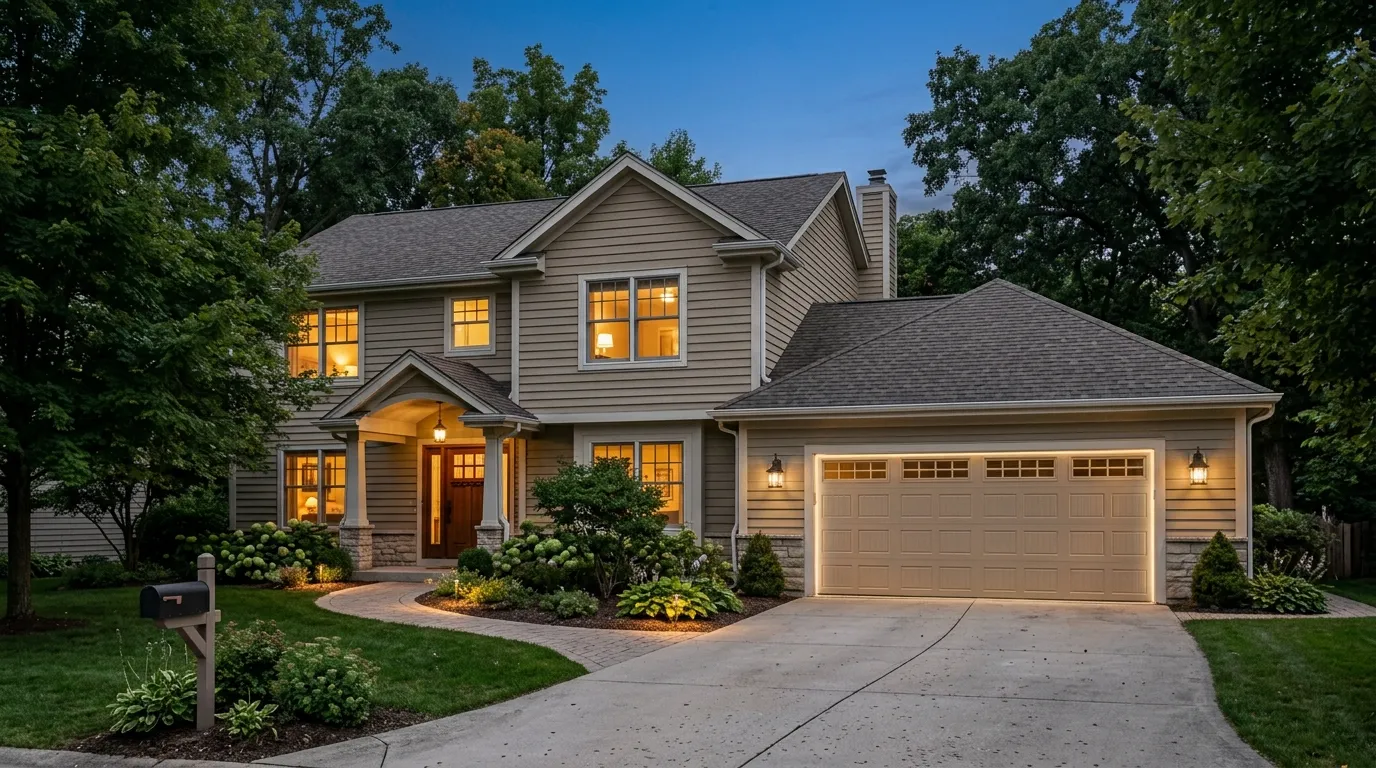
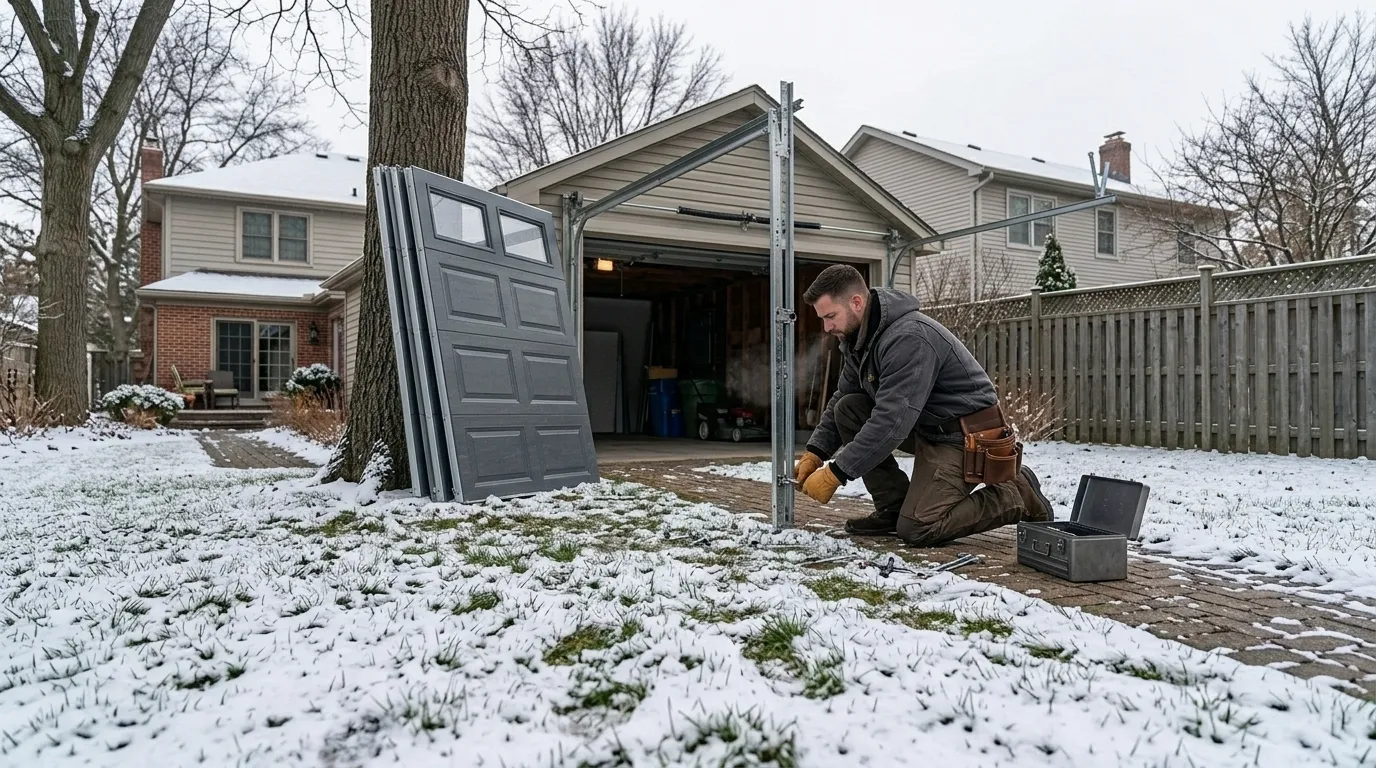
Most houses on this stretch of Brookfield went up in 1952, eleven years earlier than the service area's overall 1963 median, which puts a lot of original steel doors and non-insulated panels still hanging on old track. That vintage came with torsion springs sized for lighter, uninsulated slabs - when an owner later swaps in a heavier insulated door without upgrading the spring, the opener starts straining on every lift, and that's the service call we see most from this pocket. Winters here run the same cold-moderate swings as the rest of the region, and steel that's flexed through seventy-plus freeze-thaw cycles doesn't forgive being asked to lift more weight than it was wound for. We also see a fair number of cables frayed at the drum from decades of use with no lubrication schedule - nobody's fault, just a part that outlived the maintenance habits of the era it was installed in.
What Is on the Truck
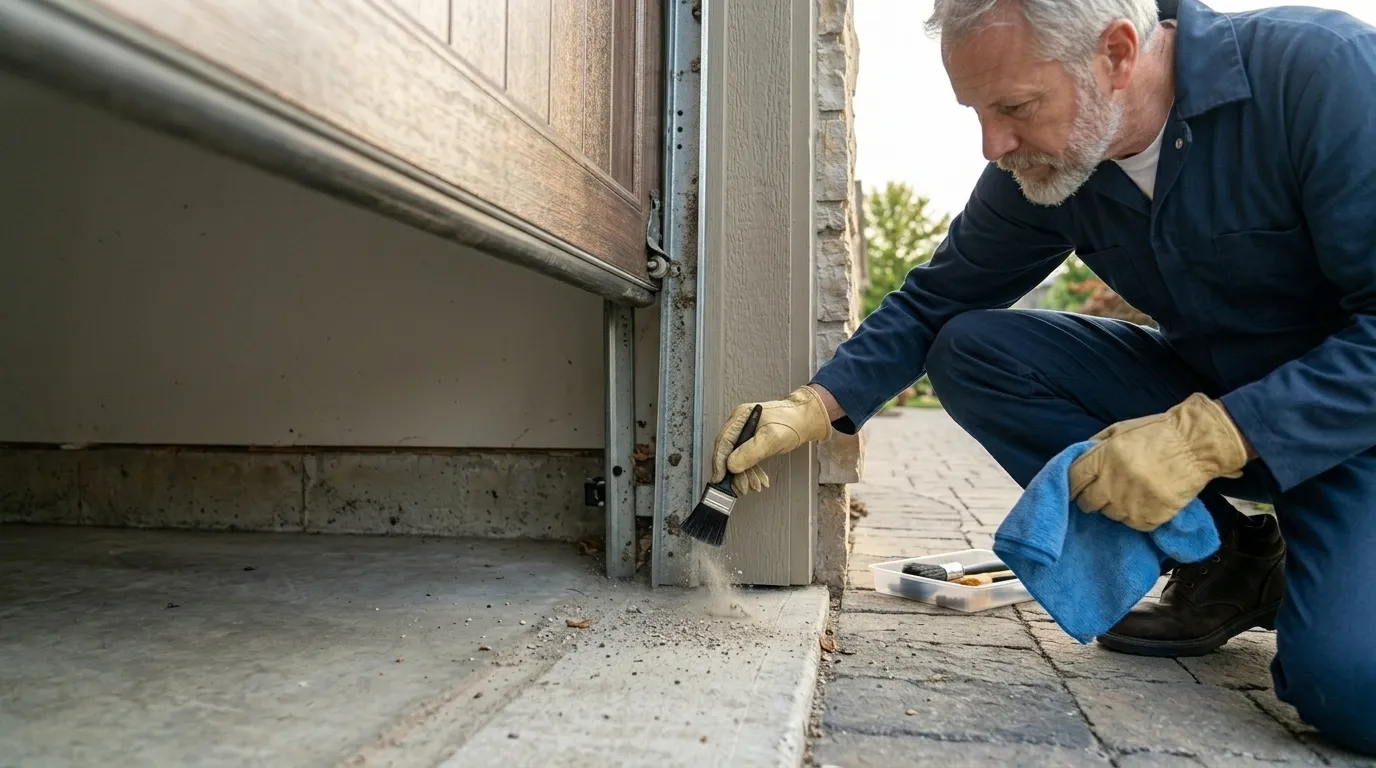
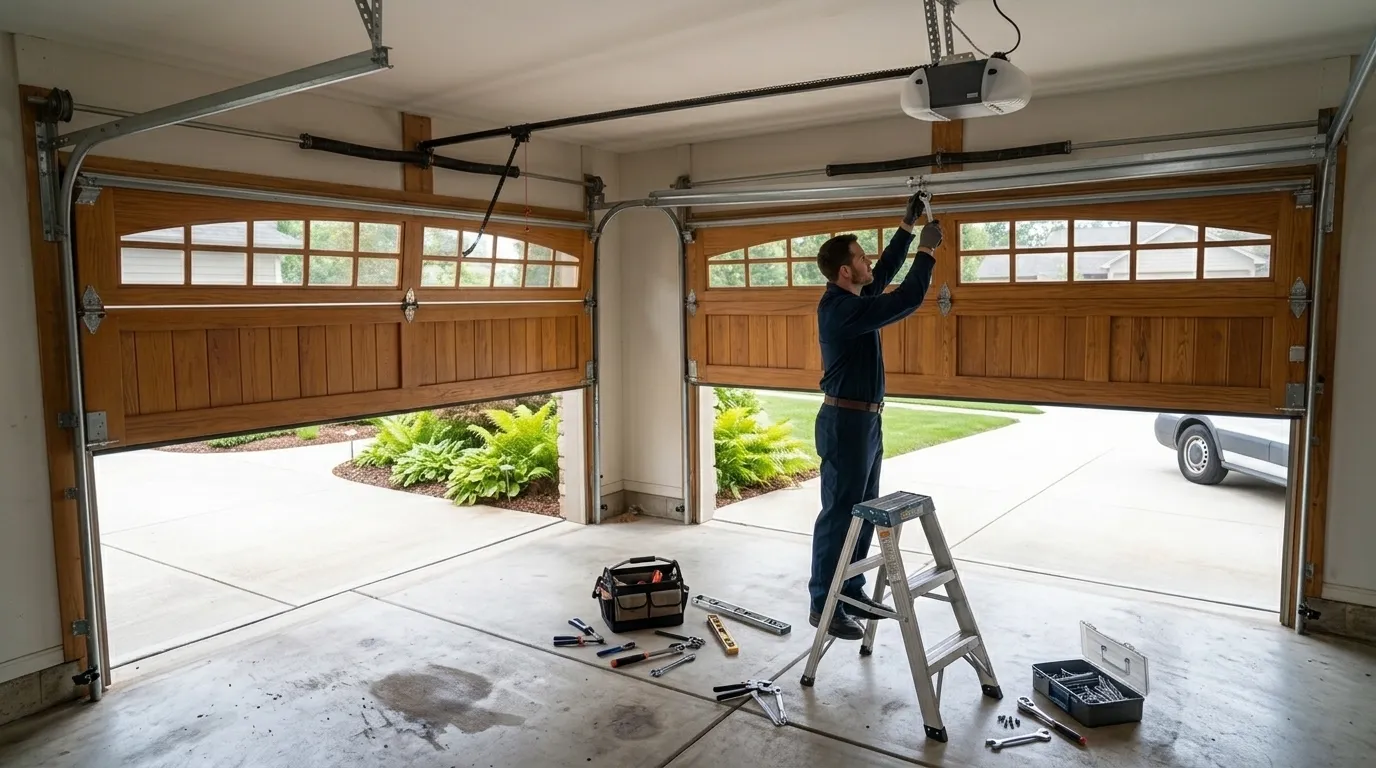
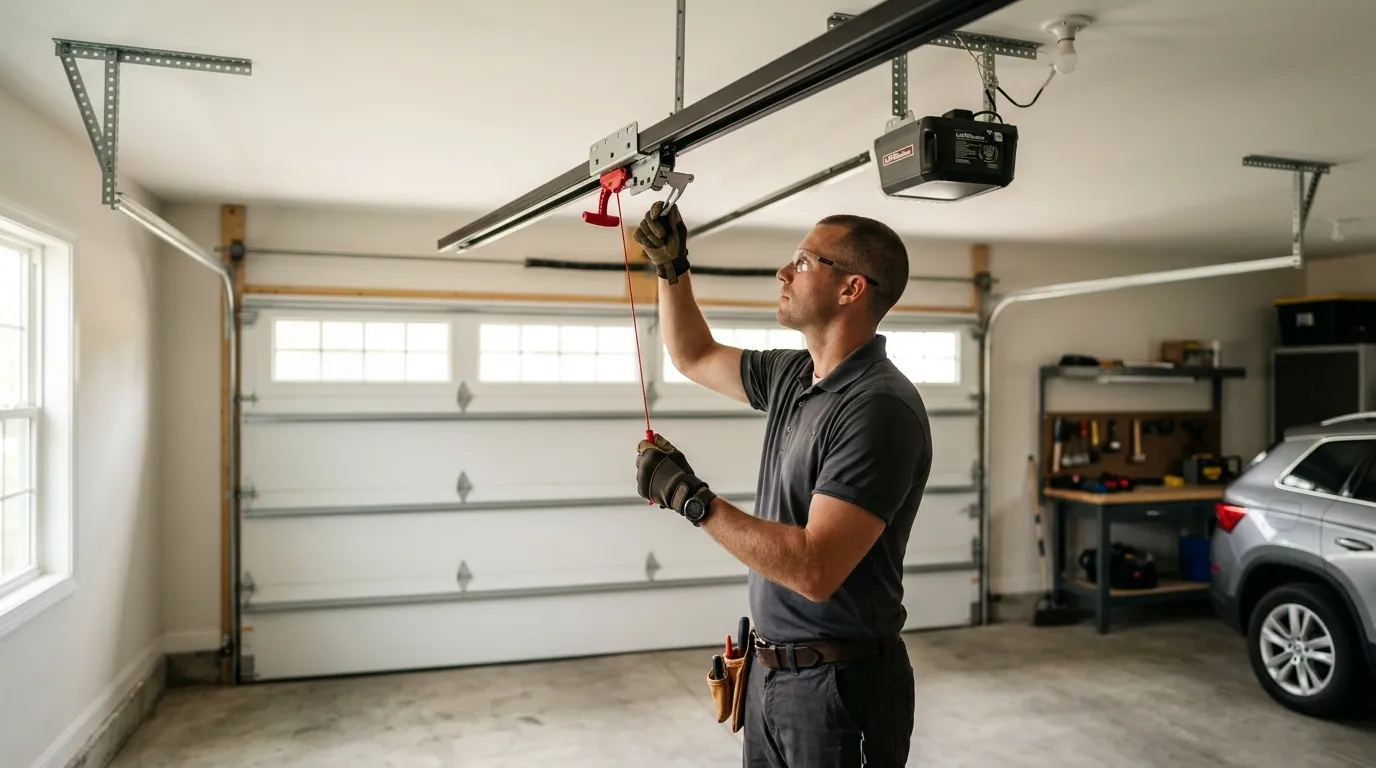
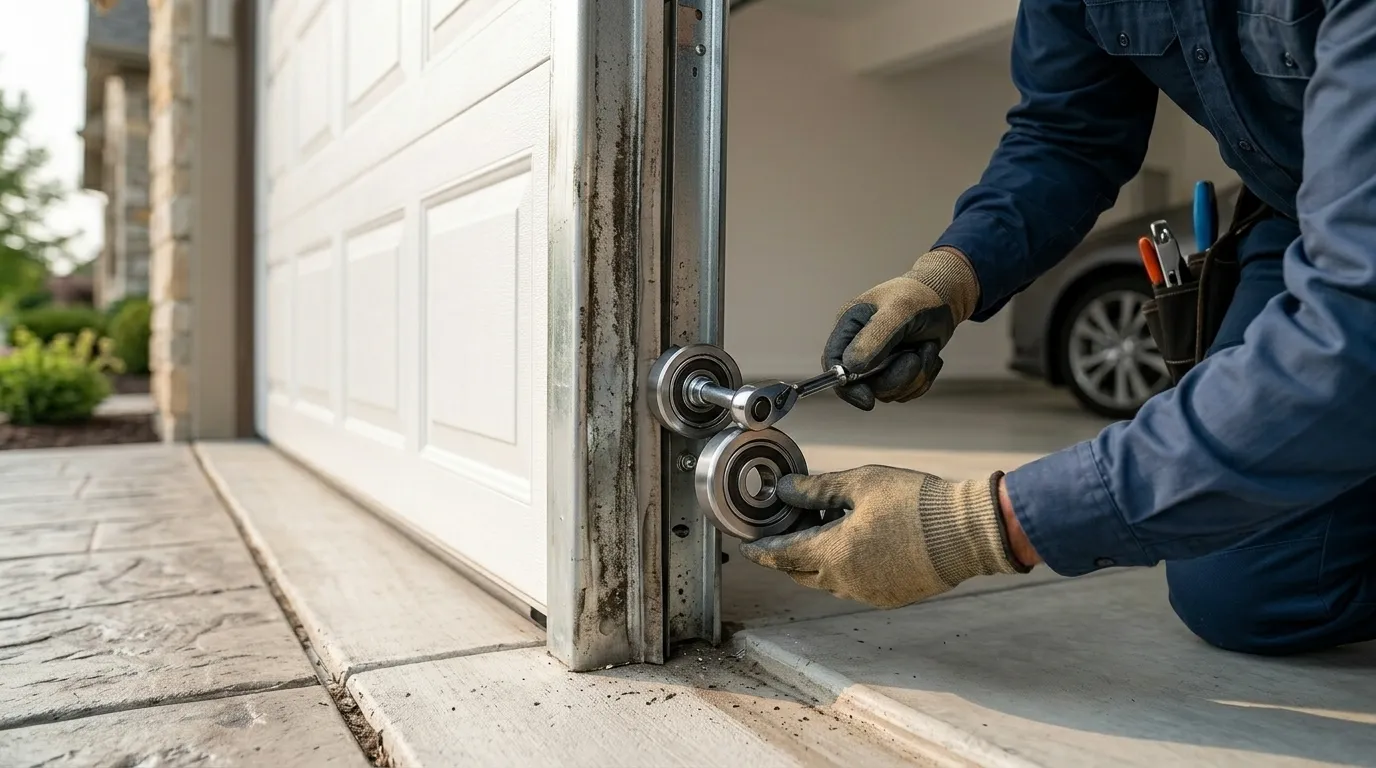
For a Brookfield call we load torsion springs across the common older sizes, standard-lift cable and drums, and a couple of universal openers, since guessing the exact original brand on a house this age isn't worth the bet. We carry track sections and rollers too, because bent track from years of a door binding is as common a fix as the spring itself once we're under the hood of one of these systems. What we don't carry is a stock of obsolete single-panel doors from the 1950s - if yours is cracked or rusted through, that's a special order, and we'll tell you the lead time on the spot rather than pretend we can swap it same visit. Weatherstrip and bottom seals ride along too, since a door that age has usually lost most of its original seal to age and sun, not damage.
What Can Go Wrong
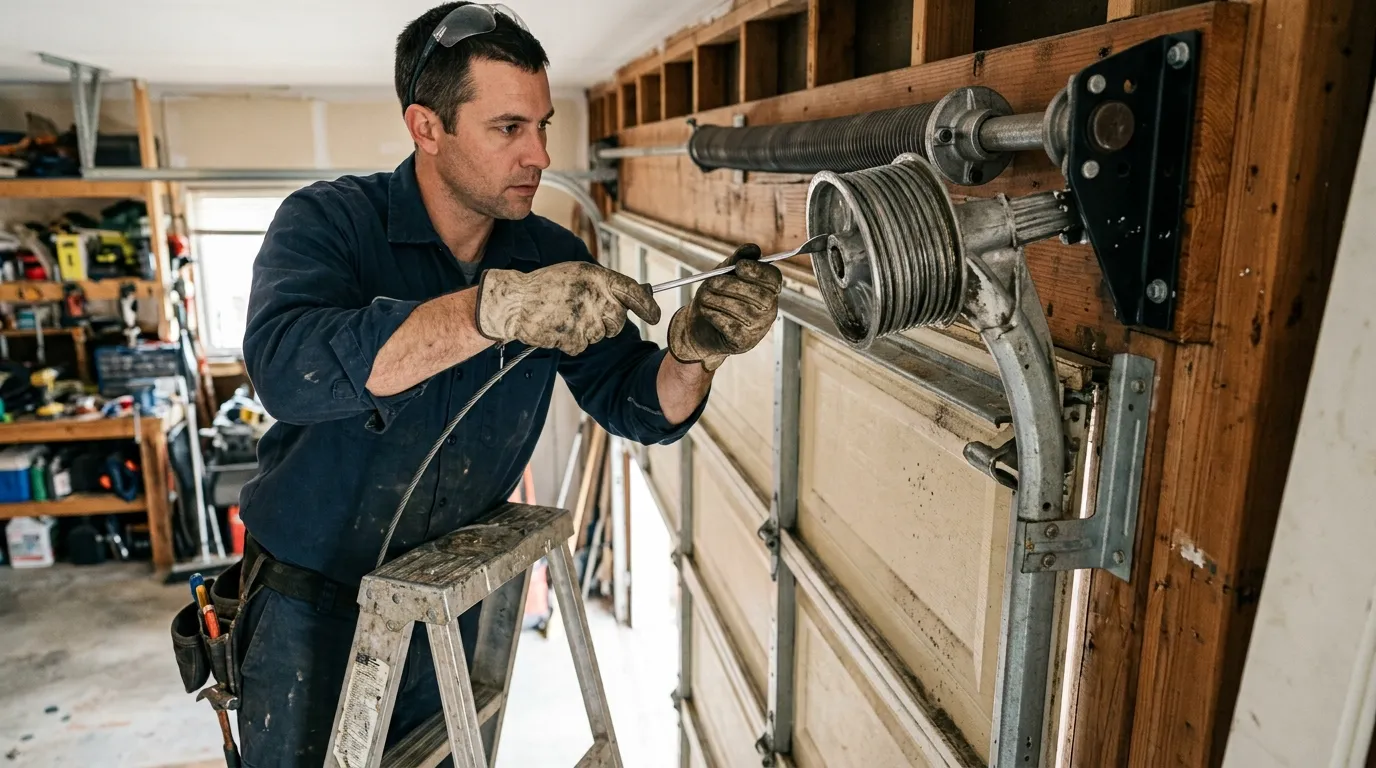
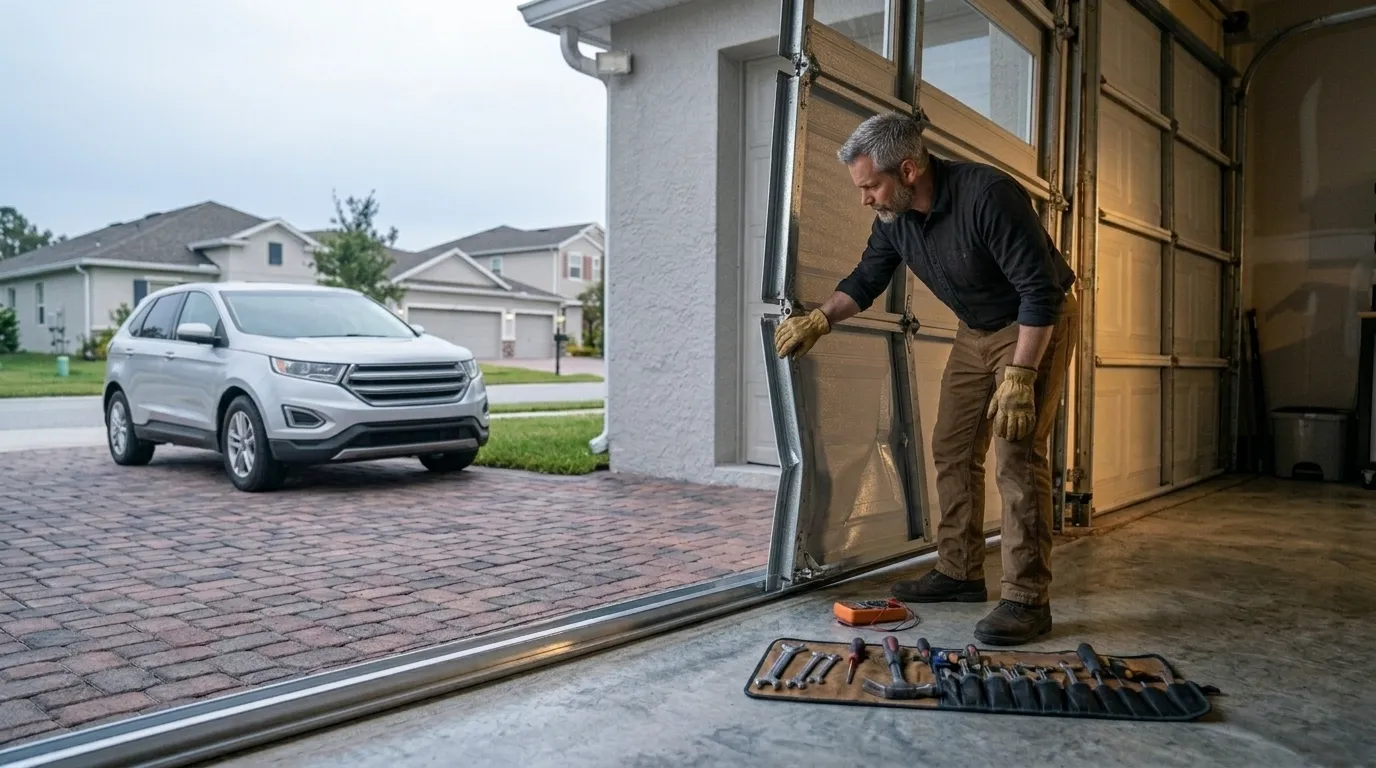
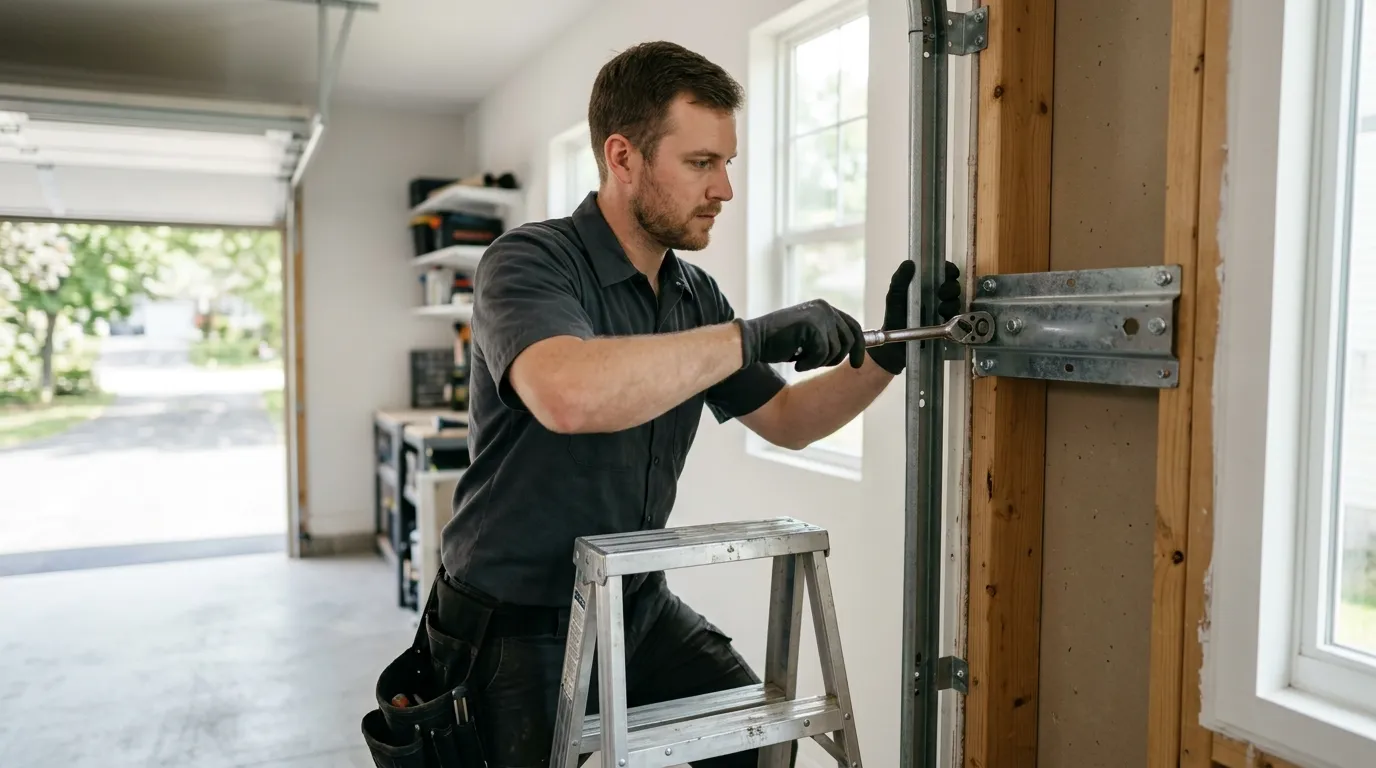
On a door this old, the failure that catches owners off guard is usually the cable fraying at the drum rather than the spring snapping outright - it goes quiet, then one day it doesn't hold, and the door drops crooked instead of coming down straight. We also see brackets that were fine for seventy years suddenly pull loose from a jamb once the wood around the lag bolts has dried and shrunk, which is a carpentry problem as much as a garage door one, and worth flagging honestly rather than just re-driving the same bolts into the same soft wood. Openers from the last upgrade cycle - often installed decades after the original 1952 door - sometimes outlive the door itself and get asked to lift a heavier replacement panel than they were rated for, which burns out the motor early. None of that is dangerous to diagnose over the phone, but it's not something we'll guess at without seeing the door.