
Getting It Booked In
We run this call out of Morton Grove, about 15 miles from Brookfield, so a repair here goes on the route rather than getting a same-hour drop-in. When you call, tell us the door's symptom - won't open, opener runs but door doesn't move, spring snapped, panel dented - and whether the door is original to the house. Brookfield's housing mostly dates to around 1952, a good decade earlier than the 1963 median across the wider area we cover, and that age tells us before we even arrive whether we're likely dealing with older torsion hardware or a replacement system some prior owner already put in. That one detail changes what we load on the truck and how long we book the job for. We'd rather ask two extra questions on the phone than show up short a part. If the door has already been worked on by someone else and you're not sure what's original, that's fine to say - it just means we bring options instead of assumptions.
What Causes It Around Here
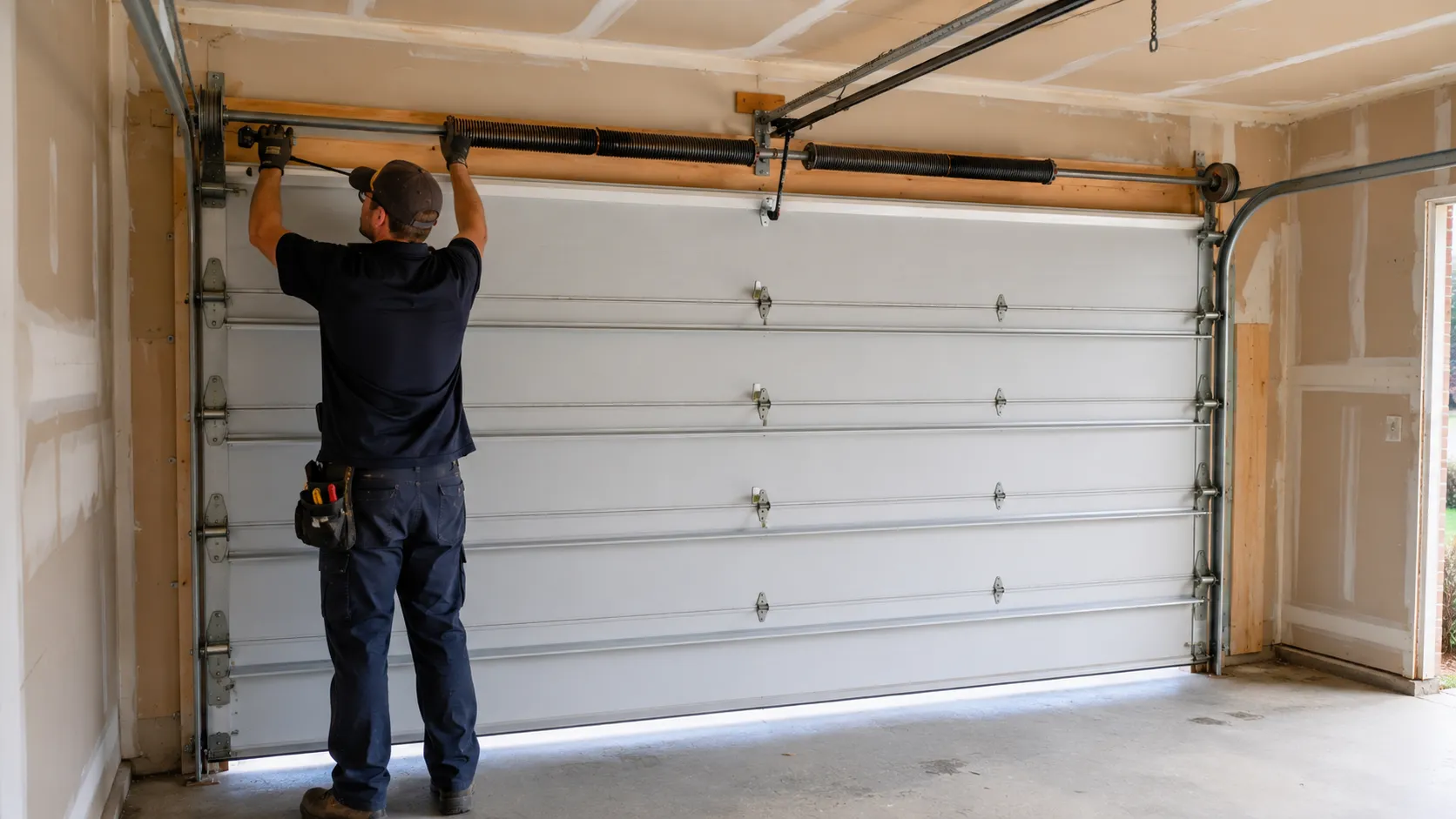
With a median build year around 1952, a lot of Brookfield's garages predate the double-track torsion systems that became standard later in the area's 1938-1996 range. That means original springs sized for lighter, thinner doors, sometimes single-panel wood doors that were never meant to carry the insulated steel replacements many owners have since installed on the same old track. When a heavier door goes on an old frame, the spring wears out faster and the rollers take more stress than they were built for - that's the pattern we see repeatedly on these older jobs, not just wear from age alone. Cold winters put extra strain on any spring, but on hardware this old the metal fatigue was already further along before the season even started. It's a mismatch between original engineering and later upgrades, and it's specific to houses of this era, not something newer construction runs into.
What Is on the Truck
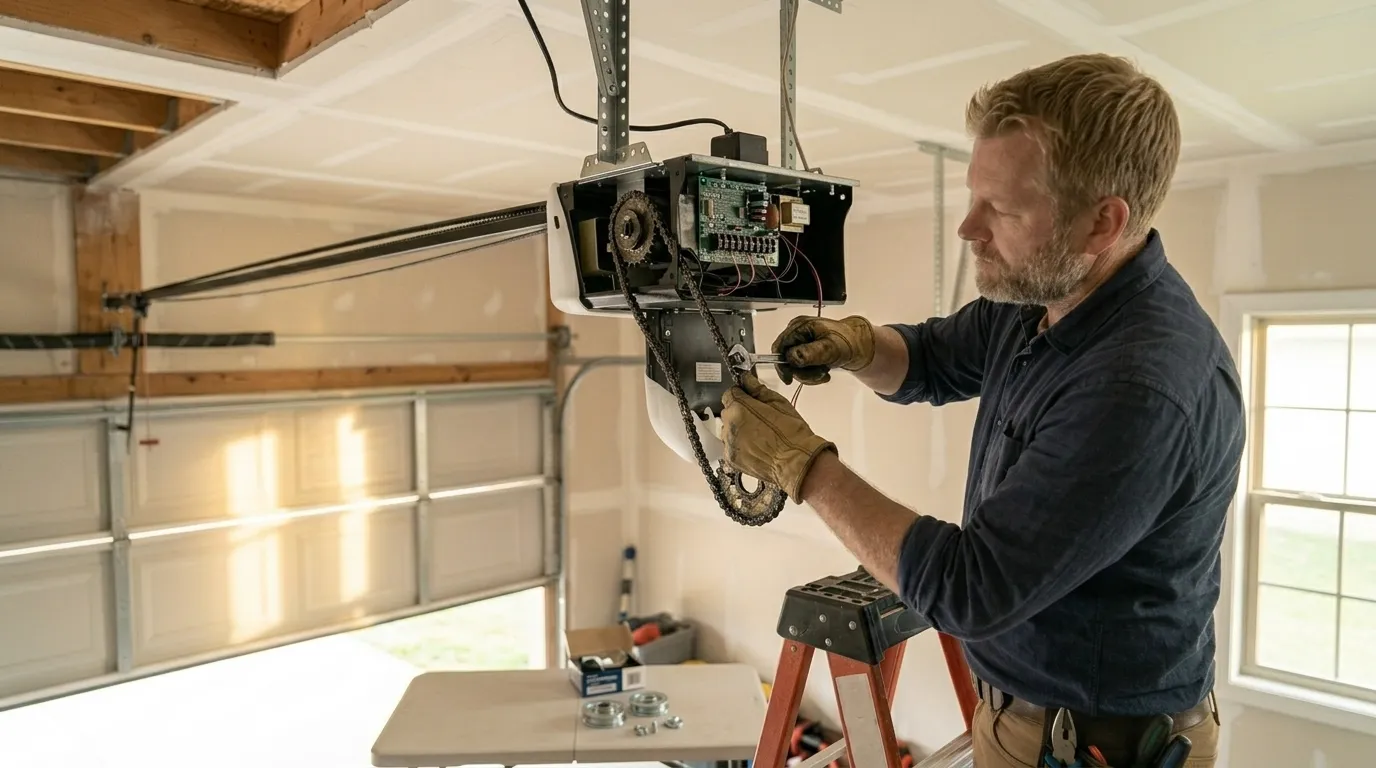
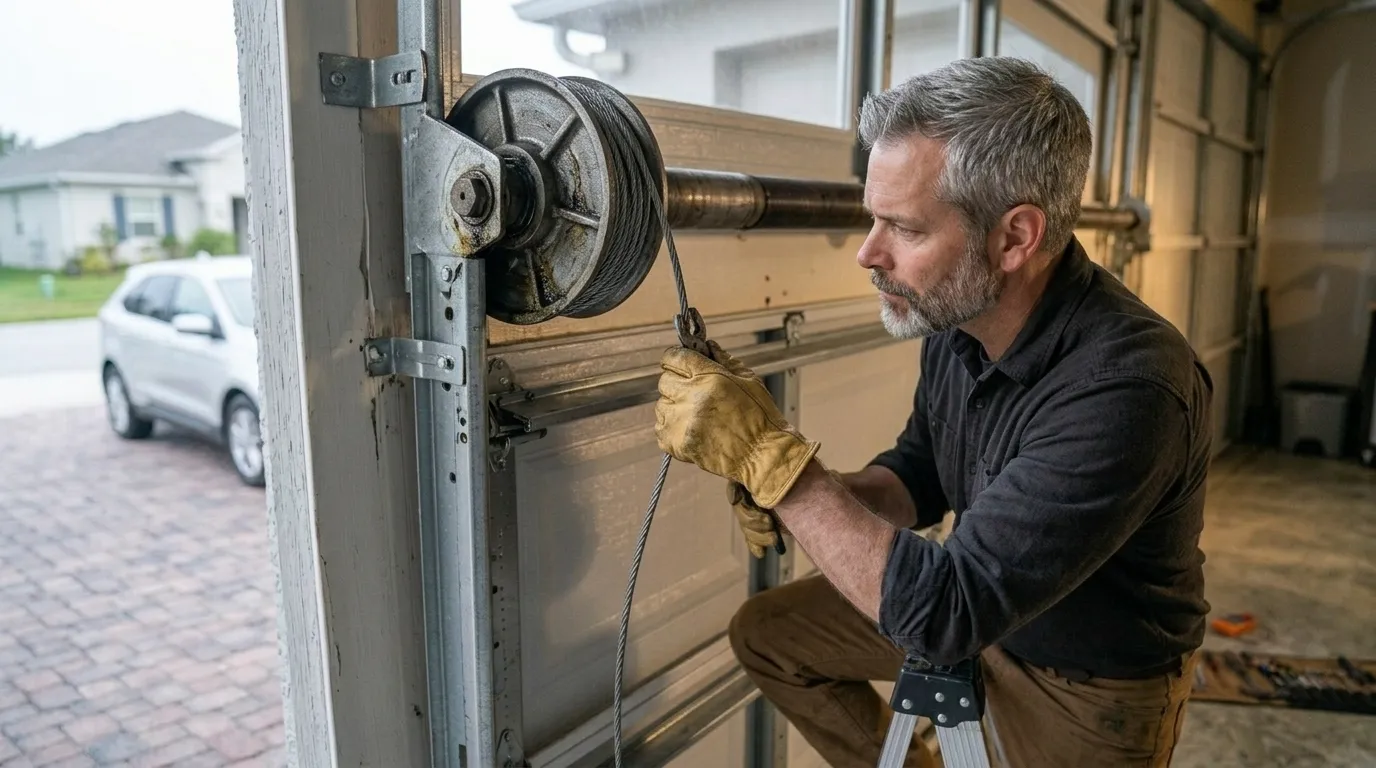
For a Brookfield call we load spring sizes that fit both the original 1950s-era torsion setups and the newer replacement systems homeowners have added since, because we usually don't know which one we'll find until we're standing in the garage. We carry standard rollers, cable, and drum stock for the more common older mounts, along with opener boards for the major brands. What we don't stock on the truck is discontinued hardware for doors that were custom-built decades ago and never sold in volume - if a door needs a part like that, we tell you straight and talk through whether a partial rebuild or a full door swap makes more sense. We'd rather admit a limit up front than string out a repair on a part we have to special-order twice.
What Can Go Wrong
On older Brookfield doors, the failure that surprises people most is a cable that jumps the drum because the drum itself has worn oval over the decades - not a clean snap, just a slow slip that eventually locks the door crooked in the track. We also see brackets that were installed with wood screws into framing that's shrunk and loosened over 70 years, which means the whole assembly shifts under load even when the spring and cable are fine. Across the wider area we cover, 120,486 of 236,623 households own their homes, and Brookfield's roughly 7,648 households sit inside that same owner-occupied pattern - most of these are long-term owners dealing with a door that's original or close to it. At $108,429, median income here tracks close to the $105,995 figure for the broader area, which is part of why most owners choose a proper hardware rebuild over a patch that just moves the failure point somewhere else.