Getting It Booked In
Start with the money, because it decides which fix you actually want. Median household income in Brookfield runs $108,429, above the $105,995 median across our wider service area. At that income level, most owners we talk to don't want a patch job on a door that's going to nickel-and-dime them again in eighteen months - they want the spring done right, and if the drums or cables are shot too, they'd rather replace the set than call twice.
We don't run a branch in Brookfield. The truck comes from Morton Grove, about 15 miles out, so when you call, we're scheduling a real trip, not a walk-in. That means we ask a few questions up front - one door or two, torsion or extension, how old the opener is - so the tech shows up with the right spring instead of guessing on your driveway. It's a small thing, but it's the difference between one visit and two.
We book the job, confirm what's failing over the phone as best we can, and load the truck accordingly before we leave Morton Grove.
What Causes It Around Here
Brookfield's median year built is 1952, a decade or more older than the 1963 median across the broader service area we cover. That gap matters for springs specifically. A lot of these doors are still running on the torsion hardware that came with the house, or a first-generation conversion installed sometime in the decades after - not the factory-matched setups you'd find on a door built in the 1980s or later.
On top of the age, the climate here is squarely cold-band. Steel that's been wound tight since the Eisenhower administration and then cycled through decades of freeze-thaw doesn't fail gracefully - it fatigues, then snaps, usually on the coldest morning of the stretch, because cold steel is brittle steel.
Put those two things together - 1950s hardware and cold-cycling - and you get a specific failure pattern: springs here tend to go earlier than their rated cycle count, not later. We see it more in Brookfield's older sections than we do in newer pockets of the service area where the doors and springs are a generation younger.
What Is on the Truck
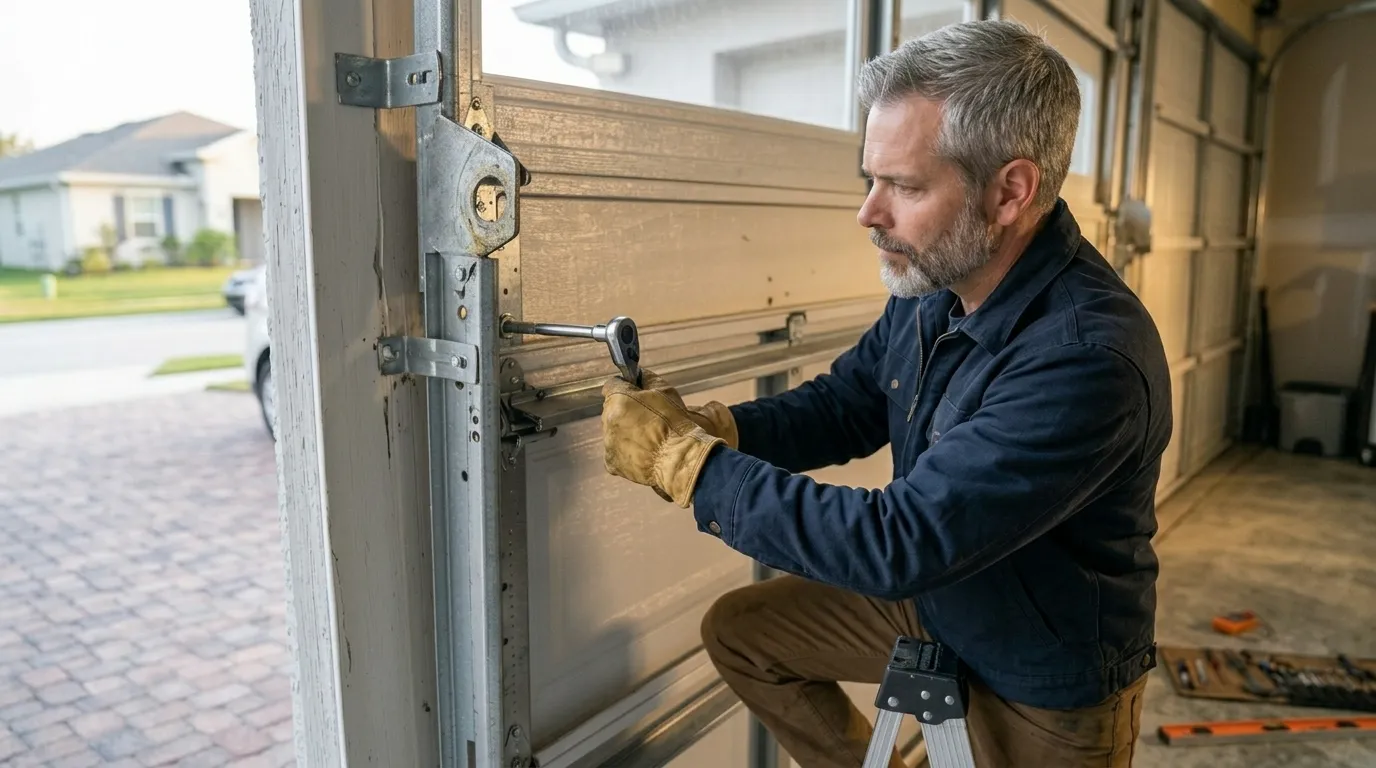
Because Brookfield skews older in build year, we don't load the truck the same way we would for a subdivision full of 1990s doors. We carry a spread of torsion spring sizes to cover the wire gauge and wind that older hardware tends to use, along with extension springs for the doors that were never converted to torsion at all - which still show up on some of the 1950s-era garages here.
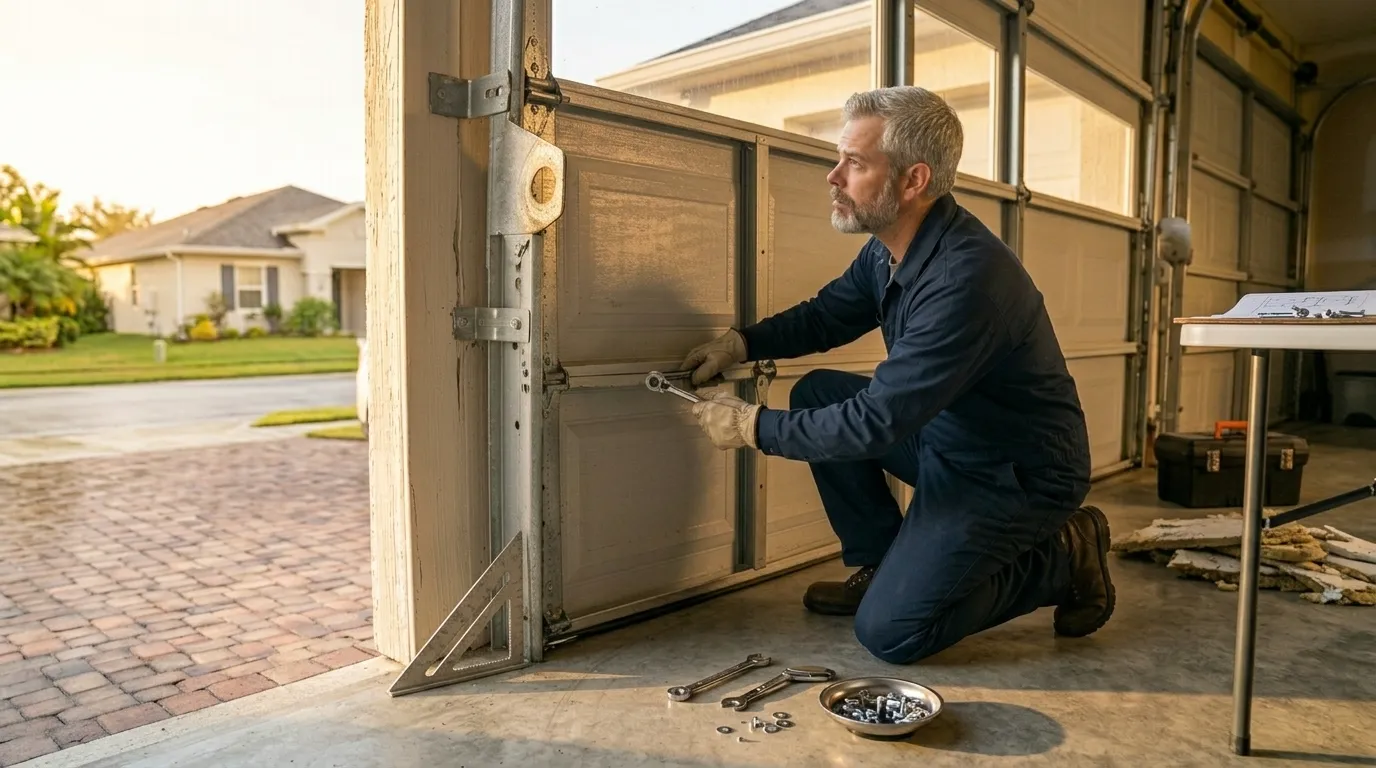
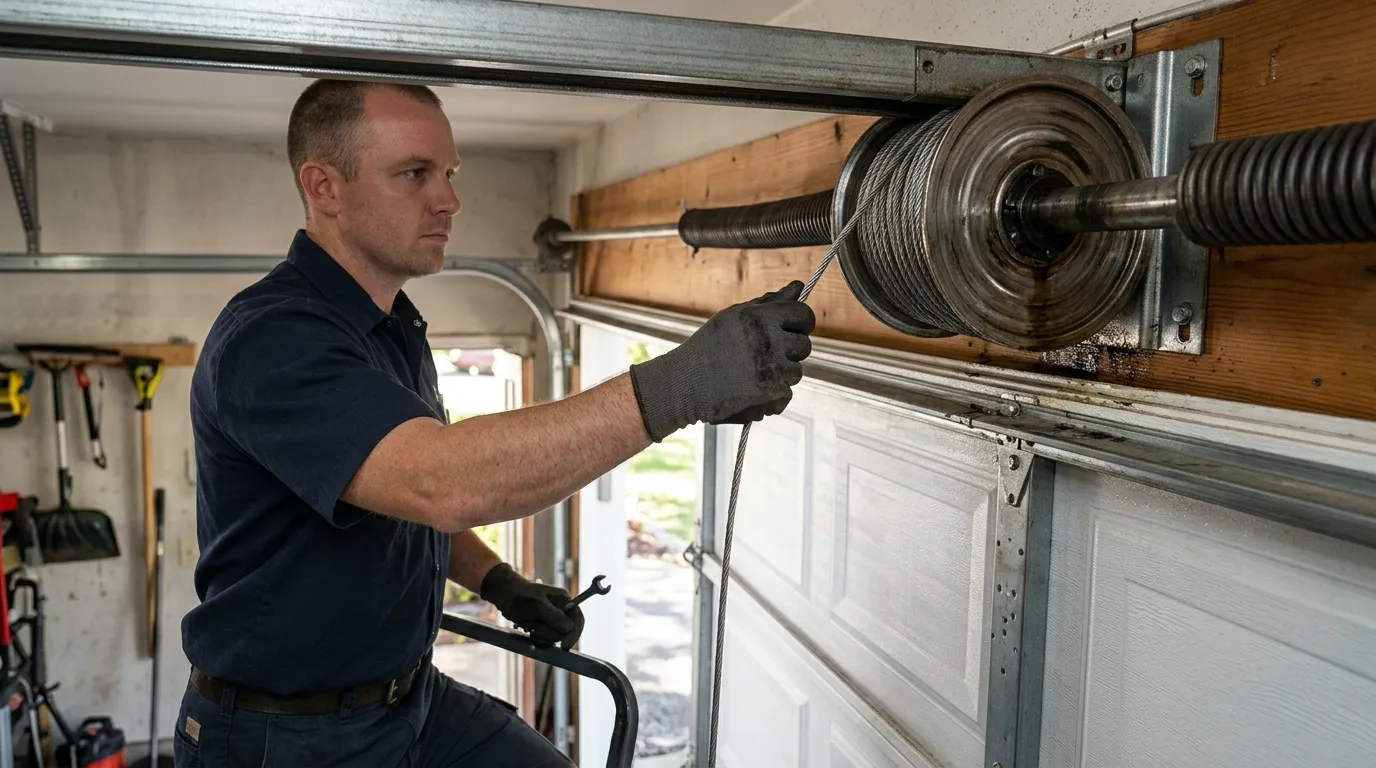
We also carry the drums, cables, and end bearing plates that commonly go with a spring failure on that vintage of door, because on a house built in 1952 it's rare for the spring to be the only worn part. A cable that's been sharing a rusted pulley with a fatigued spring for years is usually close behind it.
What we don't stock is every obsolete part ever made. If a door is running a spring size or bracket that hasn't been manufactured in decades, we'll tell you that on site rather than pretend we can match it from the truck - sometimes the honest answer is a new torsion system, not a repaired one.
What Can Go Wrong
On a door this age, a spring failure rarely arrives alone. The most common thing we see on Brookfield's older stock is a cable that's already frayed from years riding a corroded pulley - the spring going is what finally reveals it, not what caused it. Replace the spring without checking the cable and you've bought a second call within the year.
The other pattern tied to 1950s-era hardware: drums and end bearing plates that were never upgraded when torsion conversions happened decades ago. Those parts wear at different rates than the spring, and on an older door they're often close to the end of their own life by the time the spring finally lets go.
The cold-band climate adds one more wrinkle - a spring that's marginal in summer can snap outright on the first hard cold snap, because the same fatigue that would have shown up gradually shows up all at once when the steel's brittle. That's the honest reason we ask about symptoms before we ask about the fix: on these older doors, the spring is often the symptom, not the whole story.