How Long It Takes
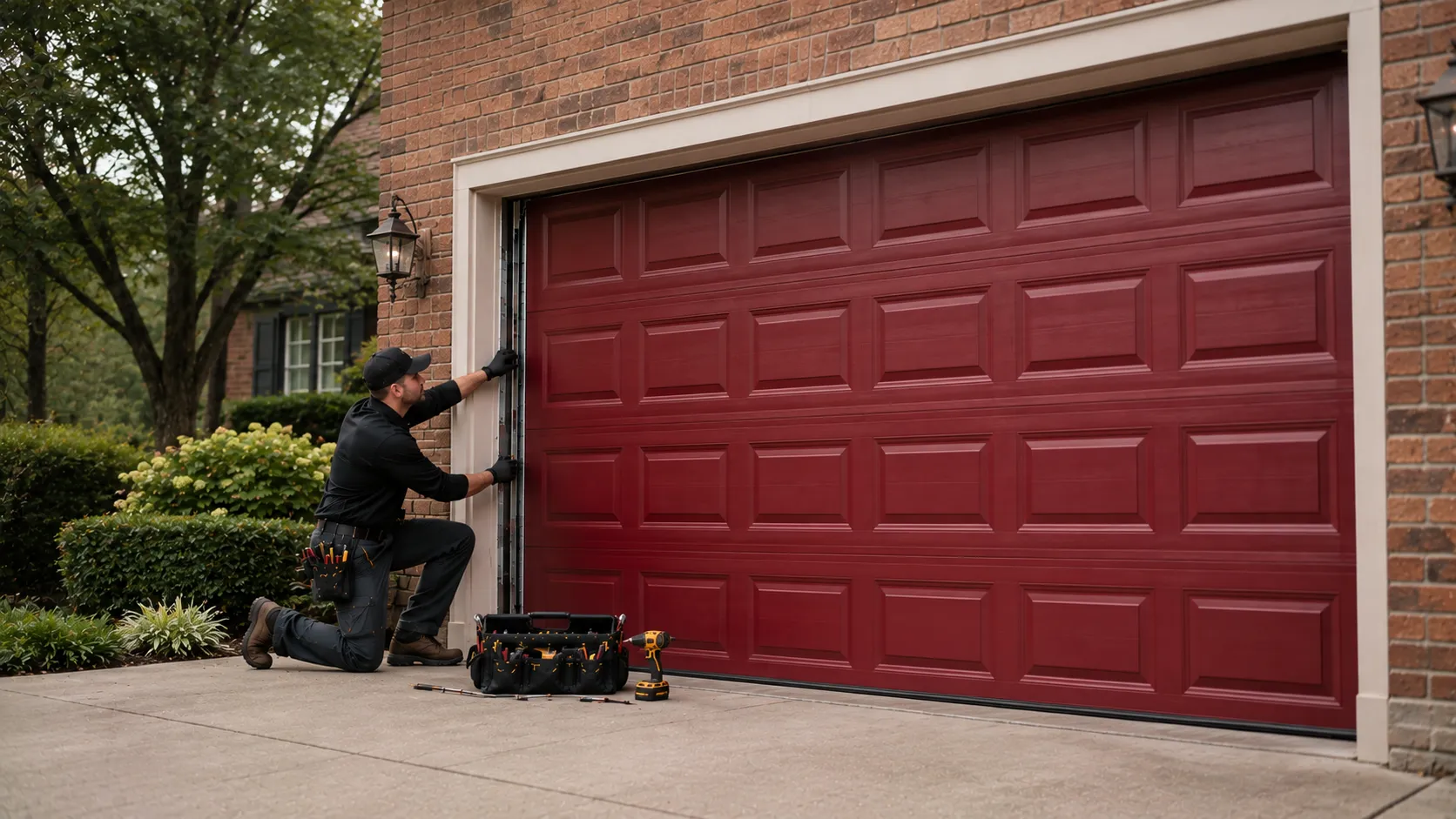
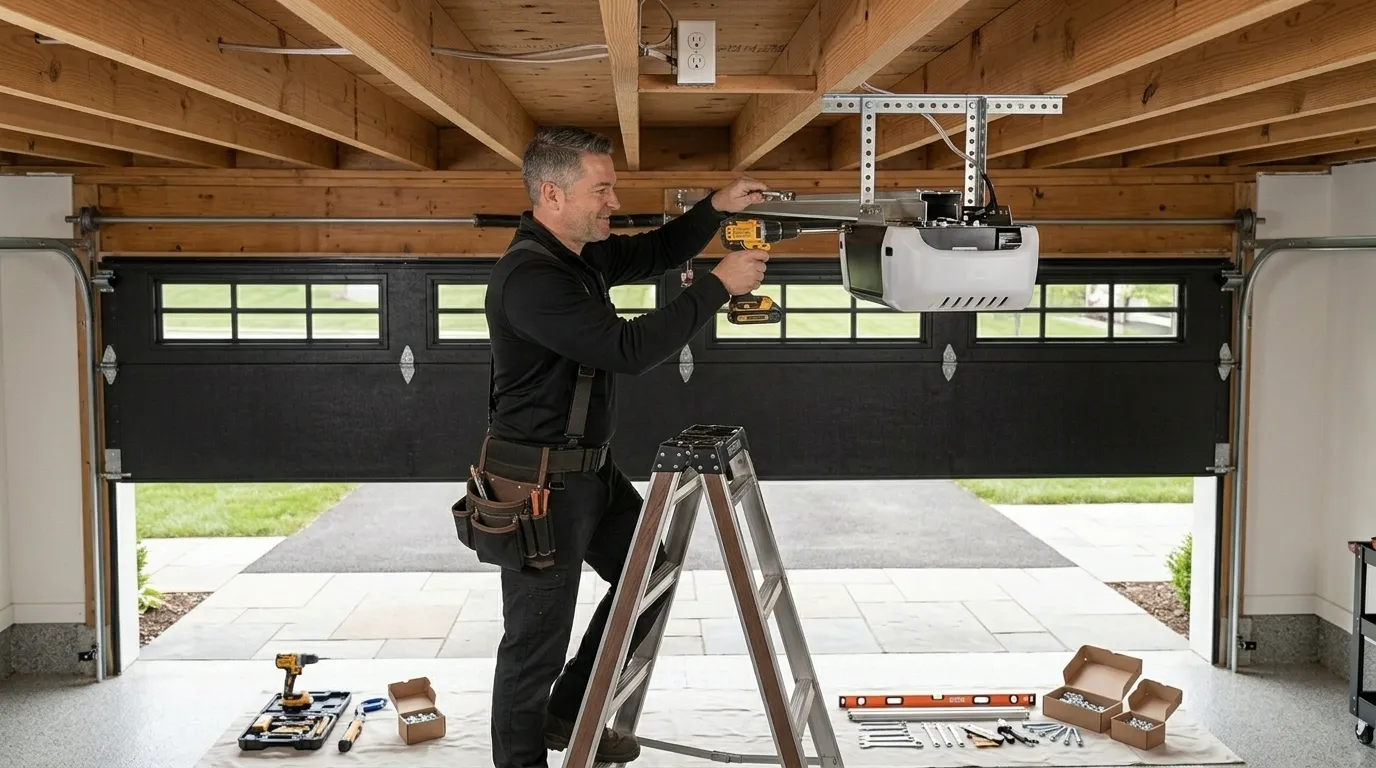
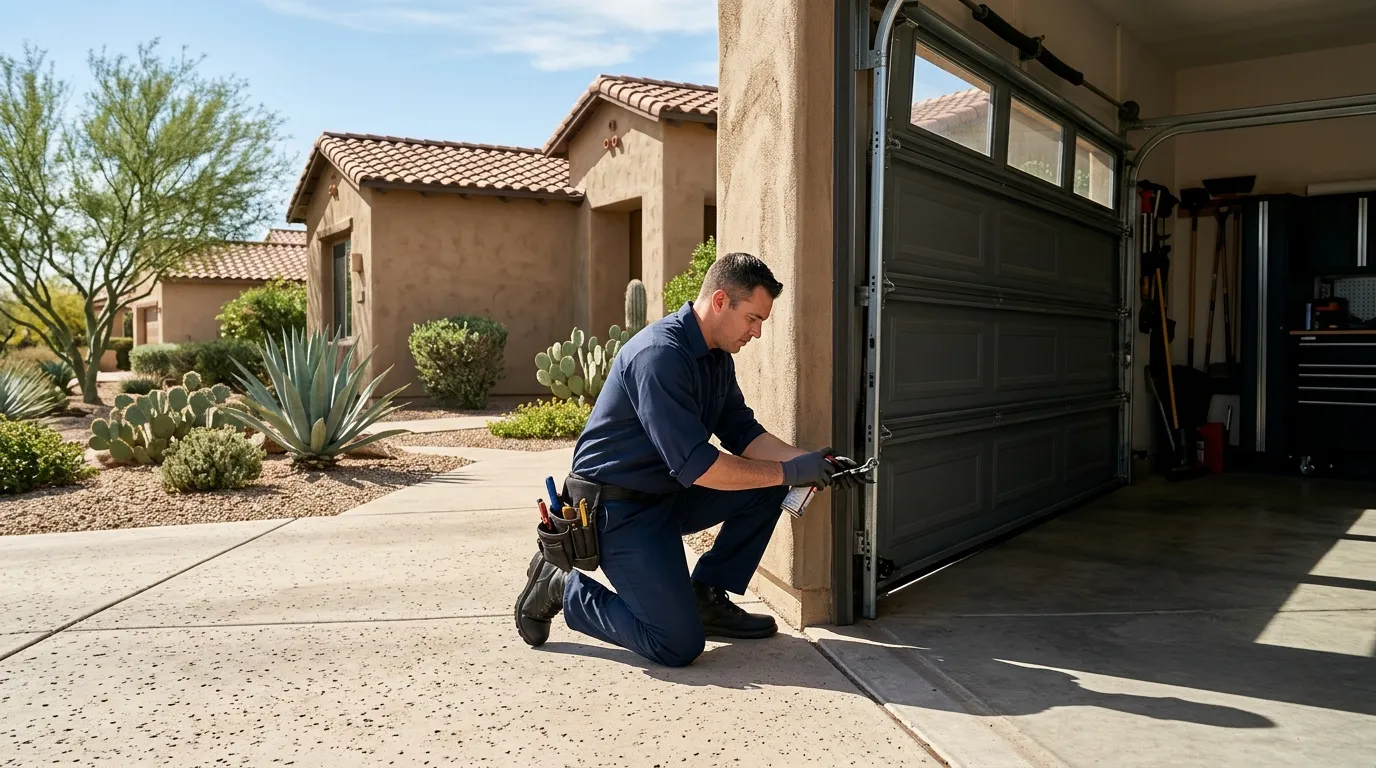
Most houses in Westchester went up around 1957, and a lot of that original garage hardware is still hanging in the bay - the torsion spring, the bracket, sometimes even the original track. When something on a door that old finally lets go, it's usually not a quick tighten-and-go job. We come out from our Morton Grove shop, which is about 14 miles from Westchester, so we book the visit with that drive built into the estimate rather than promising a same-hour arrival we can't back up. Once we're on site, a straightforward spring or cable repair on a door this age typically runs an hour to two hours, since the fasteners and drum sizes on 1950s hardware don't always match what's on the truck without a quick swap at the vehicle. If the opener itself is original or a first-generation replacement, diagnosing a dead unit takes longer than replacing one, because we have to rule out the wall switch, the wiring, and the logic board before we touch anything. We'll tell you on the phone what we expect to find and how long that specific fix should take, rather than quoting a flat number for every call in town.
What Causes It Around Here
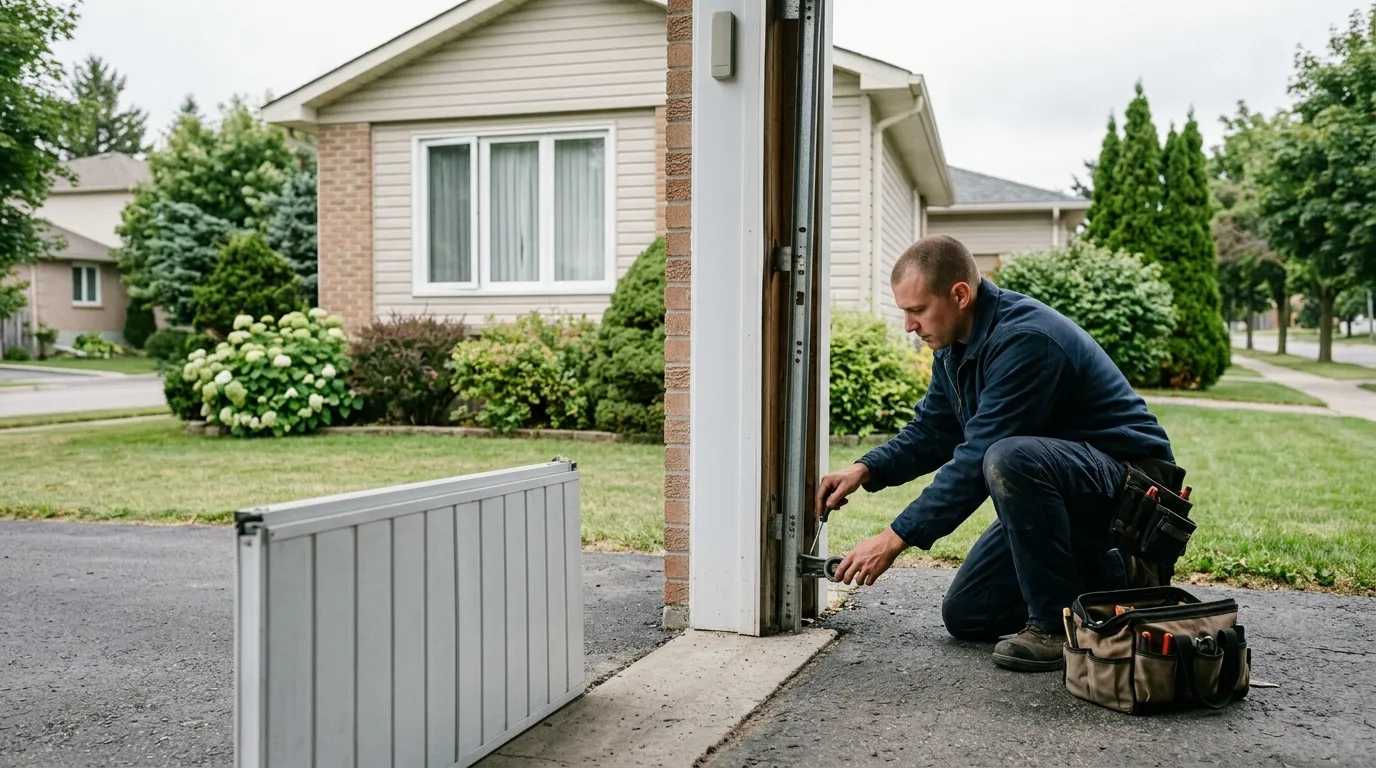
Westchester's housing stock centers on 1957, which puts a good share of garages here right in the middle of the era our service area covers - homes built between 1938 and 1996 with most of that stock dating to the 1960s and '70s. What that means for the door itself: original torsion springs rated for lighter, uninsulated wood panels now often carry a heavier replacement door they were never sized for, which shortens spring life and stresses the end bearings. The area sits in a cold moderate climate band, so winter is the other half of the story - cold makes steel brittle and grease stiff, which is exactly when an aging spring under extra load is most likely to snap. We also see original steel tracks that have narrowed slightly with age, which lets rollers ride rough and wear cables faster than they should. None of this is unique to one house on one block; it's what happens across a neighborhood built in a tight window and aging on roughly the same clock.
How We Fix It
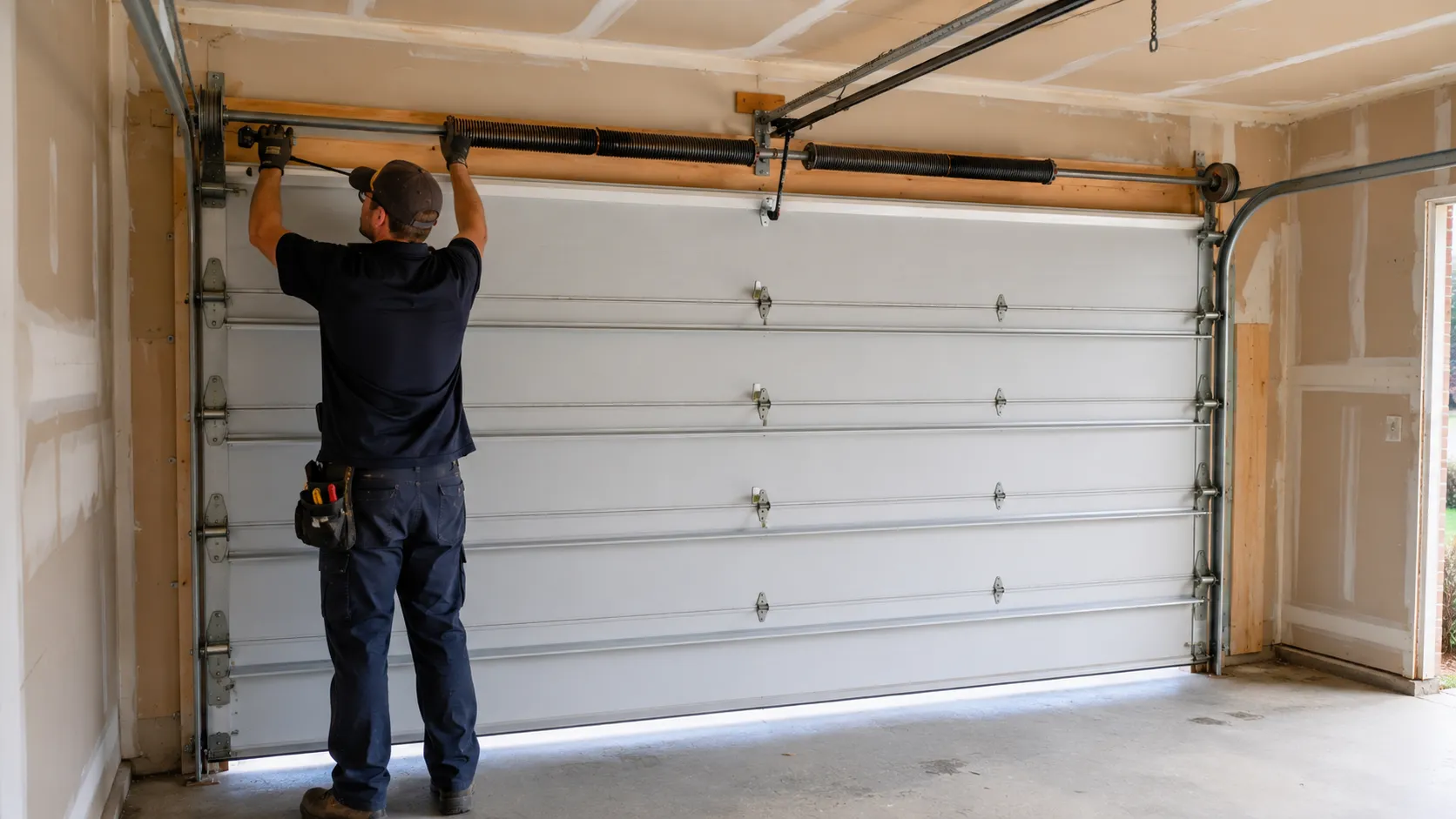
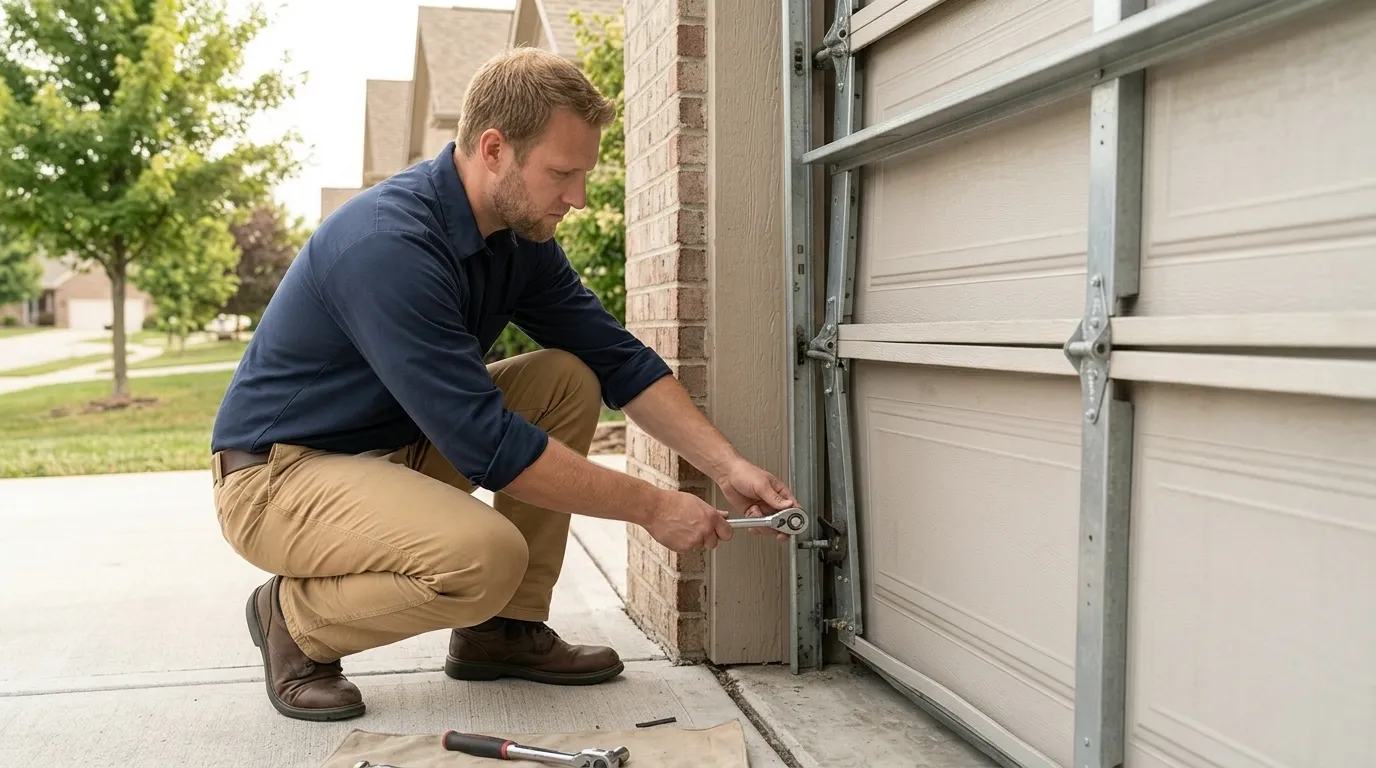
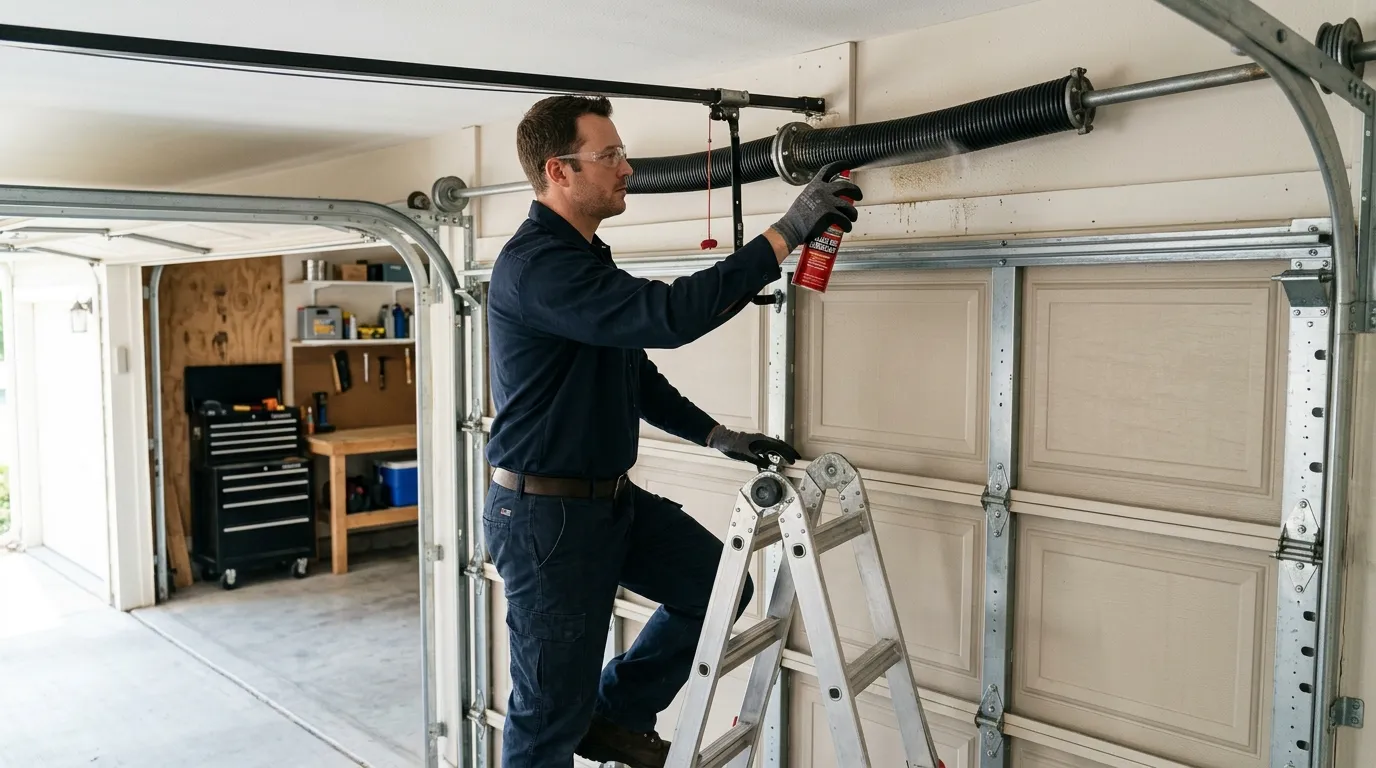
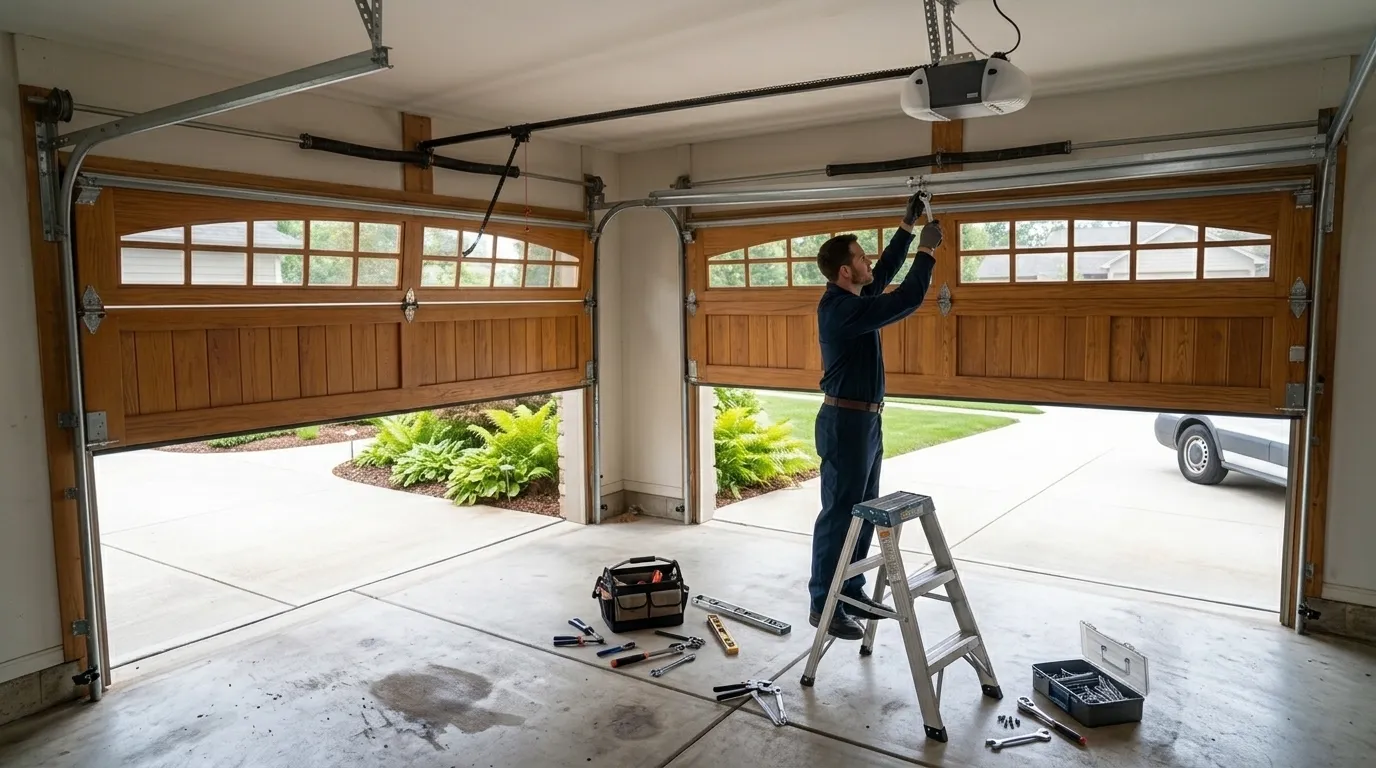
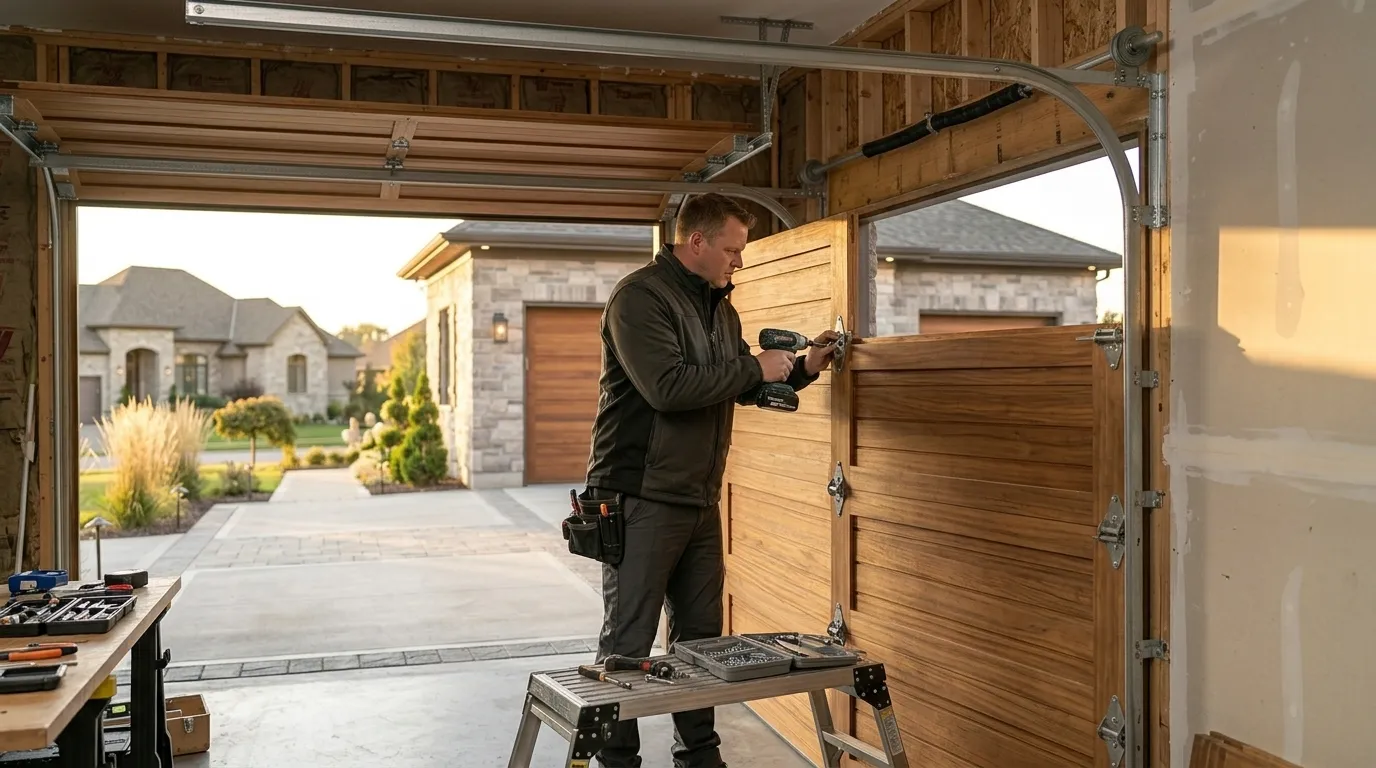
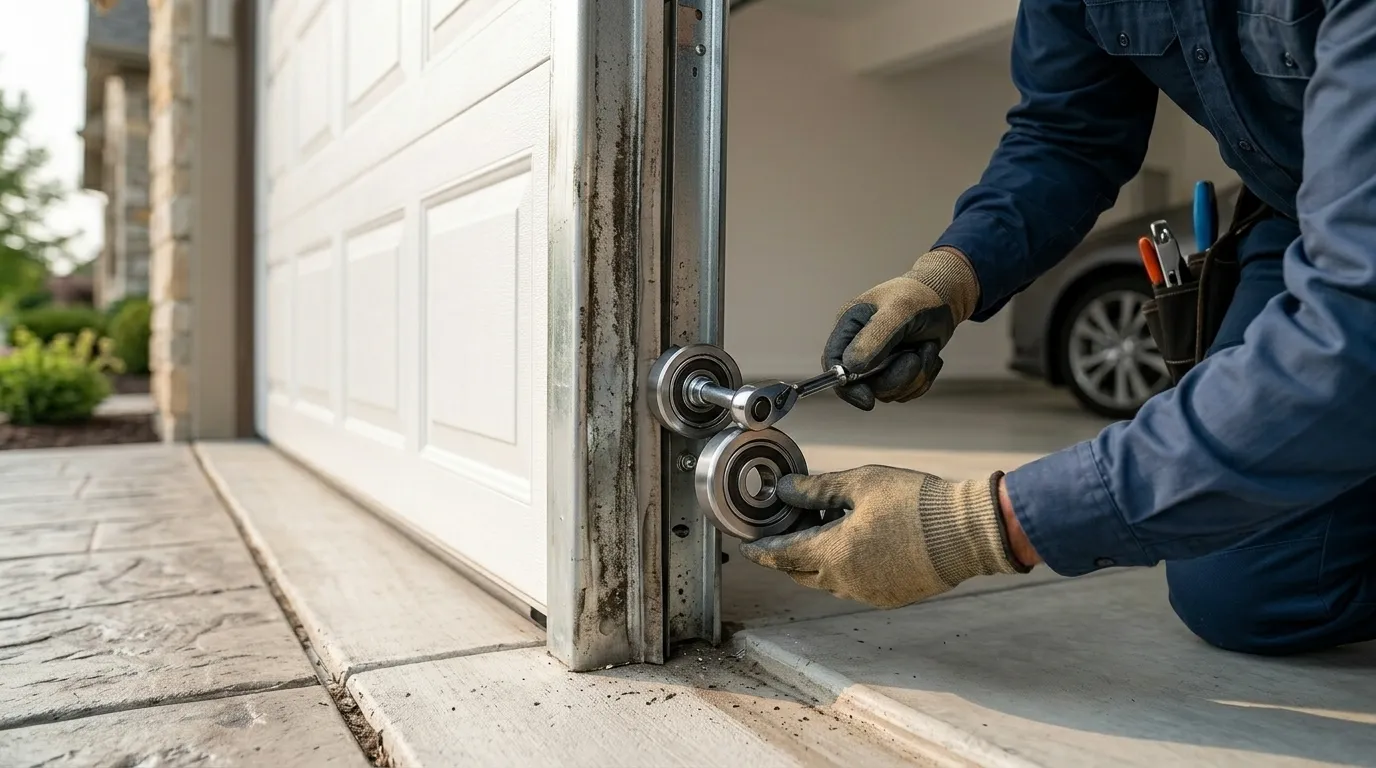
We start by matching the hardware to what's actually on the door, not what a parts catalog says a 1957 build should have, since decades of partial repairs mean plenty of Westchester garages have a mix of original and replacement parts. For a broken spring, we measure wire gauge, coil diameter, and wind direction on site rather than guessing from the door's age. For opener failures, we check whether the unit is worth repairing at all - if it's an older chain-drive with a burned-out motor and no replacement logic board available, we'll say so plainly rather than patching around it. Cable and roller work gets done in pairs, even if only one side failed, because a door this age with one weak side almost always has a second side close behind it. We test the balance point by hand after every spring job, not just the auto-reverse safety feature, since an out-of-balance door on an old opener strains the motor from day one. If the fix on the table is going to cost more than a like-for-like replacement door, we tell the homeowner that number before we start, not after.