24/7 Emergency Service Open 7 days · 7am–8pm Serving Morton Grove, IL & nearby
(224) 353-7707
Morton Grove, IL

Detached vs Attached Garages in Morton Grove: What Actually Differs

A look at how Morton Grove's 1938-1996 housing stock and cold winters affect detached and attached garage doors, from a shop that works this side of town.

Detached vs Attached Garages in Morton Grove: What Actually Differs

What to Look At First

Morton Grove's houses mostly went up between 1938 and 1996, with the bulk from the 1960s and 70s. That range matters here because it splits the town roughly into two garage types: older detached garages set back from the house, built as standalone structures with their own slab and their own settling pattern, and the attached garages that came with the ranch and split-level builds from the 60s and 70s boom, where the garage shares a wall, a roofline, and a foundation with the living space.

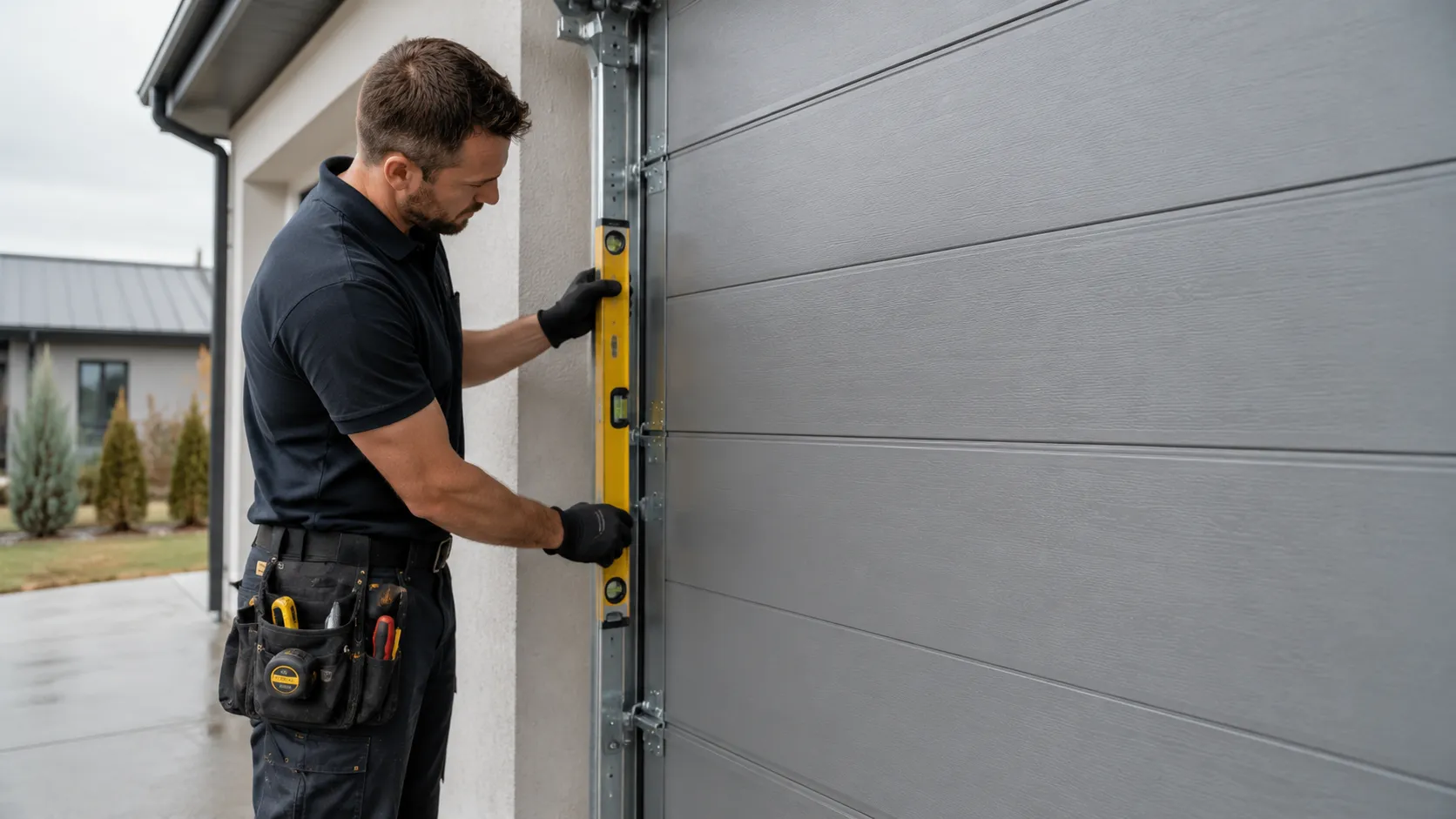
On a detached garage, check the door track alignment first. A standalone slab moves independently of the house, and after decades of freeze-thaw the concrete can heave a little at one corner, throwing the vertical tracks out of plumb even if the door itself looks fine. On an attached garage from the same era, the more common issue is the header above the door - homes built onto an attached garage in this period often used a lighter header than you'd frame today, and over 50-plus years that can sag enough to bind a door at the top corners.

Either way, start by opening and closing the door by hand with the opener disconnected. If it drags, sticks, or needs muscle at any point in the travel, that's a track or hardware problem, not something to fix by adjusting opener force.

The Seasonal Bit

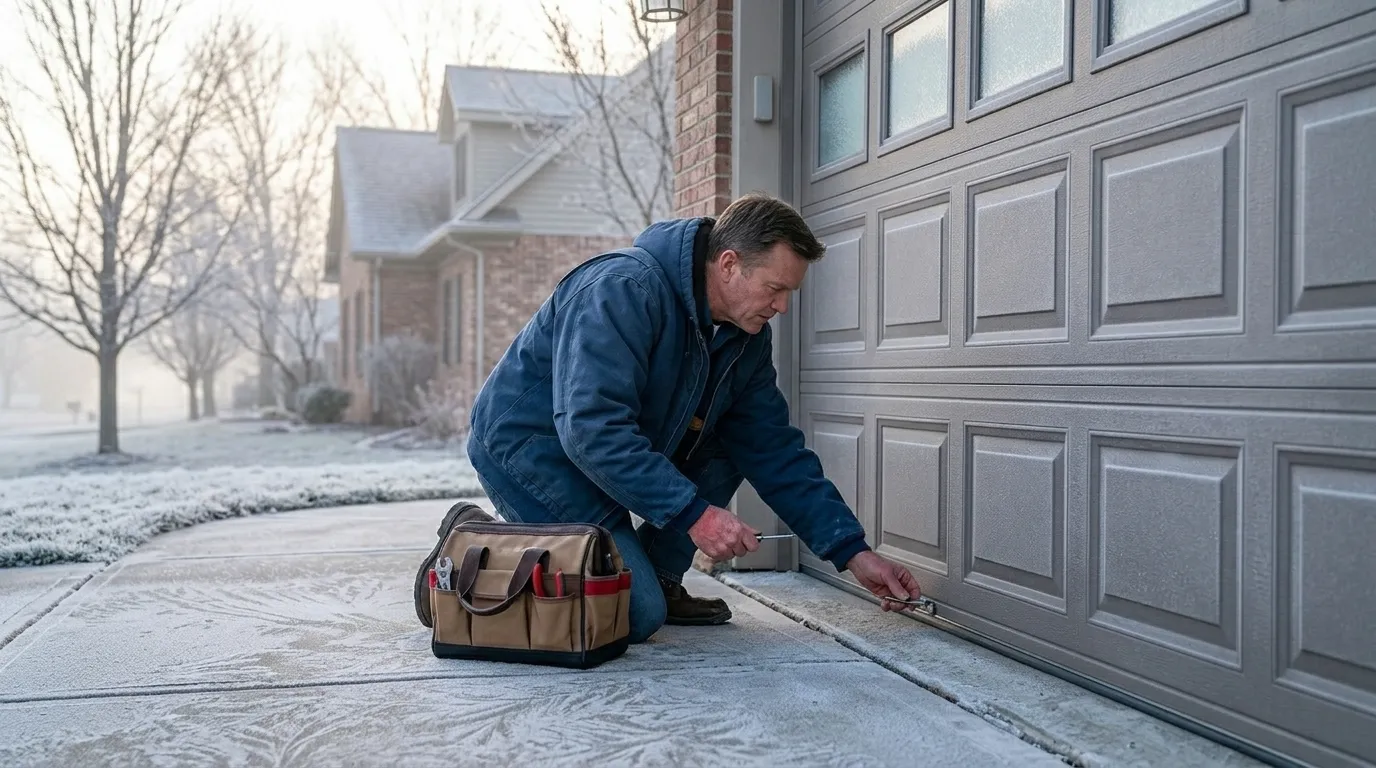
This is a cold-climate area, and that shows up differently depending on whether the garage is attached or detached. A detached garage has no shared wall with a heated house, so it swings closer to outdoor temperature all winter. Steel doors on detached structures contract more, torsion springs lose a little tension in the cold, and nylon rollers stiffen up faster than the steel ones do.

An attached garage gets some residual heat bleeding through the shared wall, which sounds like an advantage, but it creates its own problem: condensation. Warm, moist air from the house meets a cold steel door and panel, and you get moisture at the bottom section that a detached garage - fully cold, no humidity source next door - usually doesn't see in the same way.

Neither situation is dangerous on its own. But a spring that's already at the end of its life picks the coldest week to let go, and that week always seems to land in Morton Grove's real winter, not some mild stretch. If your door has been making a hard clunk on the way up for a few weeks, don't wait for a January morning to deal with it.

How Local Conditions Play In

Morton Grove sits close to Golf, Niles, and the string of near-northwest suburbs - Golf is about a mile off, Niles borders directly, and Skokie and Glenview aren't far past that. The housing pattern repeats through this whole corridor: postwar detached garages on the older blocks, attached two-car garages on the split-levels and ranches built through the 60s and into the 70s and 80s.

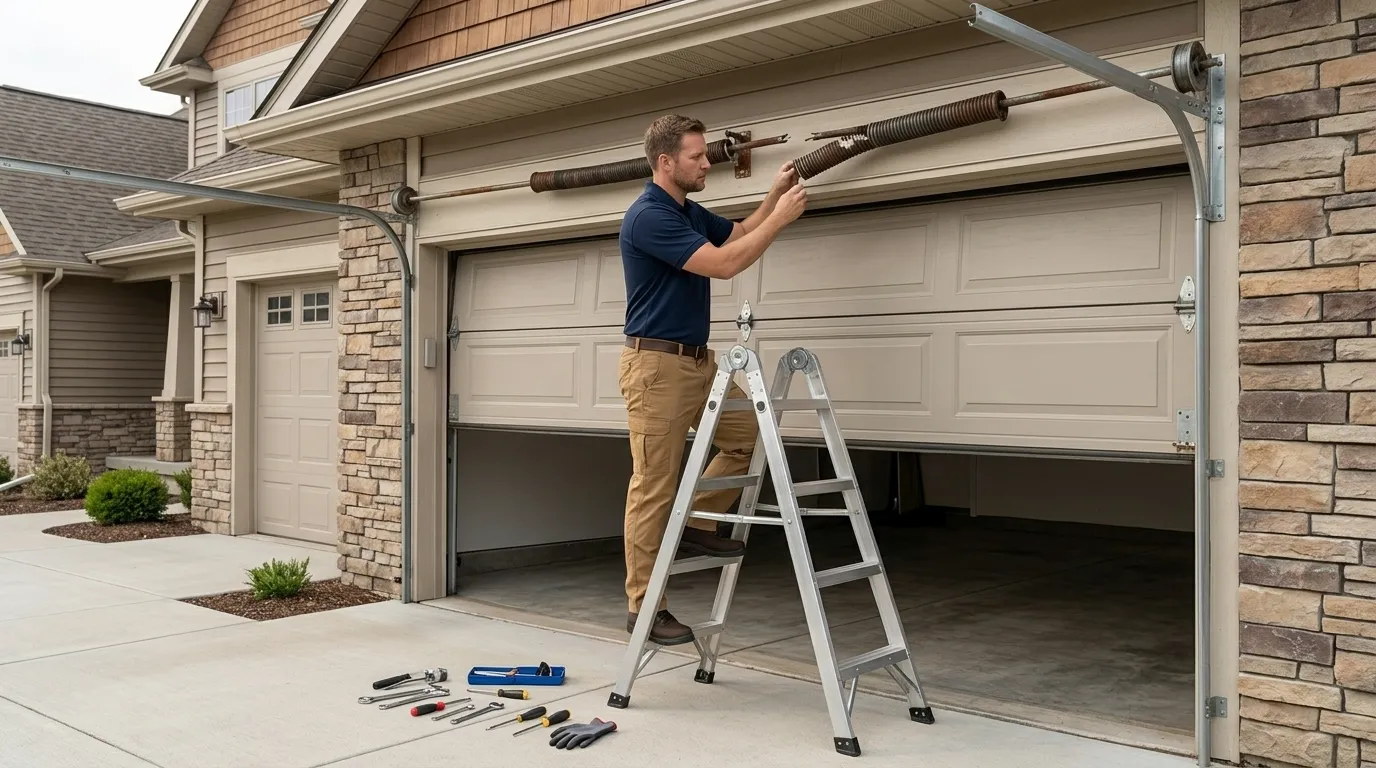
What that means for parts is straightforward. A lot of the detached garages here still run original hardware from construction - one-piece doors on side-mounted torsion springs that newer suppliers don't stock, because the design mostly stopped after the 1970s. If your detached garage door still has that setup, a repair often means sourcing or adapting parts rather than a straight swap.

Attached garages tend to have been updated at least once, since they're more visible and more used, but the header and framing issues from original 1960s construction are still there underneath whatever door is currently hung. Knowing which decade your garage - detached or attached - actually dates to tells you more about what's likely to fail than knowing the brand of door on it.

What Is Going On

Here's the honest part: we can tell you a lot from the outside about whether a problem is a detached-garage foundation issue or an attached-garage header issue, but we can't diagnose a header sag or a track misalignment for certain without getting eyes on it in person. Photos help, but garage door problems hide their real cause more often than people expect - a door that looks like it needs new springs sometimes needs a track adjustment instead, and vice versa.

The other honest limitation: on some of the oldest detached garages with original hardware, replacement parts can take longer to source than a same-week repair on a newer attached-garage door. That's not a sales pitch for replacing the whole door - sometimes the old one-piece door still has years left in it - but it's worth knowing going in if you're planning around a repair date.
How it works

From “it’s stuck” to “it’s fixed”

Tell us what’s wrong - Morton Grove garage door service

Tell us what’s wrong

Describe the symptom - won’t open, loud bang, opener runs but the door won’t move.

On-site diagnosis - Morton Grove garage door service

On-site diagnosis

A technician tests the door under power and by hand and finds what actually failed.

Clear, up-front plan - Morton Grove garage door service

Clear, up-front plan

You get the fix that’s needed and what drives the cost - before any work starts.

Repaired & tested - Morton Grove garage door service

Repaired & tested

The repair is done, the door is set true and tested, and the work area left clean.

Serving Morton Grove, IL - tell us what your door’s doing and we’ll take it from there.

How we work

What to expect

Diagnosis firstEvery visit starts by finding what actually failed - not a pre-written parts list.
The right part for the doorSprings and openers matched to the door’s weight and age, so the fix holds up.
Straight answersWhen a repair makes more sense than a replacement - or the reverse - you hear it plainly.
Clean, careful workTension released safely, hardware set true, the door tested under power before we leave.
Questions

Frequently asked

Straight answers about garage door repair in Morton Grove. Still unsure? Ask us directly.

Is a detached garage door harder to fix than an attached one in Morton Grove?

Not harder exactly, but often different. Detached garages here are more likely to have original hardware from the 1960s or earlier, which can mean sourcing parts rather than a quick swap. Attached garages tend to have been updated at least once and are more likely to have a header sag issue instead.

Why does my attached garage door sweat in winter but my neighbor's detached one doesn't?

Warm air from the house bleeds through the shared wall of an attached garage and meets the cold steel door, causing condensation. A detached garage has no adjoining heated wall, so it stays uniformly cold and usually doesn't get the same moisture buildup at the bottom panel.

How do I know if my garage door problem is the foundation or the door itself?

Open the door by hand with the opener unplugged. If it drags or binds only near the bottom, a detached garage's slab may have shifted. If it sticks near the top, an attached garage's header may have sagged. Either way, this is easier to confirm in person than from a description.

Ready to get your garage door sorted?

Tell us what it’s doing and where you are in Morton Grove - we’ll take it from there.

Request a QuoteCall