What to Look At First
Most houses on this side of the area went up between 1938 and 1996, with the median build year landing around 1963. If your house falls in that range, there's a decent chance the garage door or its hardware is original, or close to it. That means steel panels without foam insulation, single-layer vinyl weatherstripping gone brittle, and torsion springs sized for a lighter door than what's often been swapped in over the decades.
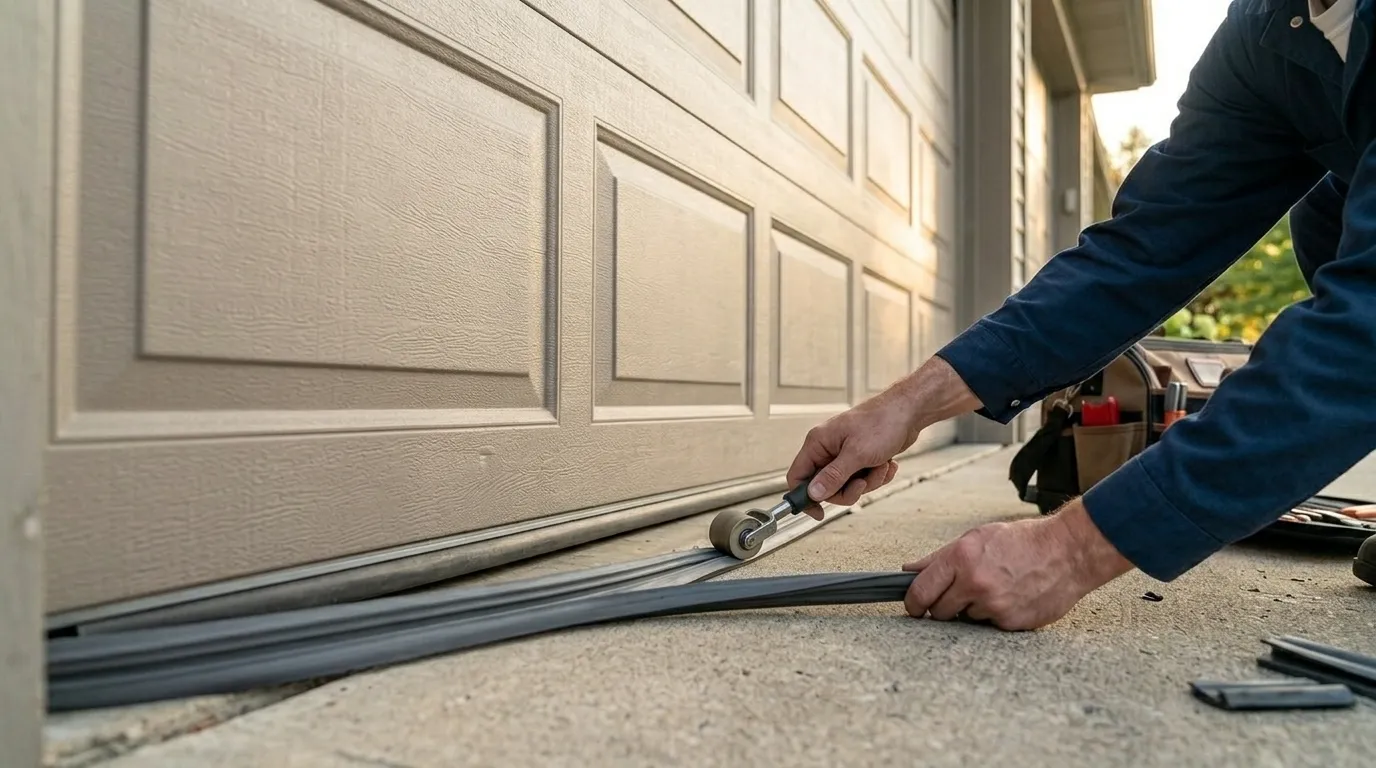
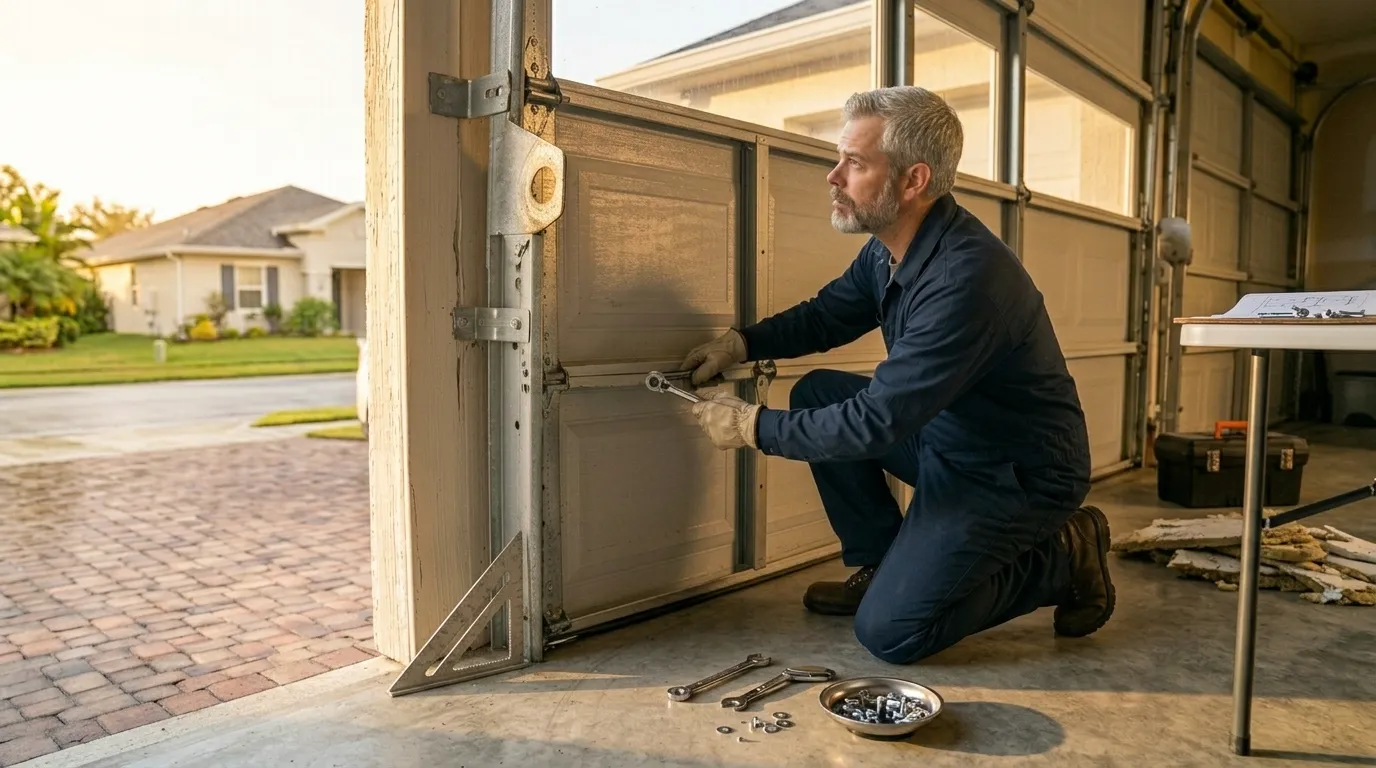
Start at the bottom seal. On a house from the 1960s stock common across this part of the region, that strip has usually been replaced once, maybe twice, and it's the first thing to crack in cold weather. Check the corners where the seal meets the track - that's where daylight gets through first, not the middle of the door.
Next, look at the weatherstripping around the frame itself, not just the bottom seal. On original jambs from this era, the wood has often shrunk slightly over sixty-plus years, leaving a gap the stripping was never built to cover. That's a five-minute check with a flashlight at night - stand inside the garage, kill the lights, and see where the outside light comes through.
How Local Conditions Play In
With a median household income of $105,995 across the service area and 120,486 owner-occupied houses among 236,623 households total, a lot of what we see is people replacing doors once, correctly, rather than patching them every couple of years. That tracks with housing built mostly in the 1938-1996 range - once the original door and hardware reach the end of their run, most owners are choosing insulated steel over another uninsulated replacement.
Morton Grove sits close to a cluster of similar-era suburbs - Golf a mile out, Northfield about four miles, Kenilworth and Winnetka around five - and the housing stock across that stretch tracks the same 1950s-60s build pattern. That matters because parts availability follows the housing: original hardware from this era is the kind nobody stocks on the shelf anymore, so a repair on an older door sometimes means sourcing instead of grabbing a part off the truck.
The cold band this area sits in isn't dramatic, but it's steady, and steady cold does more to rubber and vinyl over sixty years than one hard freeze ever does.
What Is Going On
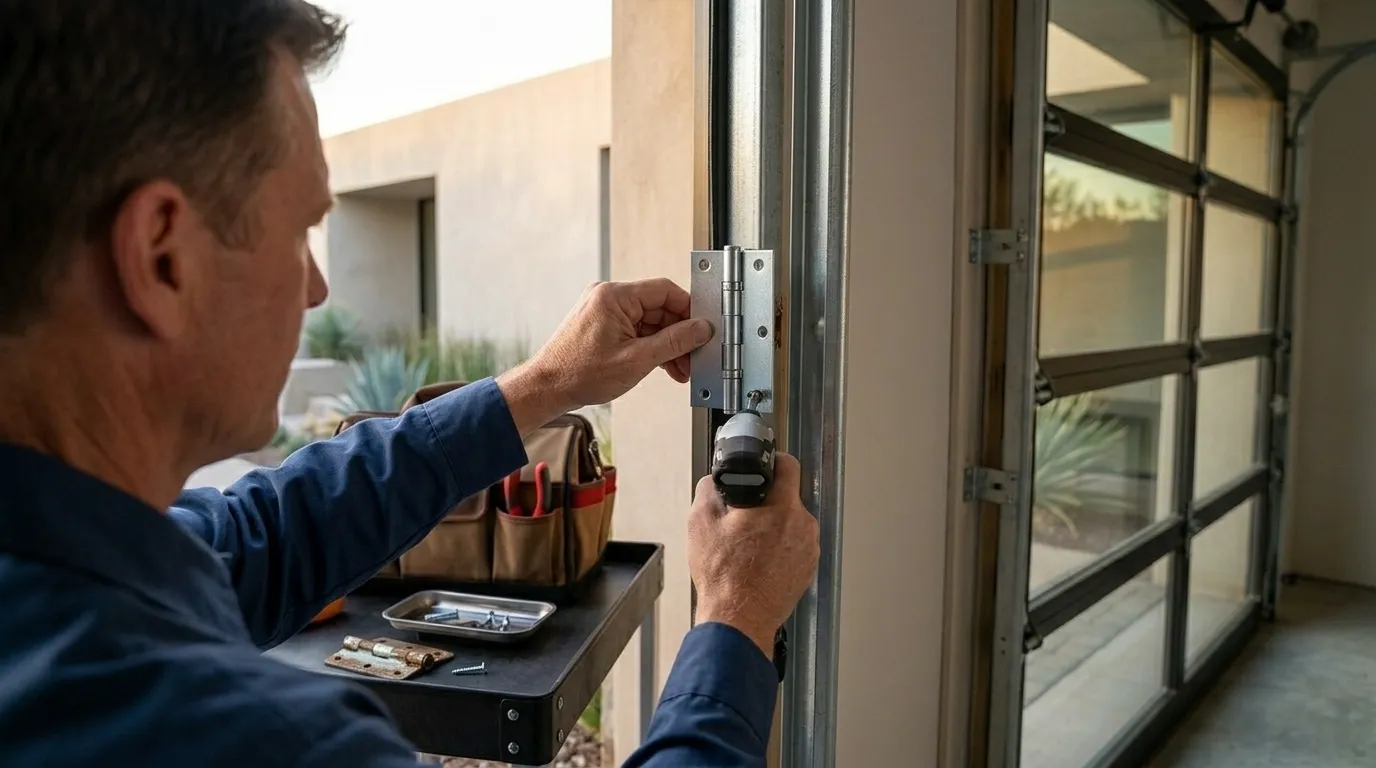
Here's the honest part: if your door and track are original to a house built in the 1950s or 60s, a new seal alone won't fix a door that's also sagging on its hinges or running on a spring rated for a lighter panel. Seals stop draughts. They don't straighten a track or true up a door that's racked.
We also won't tell you a seal replacement is a permanent fix if the frame itself has shifted over six decades - that's a call we make in person, not over the phone.
What we can say from what we see across this area: houses from the 1963-median era are hitting the point where original hardware and original seals are both due, often at the same time. If yours hasn't been touched, that's worth a look before the next cold stretch, not during it.