What to Look At First
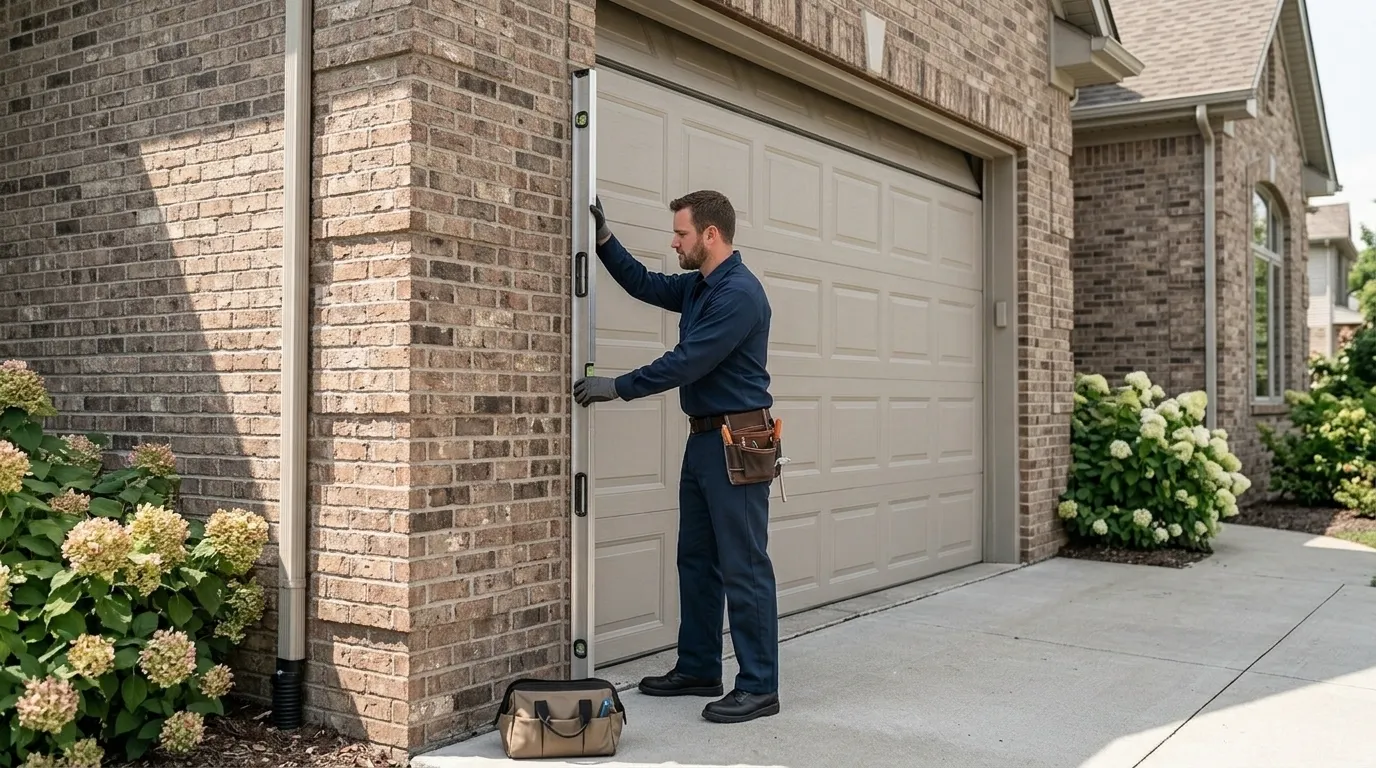
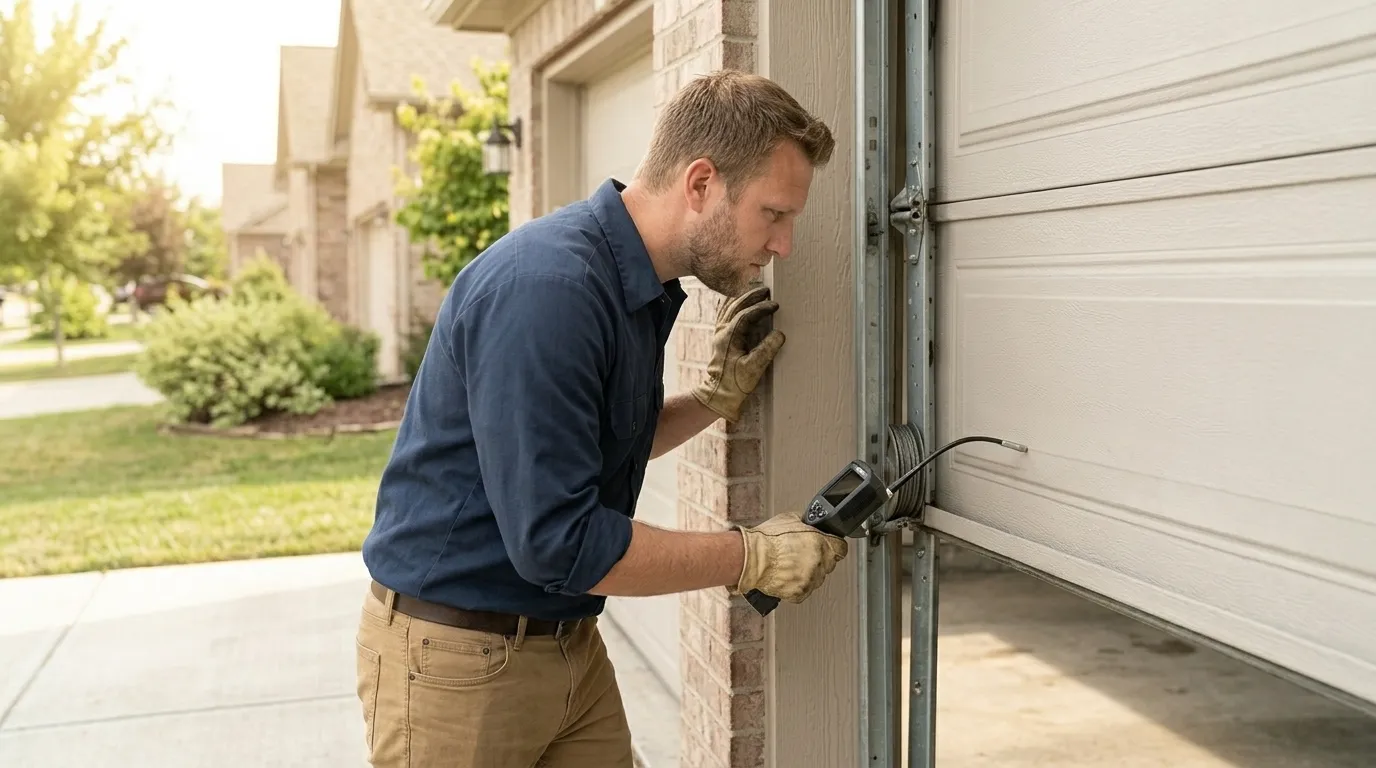
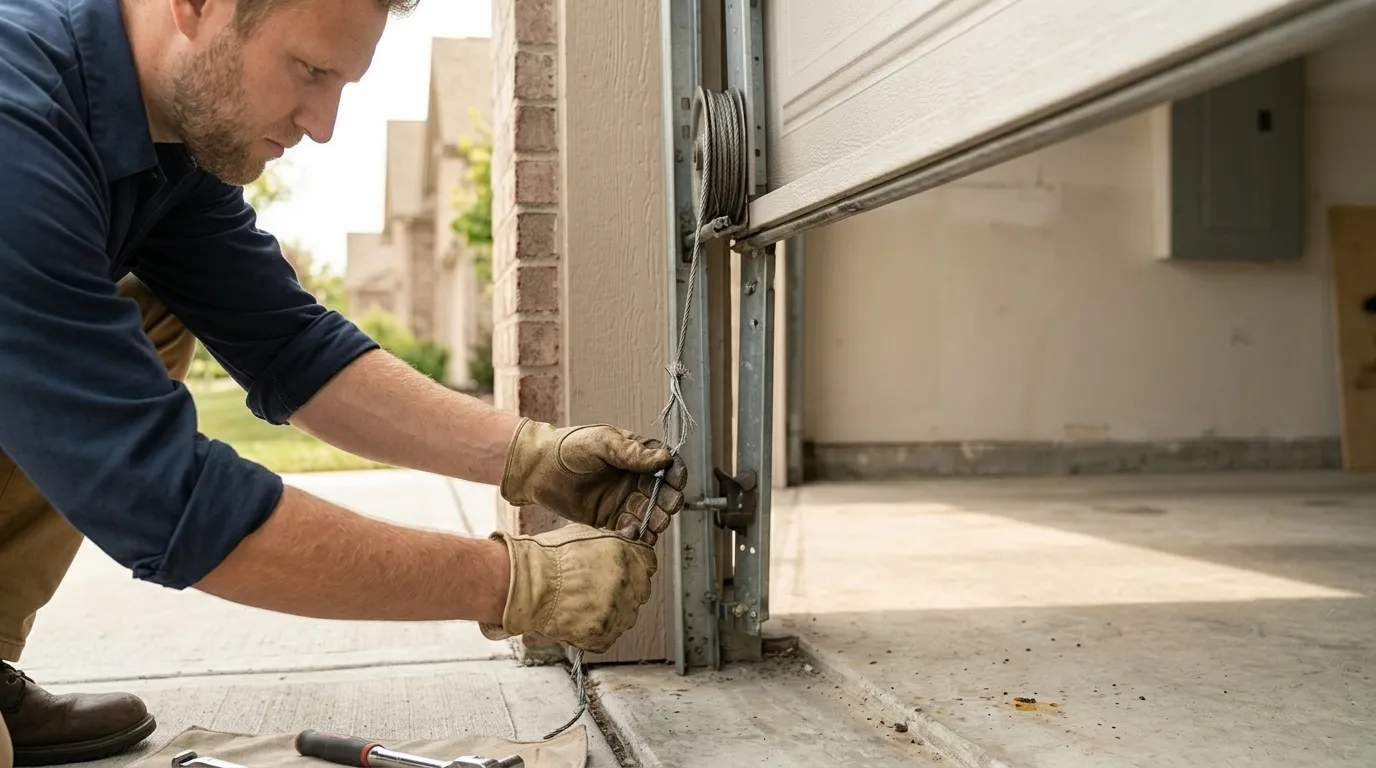
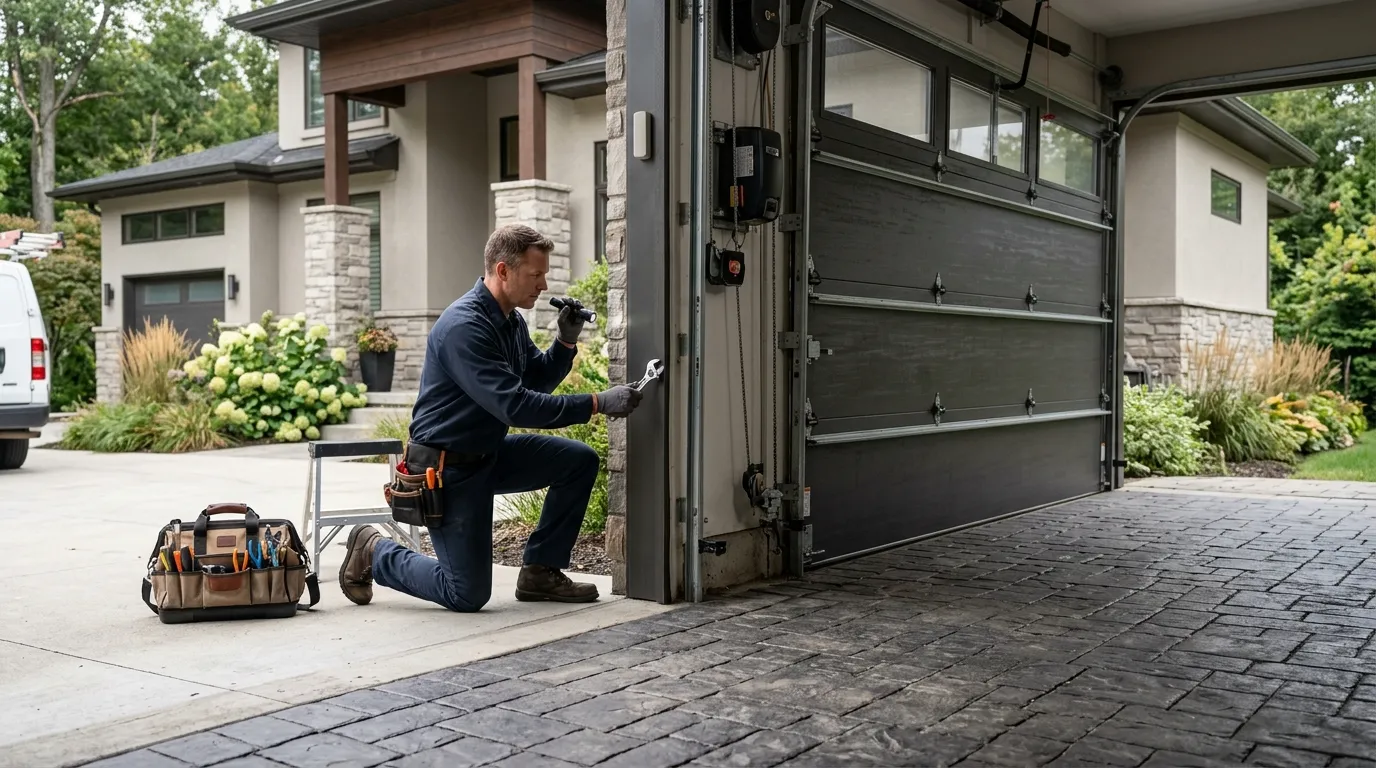
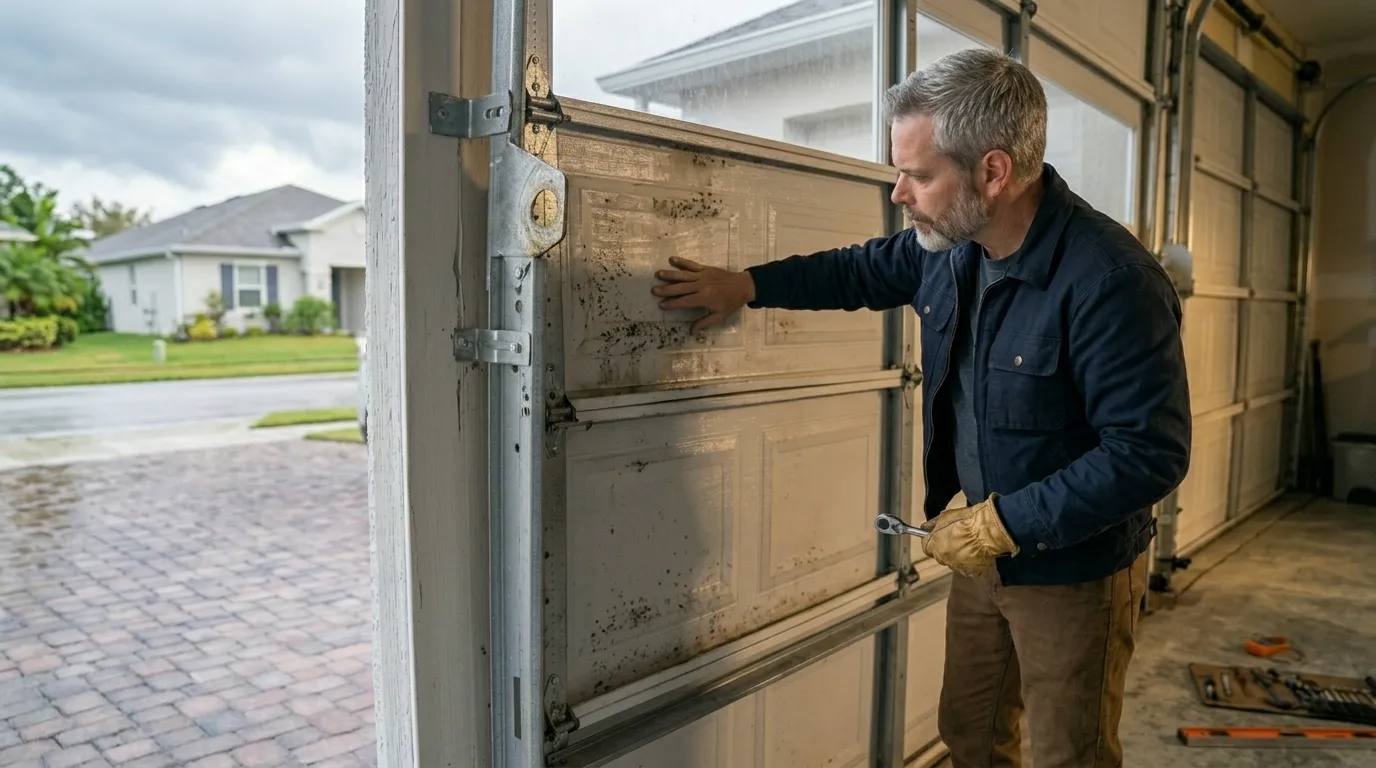
Start at the brackets, not the eyes themselves. In a lot of the houses on this side of Morton Grove, built between 1938 and 1996 with most going up in the 1960s and 70s, the sensor brackets were bolted to the same wood jamb trim as the original door, and that trim has had sixty-plus years to shrink, swell, and pull screws loose a sixteenth of an inch at a time. That's enough to knock the beam off center. Look for a bracket that wiggles when you press on it, or a sensor lens sitting slightly rotated compared to its partner across the opening. If the LED on one eye is solid and the other blinks, you've got your answer before you touch a wrench. A five-minute check with a level against each bracket face will tell you more than swapping sensors ever will.
One thing worth saying plainly: if the wiring insulation is cracked and brittle at the staple points, that's an electrical issue, not an alignment one, and pushing the brackets around won't fix it. That's a rewire, and it's not a job to force.
How Local Conditions Play In
With housing stock spanning 1938 to 1996 and a median build year of 1963, a good share of Morton Grove garages still have the original stud framing and jamb material the sensors were first mounted to decades ago. Wood that old has settled about as much as it's going to, but it still moves with humidity, and that slow seasonal flex is enough to twist a bracket that was dead-on when installed. Newer builds and additions in the area, where the framing is straighter and drier, tend to hold alignment longer between checks.
Garages near Golf, a mile off, and the closer-in areas toward Niles and Skokie share the same cold-climate freeze-thaw pattern, so this isn't unique to one block. It's a function of build era plus winter, not bad luck with one particular door.
What Is Going On
Put together, it's rarely one cause. It's an old bracket on aging trim, a slab that shifts a little every winter, and wiring that's been stapled in place since long before LED sensors were standard. Any one of those alone might not throw the beam off. Together, over a house built in the 1960s riding out another cold season, they add up to the eye blinking when you pull in at night.
If you've re-aligned the brackets twice this year and they keep drifting, that's usually a sign the mounting surface itself has failed, not that the sensor is bad. At that point, remounting to a solid backer board fixes it for good instead of chasing the same quarter-inch shift every few months.