What to Look At First
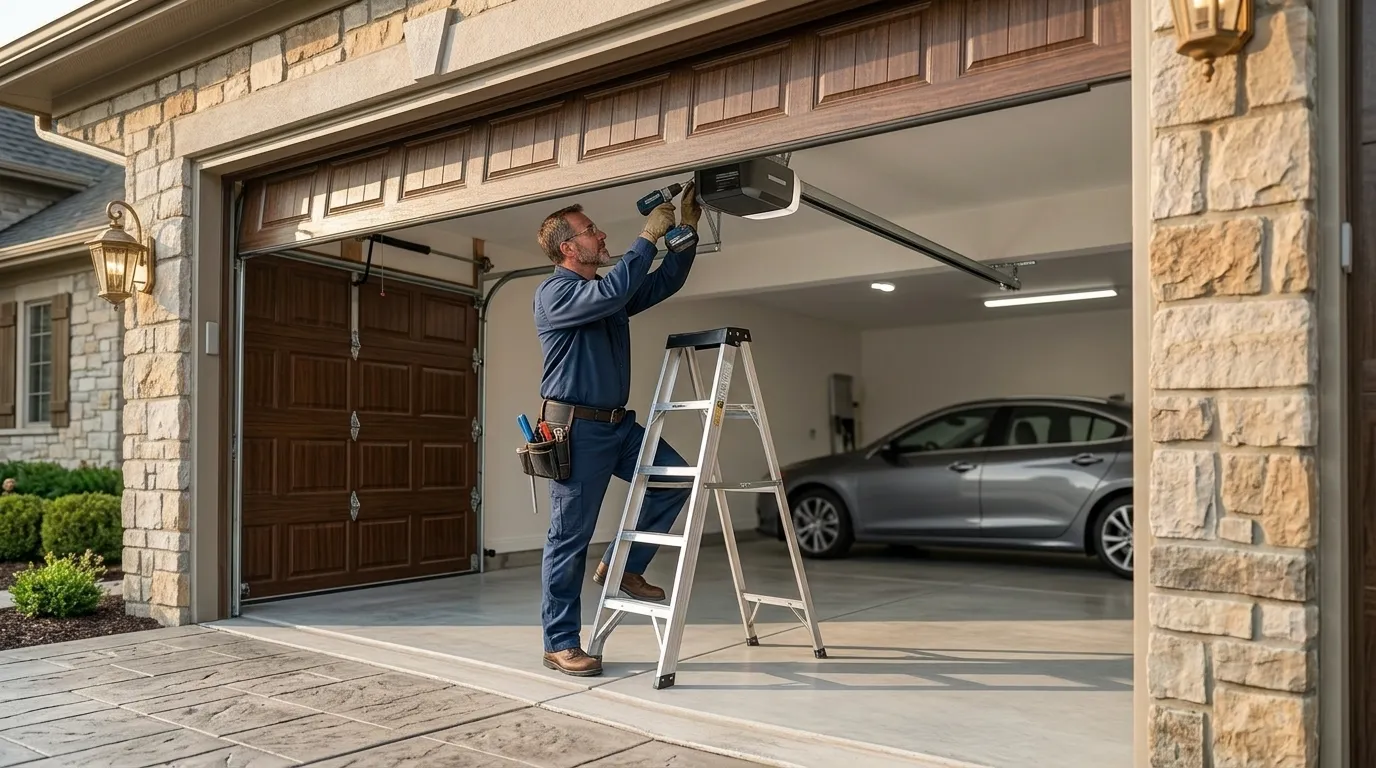
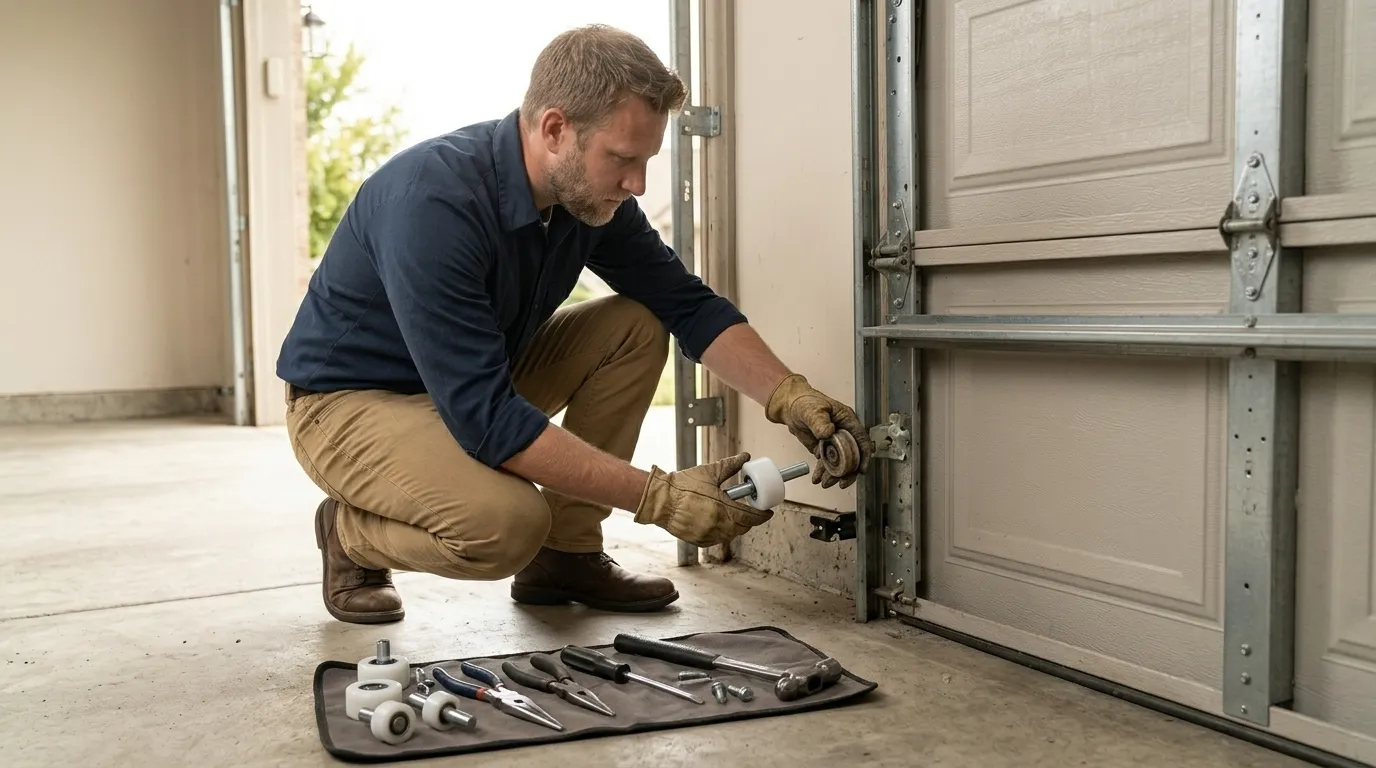
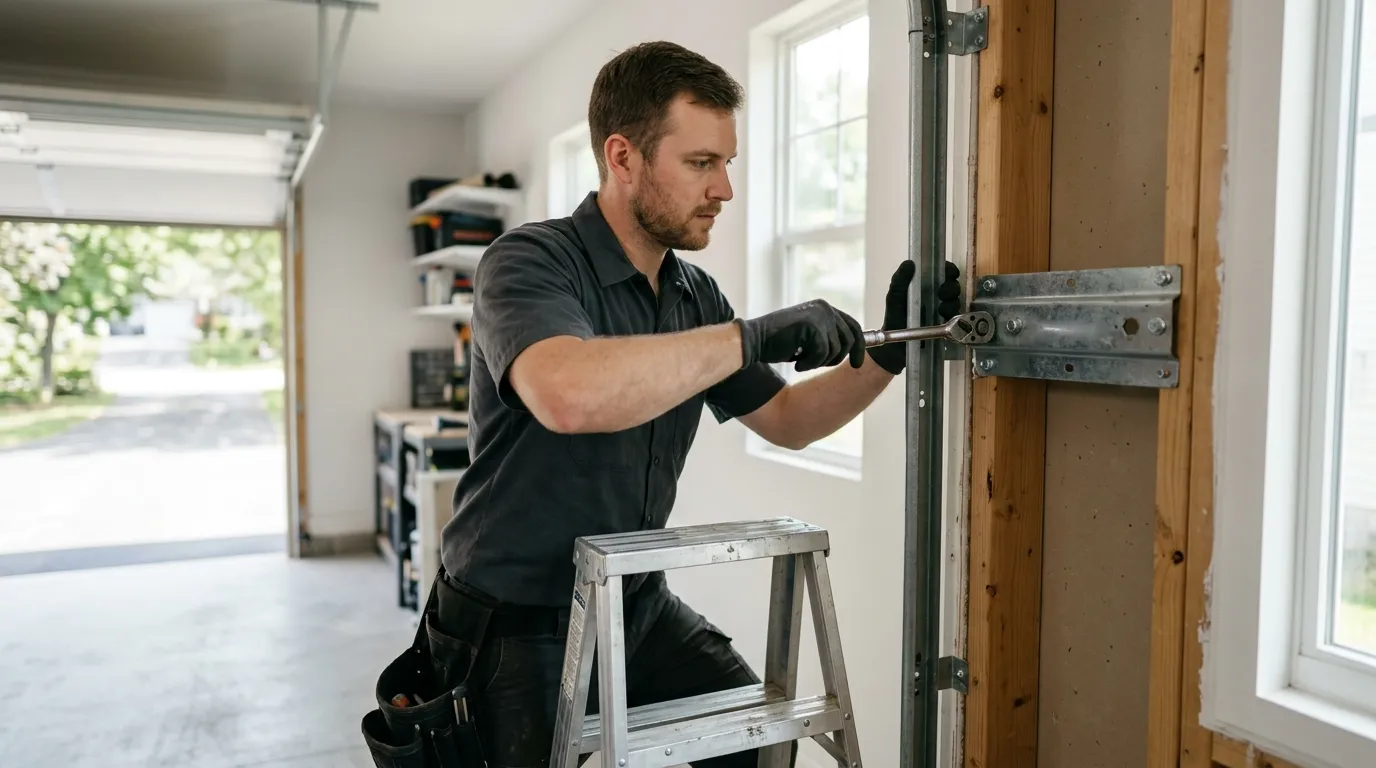
Before you call anyone, look at the track itself, not the door. On a house built in the 1960s or 70s - which describes most of the housing stock here, with a median build year of 1963 - the vertical track sections are usually bolted to a wood jamb that's shifted a little over sixty years of freeze and thaw. Check where the track meets the horizontal curve near the ceiling. If there's a visible gap between the roller and the rail, or the track has pulled away from its bracket, that's your off-track door, not a broken spring or a bad opener.
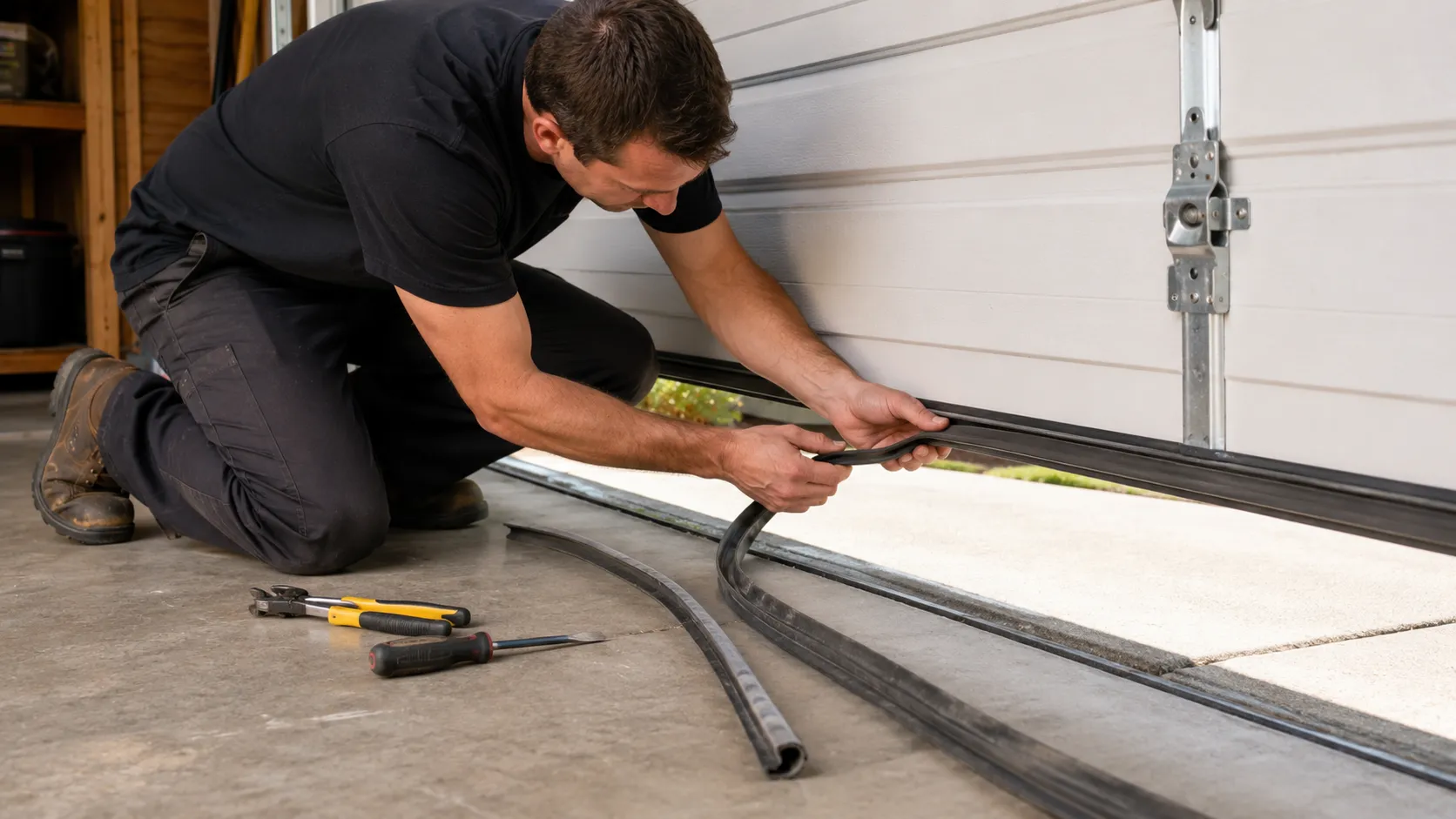
Run your hand along the track from the floor up. Original steel track from that era is thinner gauge than what gets installed today, and it dents easily if a bumper or a bike ever caught it. A dented section catches the roller every time the door passes, and over months that knocks the whole assembly a few degrees out of true. It's a slow failure, not a sudden one, which is why a lot of owners don't notice until the door binds hard or a cable jumps its drum.
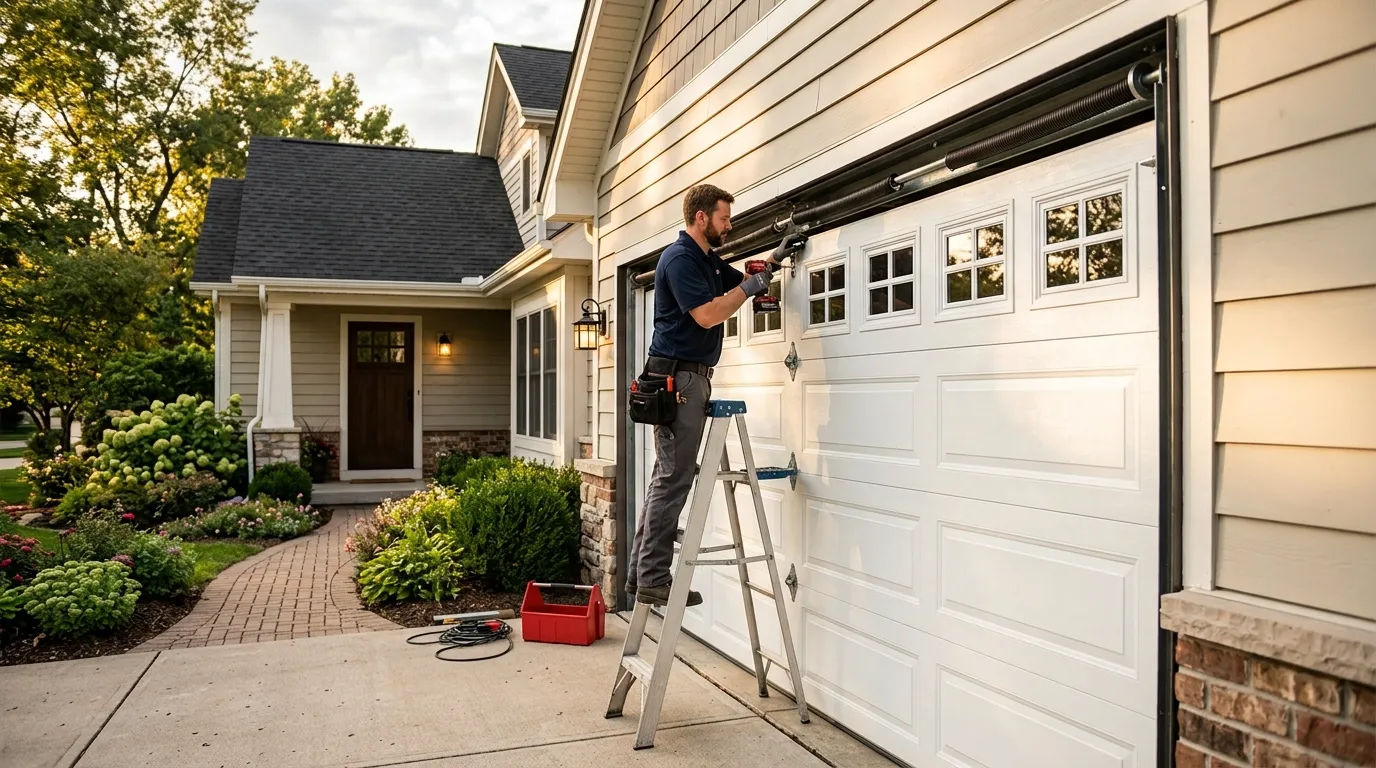
We don't recommend trying to force the door back onto the track yourself. Under spring tension, a track that lets go can move fast.
How Local Conditions Play In
Across this area, housing runs from 1938 up through the 1990s, but the bulk of it clusters in that 1960s-70s build window. That means original torsion or extension hardware, sized for lighter doors than what's sold now, is still doing the job on a lot of these garages. Track alignment on those older setups depends on brackets spaced for a door that may since have been swapped for a heavier insulated model - same track, more weight, more flex.
We see this most on the detached single garages set slightly forward of the house, the layout common on the older blocks between here and Golf. Those structures took the brunt of six decades of settling on their own foundation, separate from the house, so the garage frame and the house frame don't always move together. When the garage door frame racks even slightly out of square, the track goes with it, and no amount of lubricant fixes a track that's no longer plumb.
We don't try to guess frame condition over the phone. If a door's been jumping track and the garage itself looks like it's leaning or the slab has heaved, that's a structural conversation before it's a door conversation.
What Is Going On
Put it together and a track failure here is almost always one of three things: hardware loosened by seasonal contraction, a dent or bend in track that's outlived its original install, or a frame that's shifted enough over sixty-plus years that the track no longer runs straight up and down. All three trace back to the same root - this is old housing stock in a climate that works metal loose every winter.
What it's not, most of the time, is the opener. Owners often replace the opener first because that's the part with the motor and the noise, but a door that's actually off track will keep jumping regardless of what's driving it. Fix the track alignment and the hardware, and the existing opener usually keeps working fine.
One honest limit: if the track is bent badly enough, we don't recommend hammering it straight. Track is cheap compared to a roller jumping loose under tension a second time. Past a certain point it's a replacement section, not a repair, and we'll tell you which one it is before we touch anything.