What to Look At First
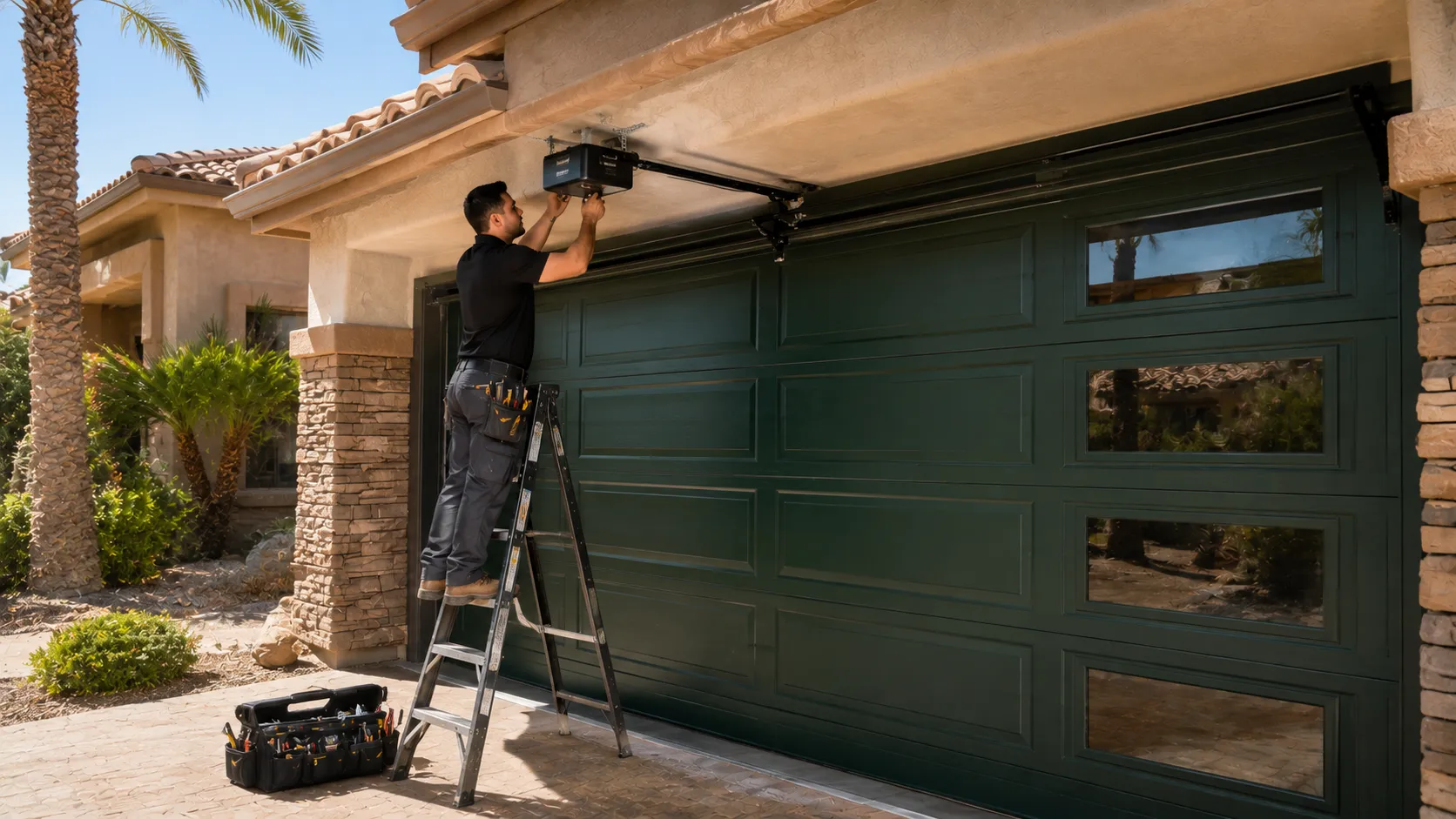
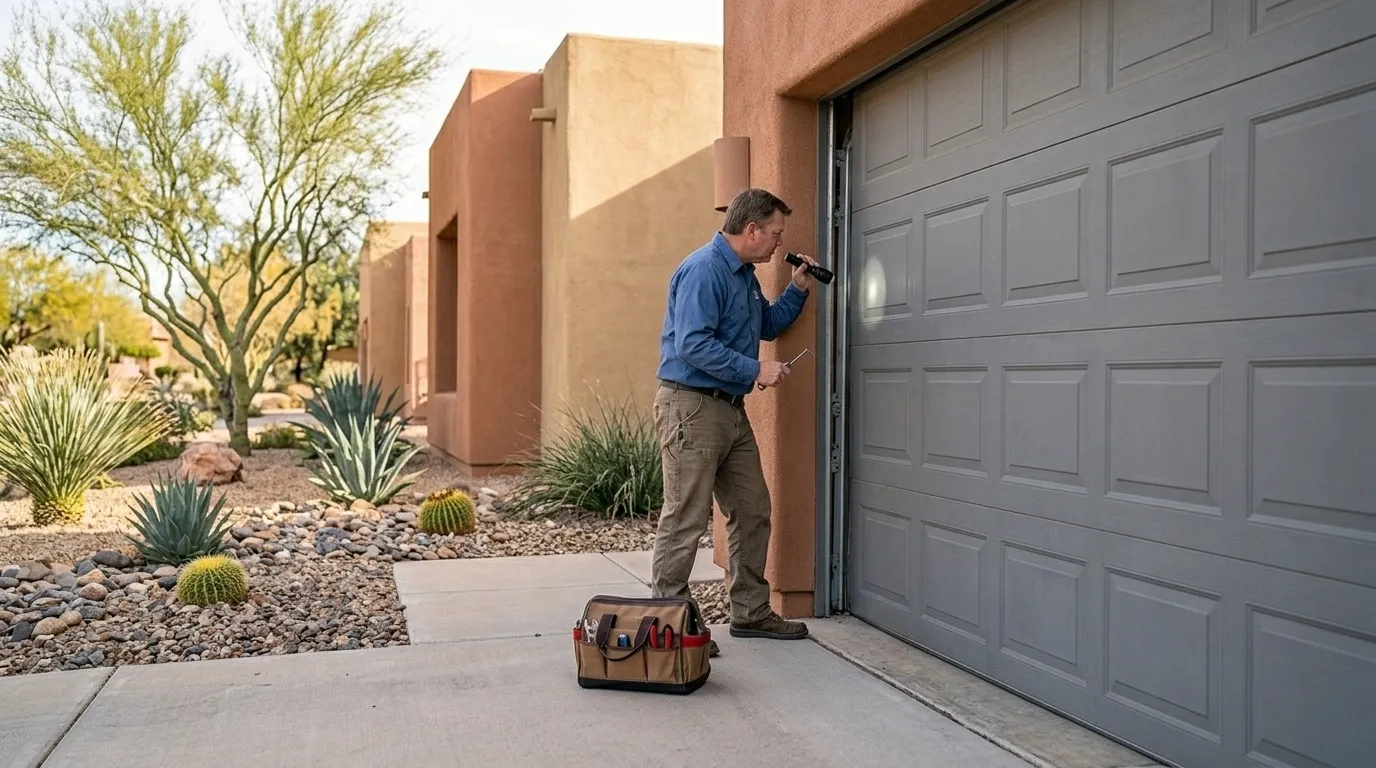
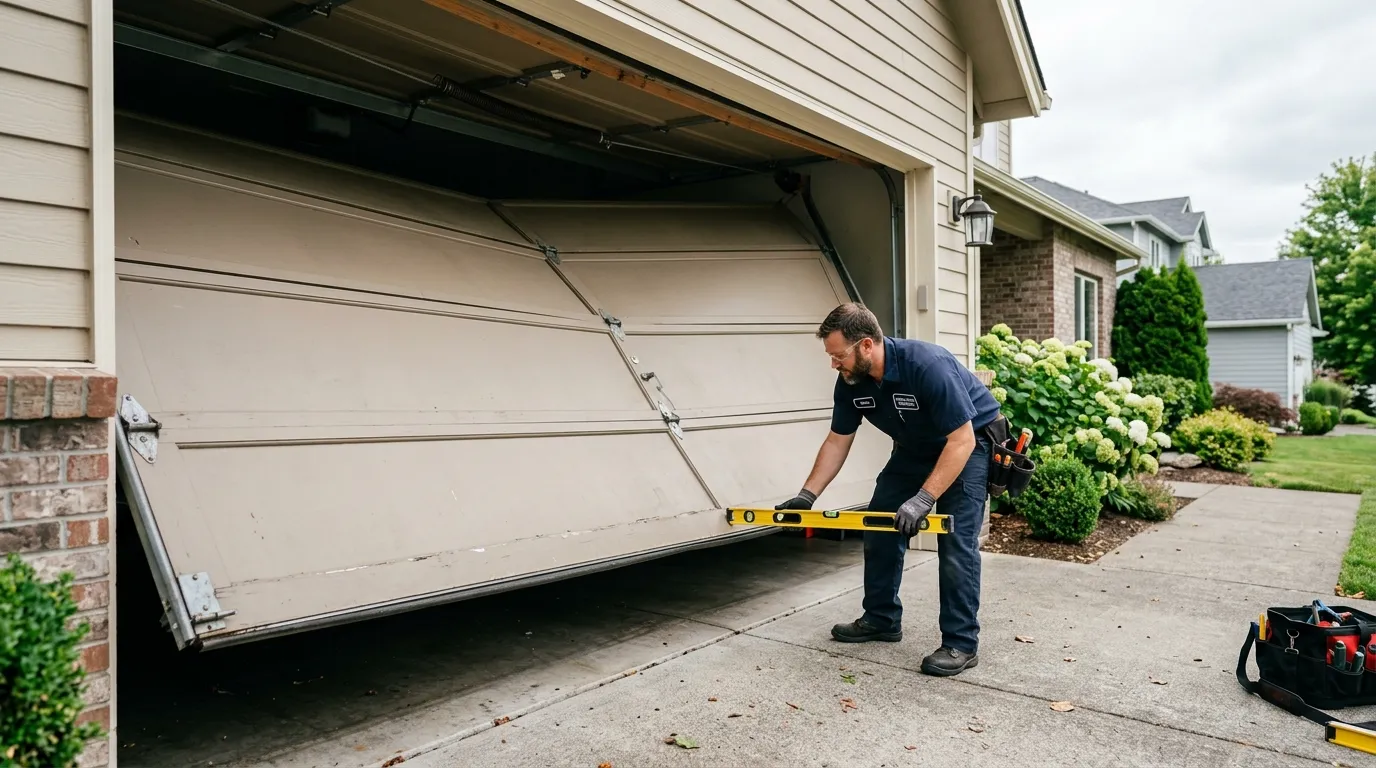
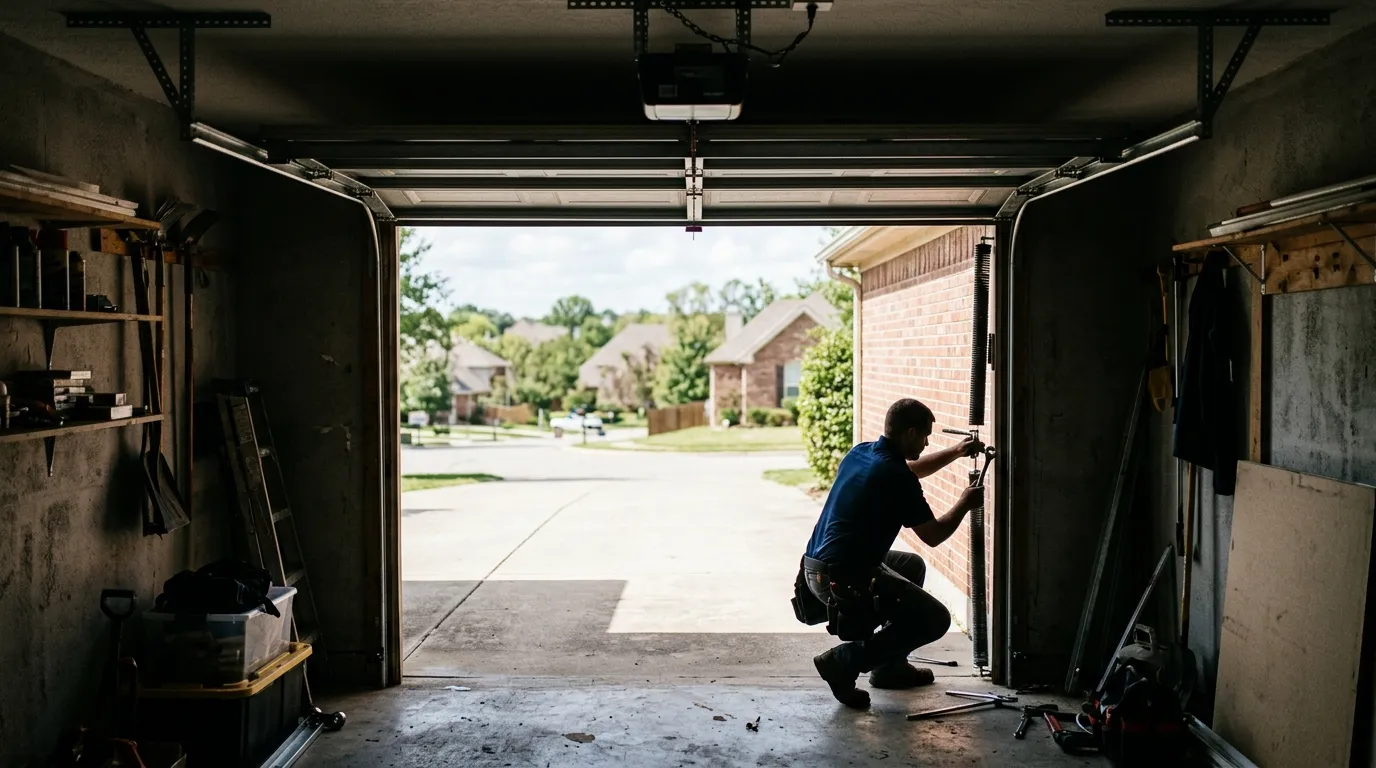
Start with the track brackets, not the panels. On a wide double door - the kind you see on most of the ranch and split-level houses built here between 1938 and 1996, with the bulk going up in the 1960s and '70s - the horizontal tracks run a long span with only a handful of anchor points into the framing. Wind doesn't push on a door evenly. It gusts, and a gust load on an 8-foot or 9-foot wide panel puts real leverage on whichever bracket is weakest. If you've got a house from that era with the original hardware still in place, check those brackets for play before you check anything else. A quarter inch of movement at the bracket becomes an inch or more at the bottom of the panel, and that's what eventually pulls a track loose or bends a top section. This is a five-minute look with a flashlight and a wrench, and it tells you more than staring at the paint on the panels ever will.
How Local Conditions Play In
The housing stock in this part of the service area runs 1938 through 1996 with a median build year around 1963, and that number matters here because it tells you what kind of door and hardware is likely still on the house. A lot of homes from that window were built with single wide sections rather than the shorter, stiffer panels used on newer doors, and a single wide panel flexes more under wind pressure than a stack of shorter ones. If your garage faces open side yard or a street with a long unobstructed run - common on the flatter blocks - that panel is taking more direct load than one tucked between two houses. None of this means the door is unsafe. It means a wide door on older panel construction is worth a closer annual look than a newer sectional door with shorter panels and factory-rated wind struts.
What Is Going On
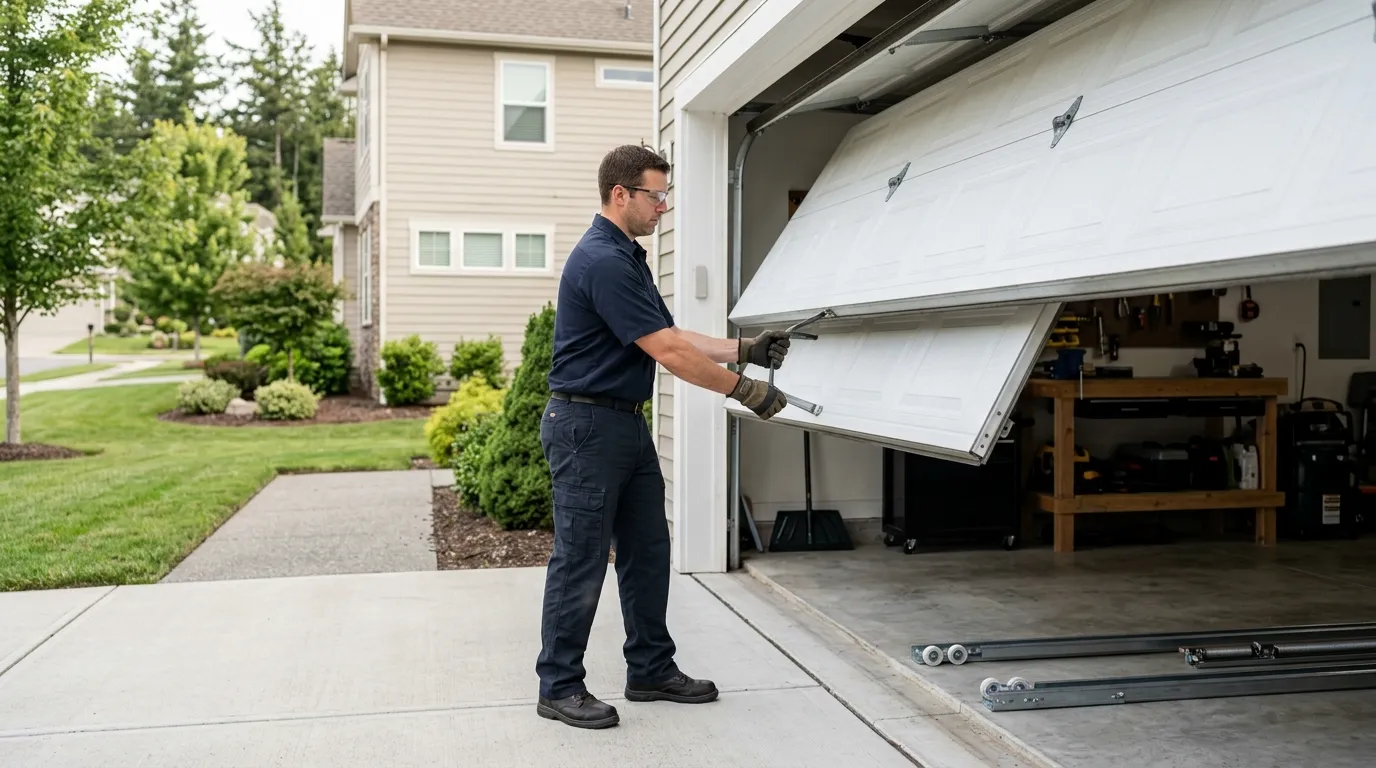
Put plainly: wide doors flex more, older single-wide panel construction flexes more than newer short-panel construction, and a cold moderate climate cycles the steel enough over a year to loosen what was already a marginal connection. Put those three together on a house from the 1960s or '70s - which describes a large share of homes in this area - and you get the failure pattern we actually see: a track pulled from the wall, a bent top panel, or a bottom bracket sheared loose, usually after the door was already a little out of adjustment. We don't reinforce every wide door that comes through - if the panels themselves are thin and near the end of their life, adding bracing to old steel is money spent on a door you'll replace in a year or two anyway, and we'll tell you that instead of selling you the bracing. For everything else, a wind-rated strut kit on the top two panels is usually the fix, not a full door replacement.