What Causes It Around Here
Most of the housing stock in this area went up between 1938 and 1996, with the median build landing around 1963, and that matters more than people think. A garage built in the early 1960s almost never has the door and opener it started with, but it often still has the original track brackets, the original jamb hardware, or a torsion spring that was swapped once, decades ago, on a shaft that's now pitted and undersized for anything modern.
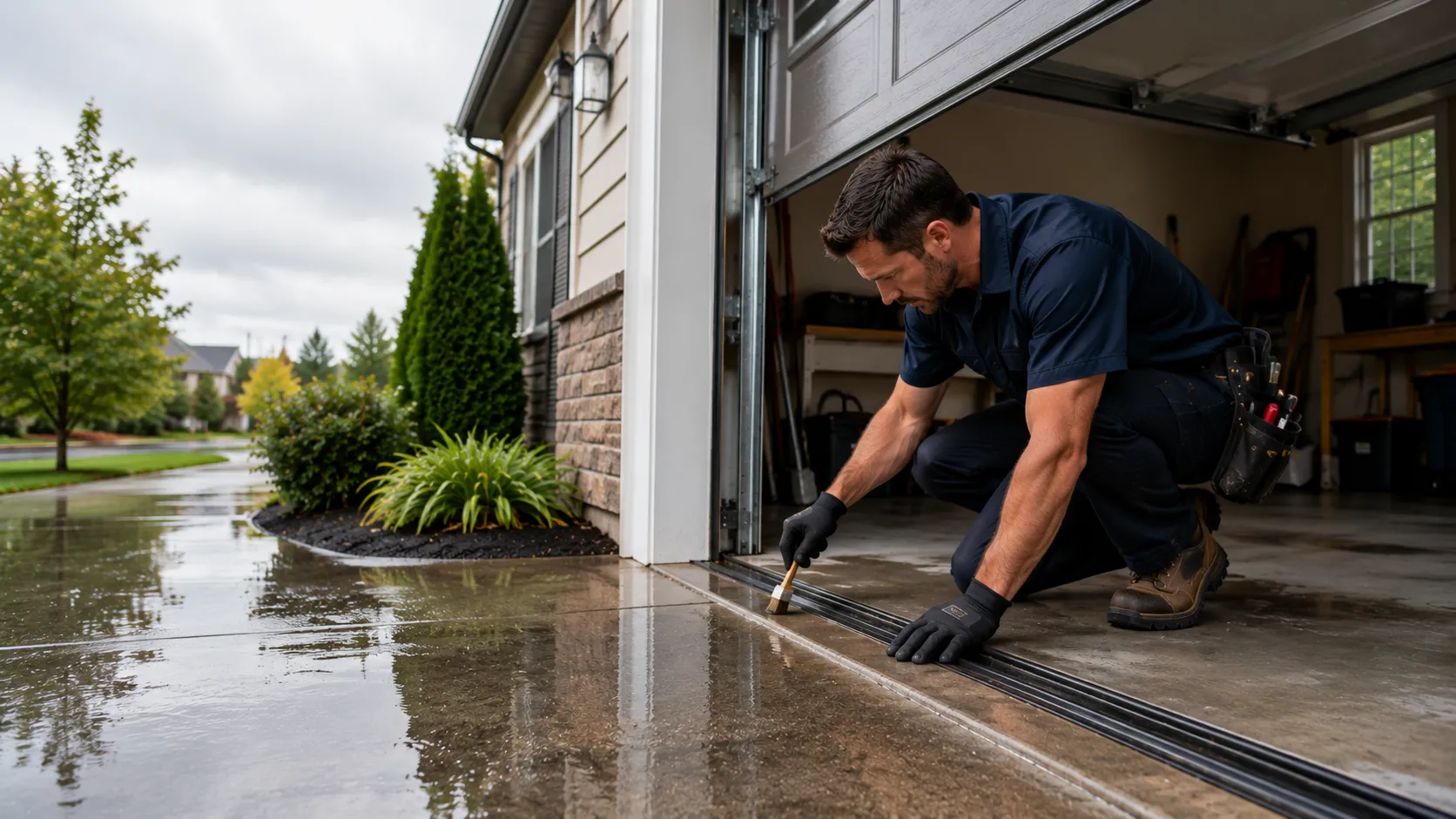
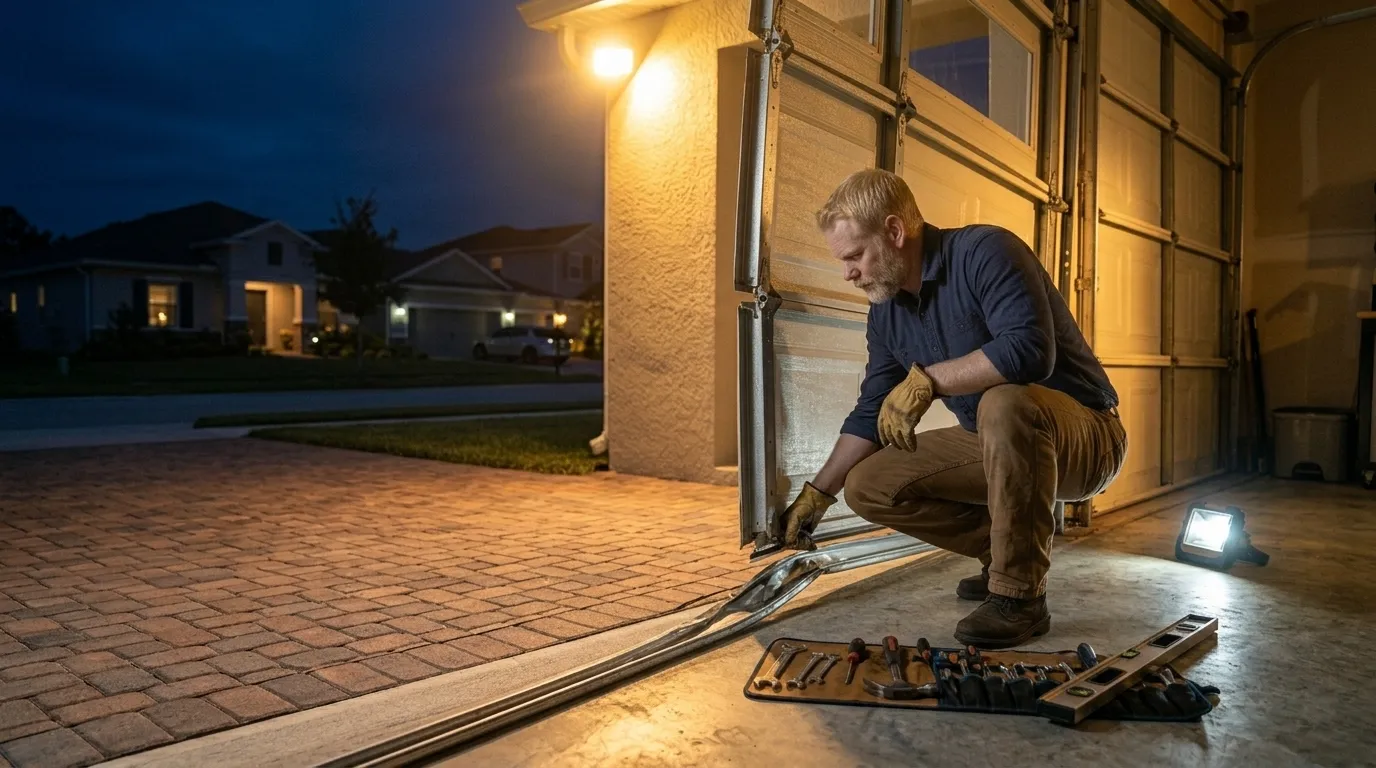
The climate band here is cold, and that's the second half of the story. Steel torsion springs lose tension as the metal contracts in low temperatures, so a spring that's already near the end of its cycle count tends to let go on the first hard cold snap of the season, not in July. Nylon rollers from an older install get brittle the same way. Track bolts that were fine all summer start to walk loose once the wood jamb behind them shrinks in dry winter air.
We see this pattern block after block through Morton Grove and in the nearby stretch toward Golf, about a mile off, where the housing dates from the same era. It's not bad luck. It's a 60-year-old garage doing exactly what 60-year-old steel and wood do in this weather.
How We Fix It
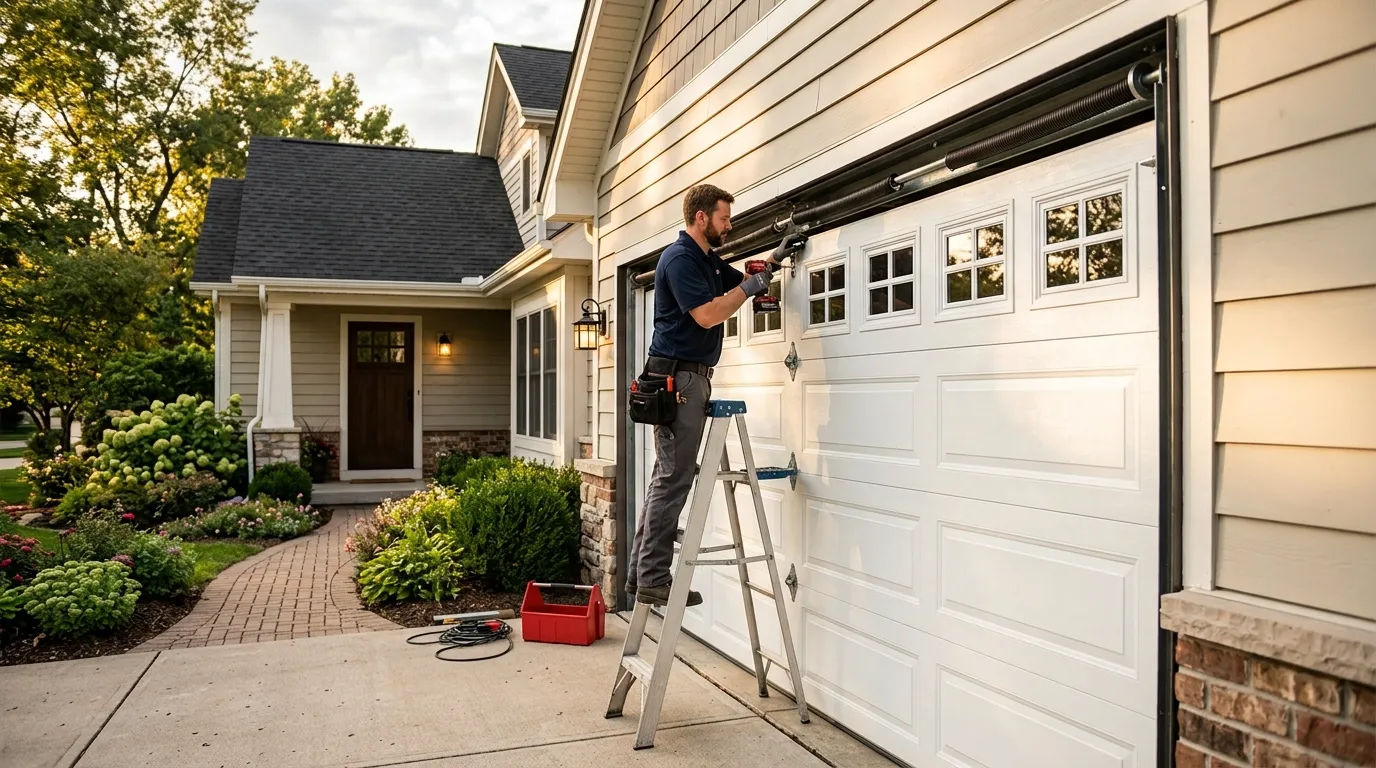
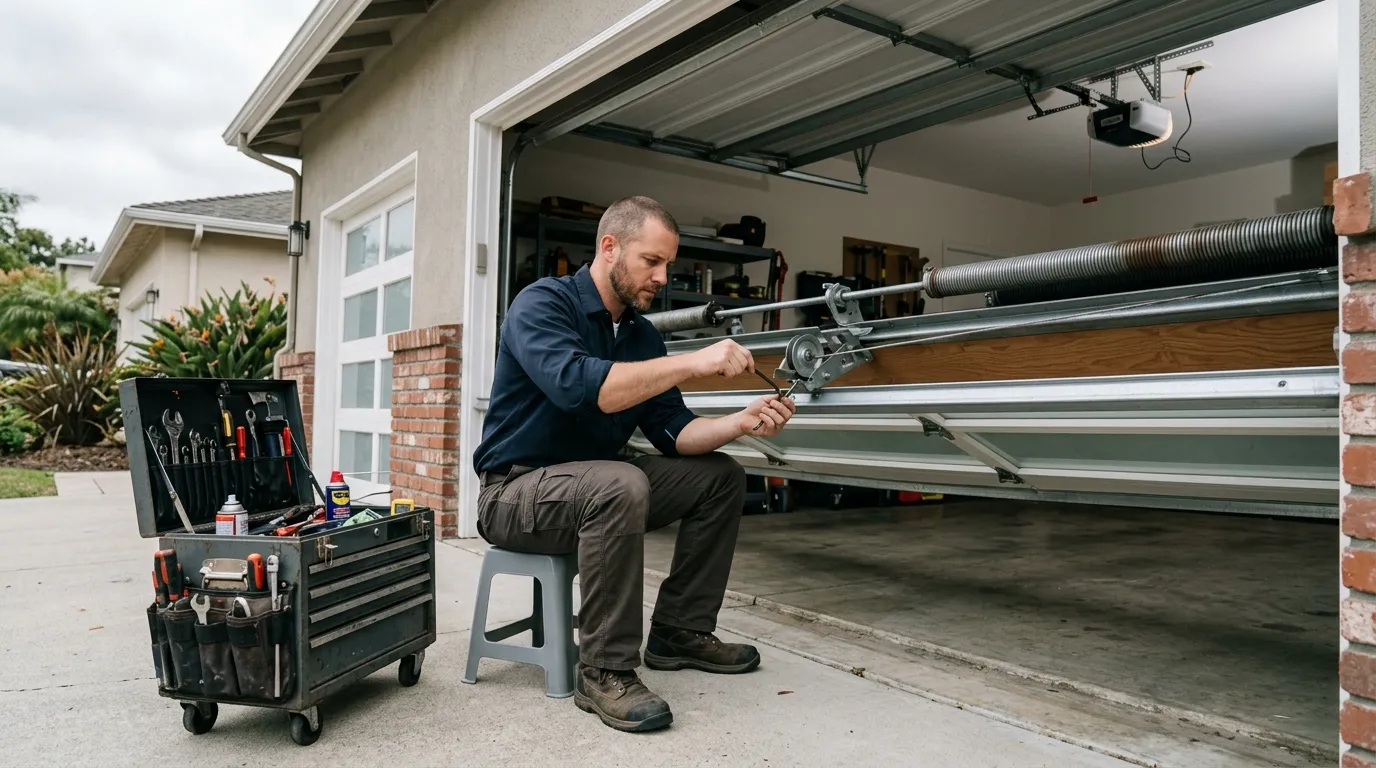
For a broken torsion spring, we match spring wire size and wind to the door's actual weight and the drum size on the shaft - not just to whatever was on there before, since a mismatched replacement on an older door is one of the most common repeat calls we see. Cables, rollers, and hinges get replaced as a set on that side of the door when one component has already failed, since they wear on the same clock.
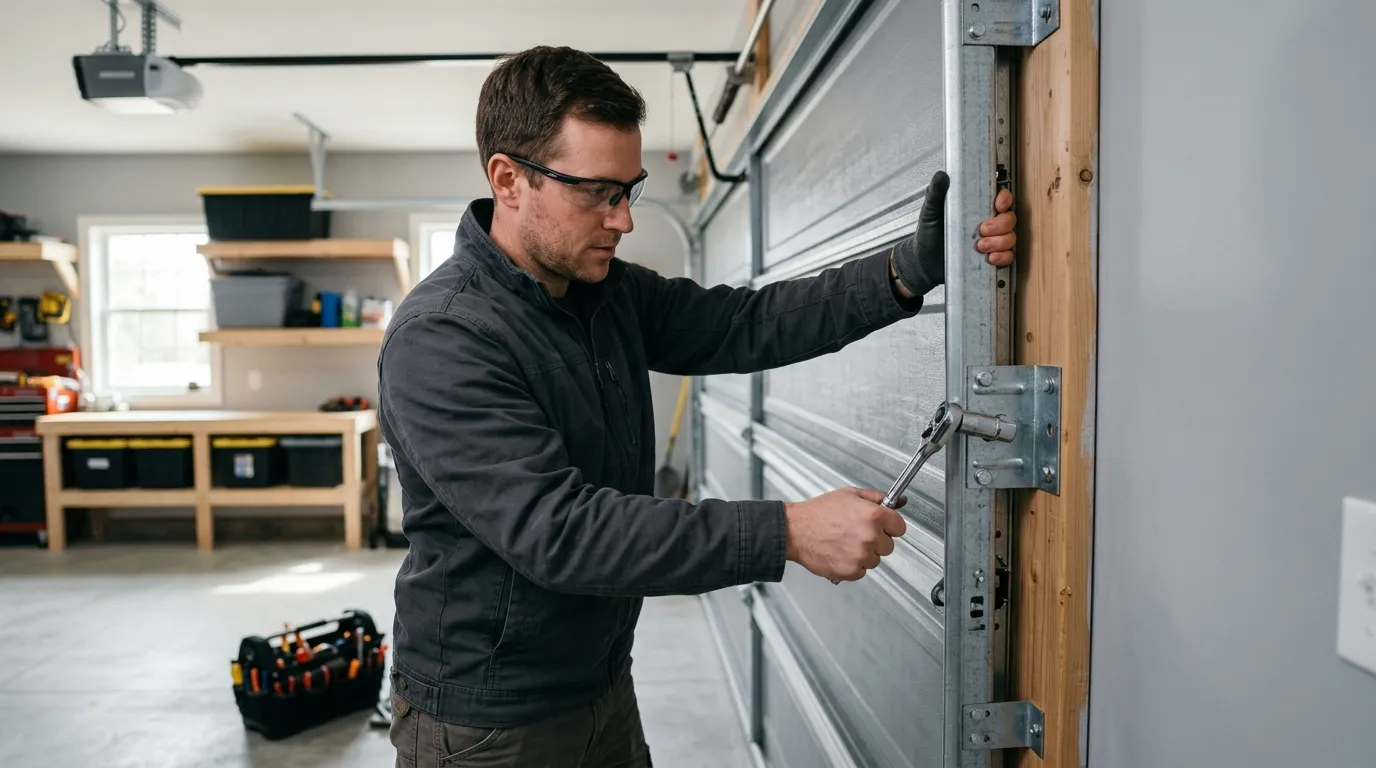
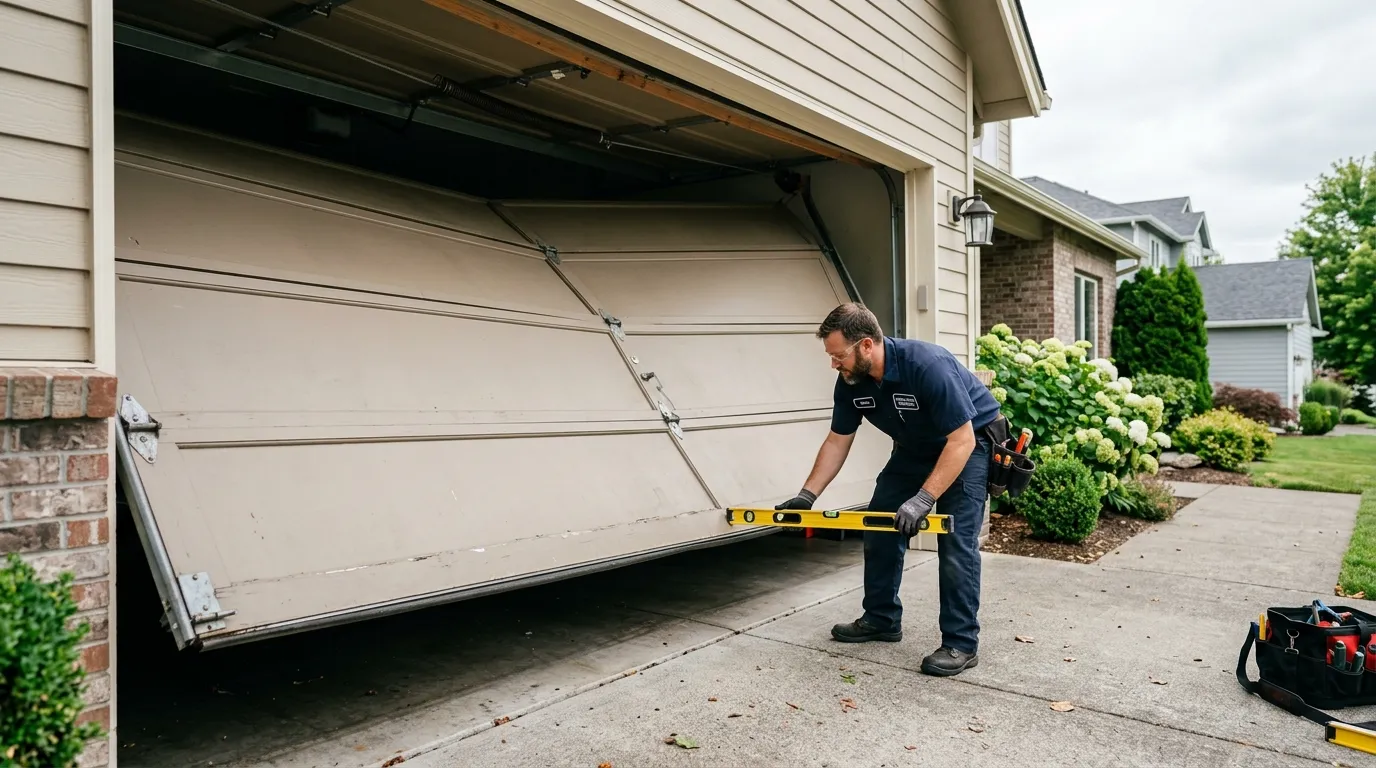
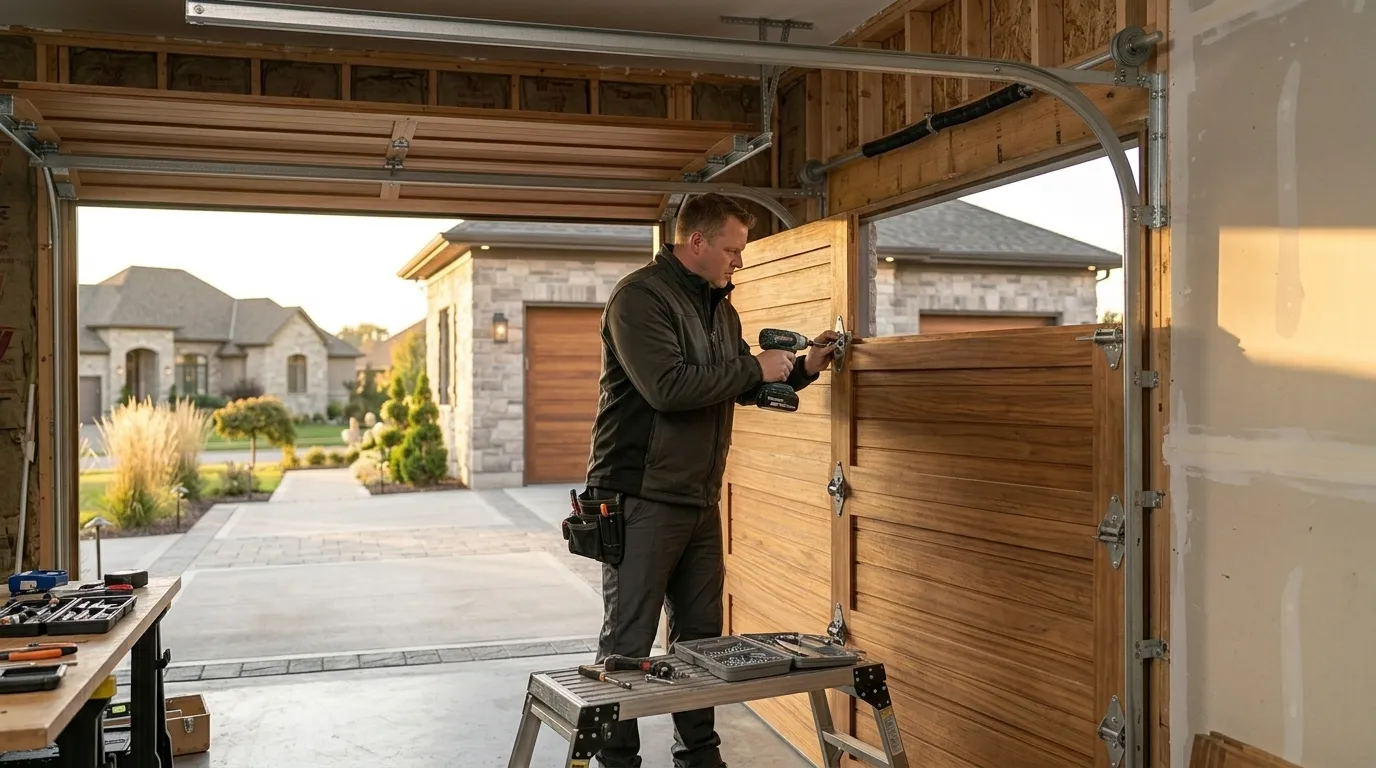
Track alignment gets checked against the jamb, not just eyeballed, especially on houses from the 1960s and 70s where the framing has settled some over sixty-plus years. A door that's binding on a slightly out-of-square track will keep breaking the same parts if the track itself never gets corrected.
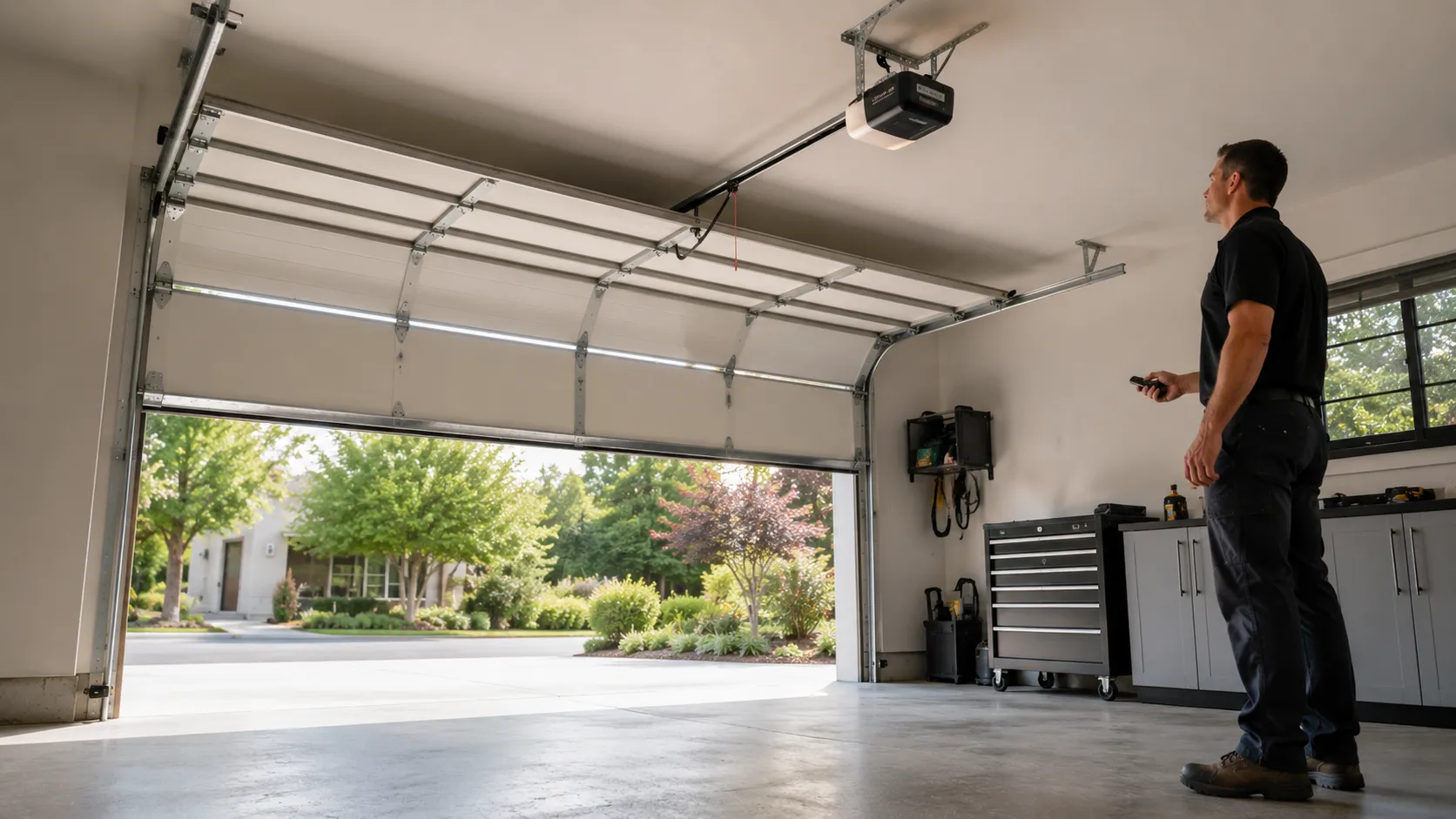
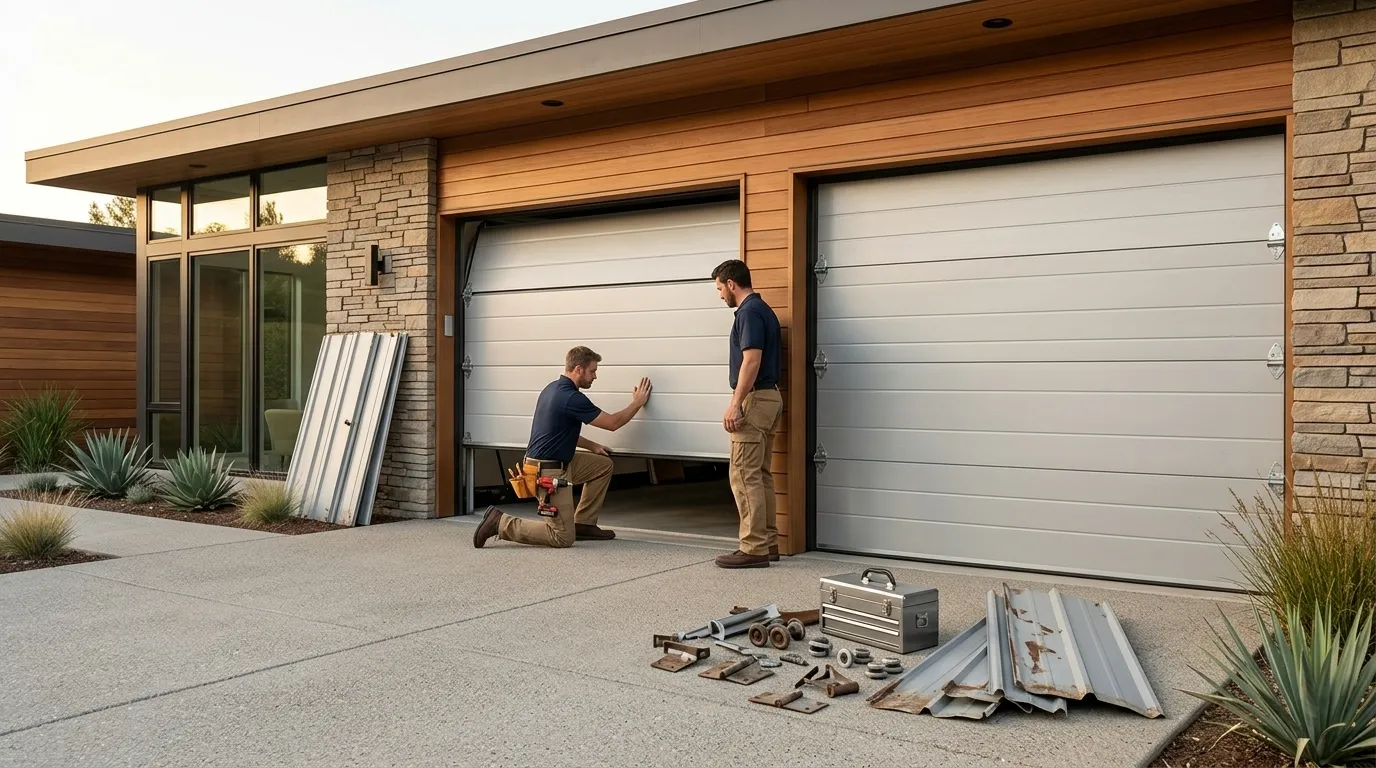
On openers, we test the safety reversal and the force settings before we call a job done - not optional on any repair, but especially not on units that have been in place long enough that the safety sensors may be older than current standards call for. One honest limit: if a panel needs custom fabrication because the original size isn't made anymore, that's outside what we do on a repair call, and we'll tell you that up front rather than string out a job that needs a full replacement instead.
How It Shows Up
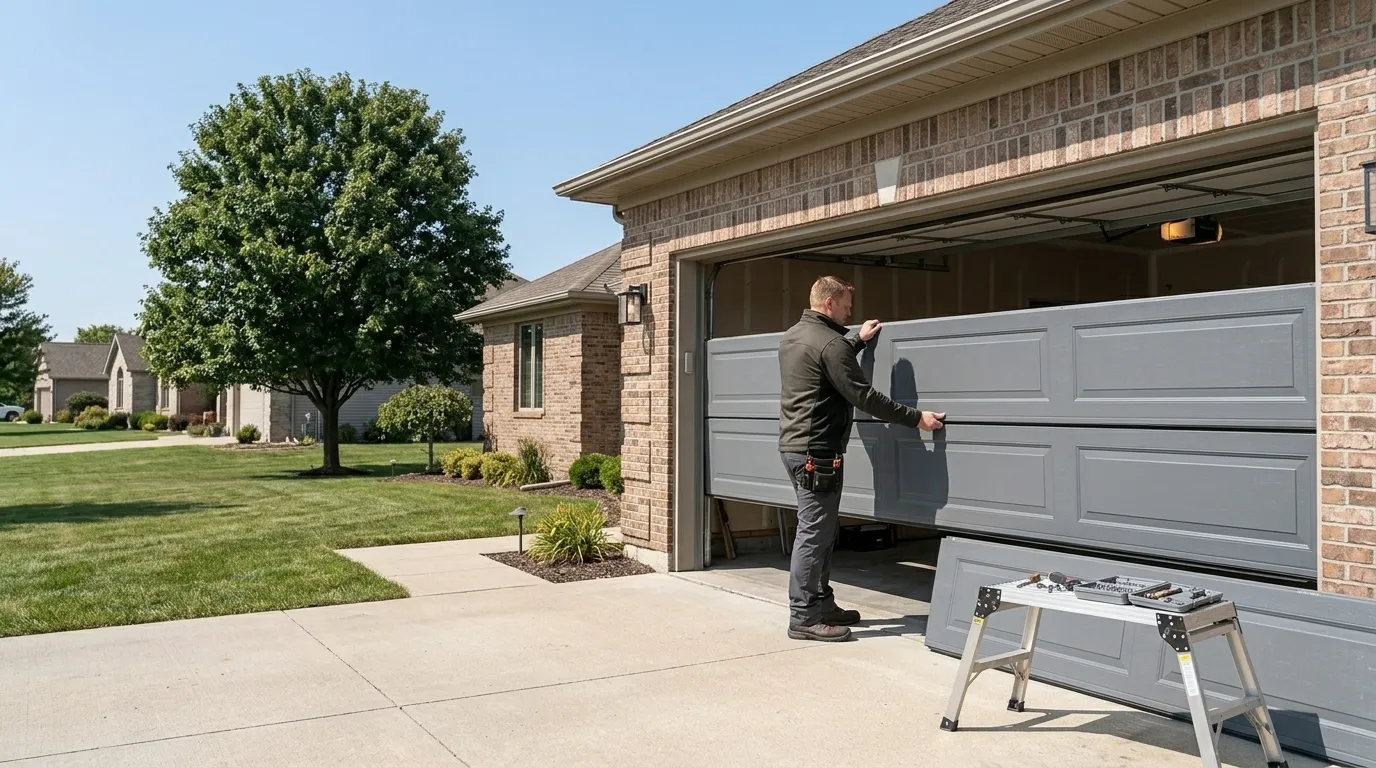
The most common call is a door that won't move at all and a spring visibly split at the coil - that's a torsion spring, and it's not safe to force the door open or closed with hand pressure or the opener when that happens. Close behind it is a door that opens rough, shudders, or drags on one side, usually a cable that's frayed or jumped the drum, often paired with a roller that's cracked or missing its bearing.
A door that reverses partway down, or won't close all the way and just backs up, points to the opener's force or limit settings drifting out of range, which happens more on older units that have never been recalibrated. If the door is noticeably heavier to lift by hand than it used to be, that's a spring losing tension gradually rather than snapping outright - worth a call before it fails completely and takes a cable or the opener's drive with it.
Given that median household income in the service area runs a bit over $105,000, we find most owners here would rather pay for a properly matched spring and a calibration check now than replace an opener that gets forced past its limits repeatedly.